



How to Replace an RV Converter (DIY vs Professional)
Posted by Happy Campers Store on Jan 5th 2026
How to Replace an RV Converter (DIY vs Professional)
DIY decision guide + illustrated steps • Typical charging voltage: 13.6–14.4V
If your RV battery isn’t charging on shore power, a failing converter is one of the most common culprits. This guide helps you confirm the diagnosis, decide whether to DIY or hire a tech, and follow a safe, high-level replacement process.
Related: RV Electrical System Problems: How to Diagnose, Fix, and Prevent Common Failures (hub article)
Quick answer: should you replace the converter yourself?
- DIY is usually fine if your converter is a simple standalone unit and you’re comfortable labeling wires and working slowly.
- Hire a pro if it’s integrated into a power center, you’re upgrading to lithium, you have an inverter/charger combo, or anything about the wiring looks confusing or damaged.
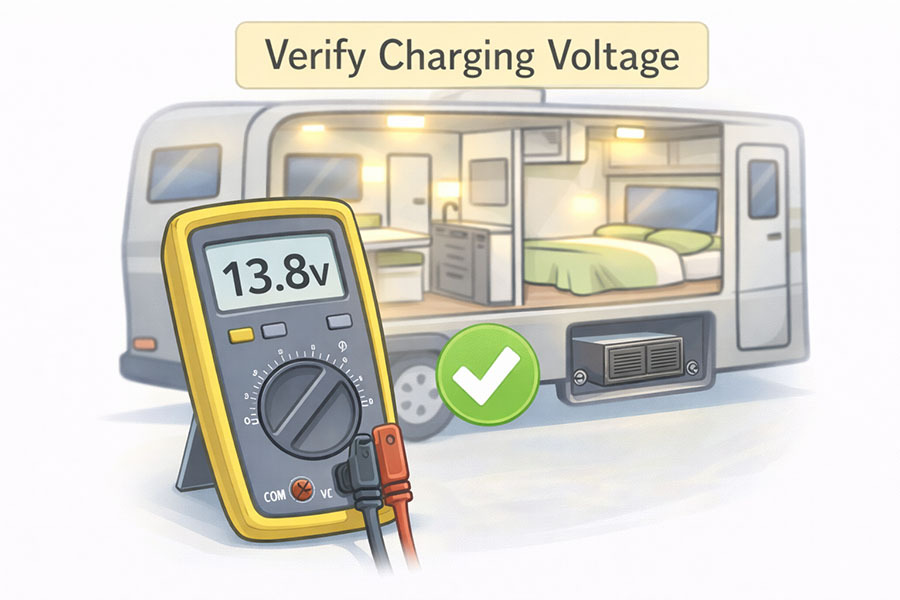
- After replacement, you should typically see 13.6–14.4 volts at the battery when charging normally.
What an RV converter does (and why it matters)
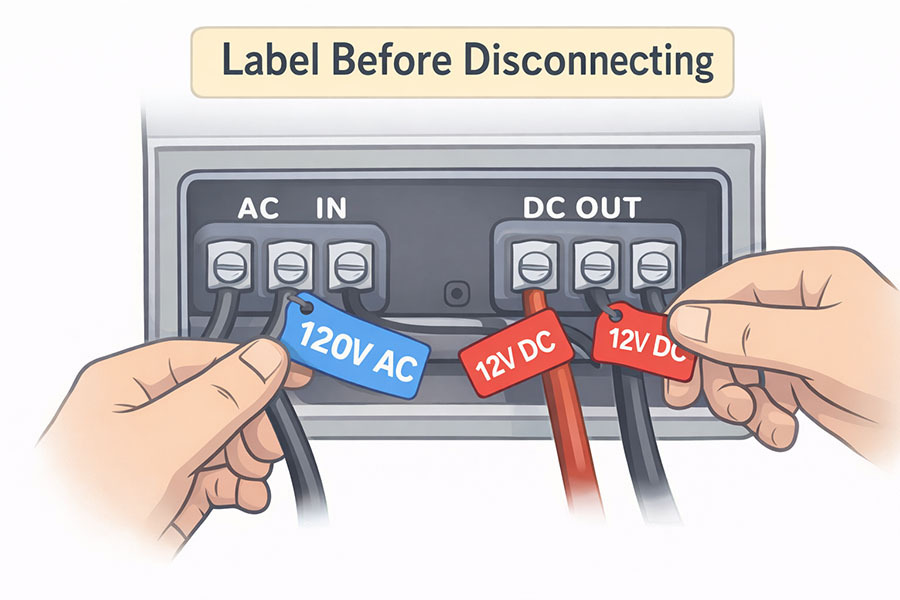
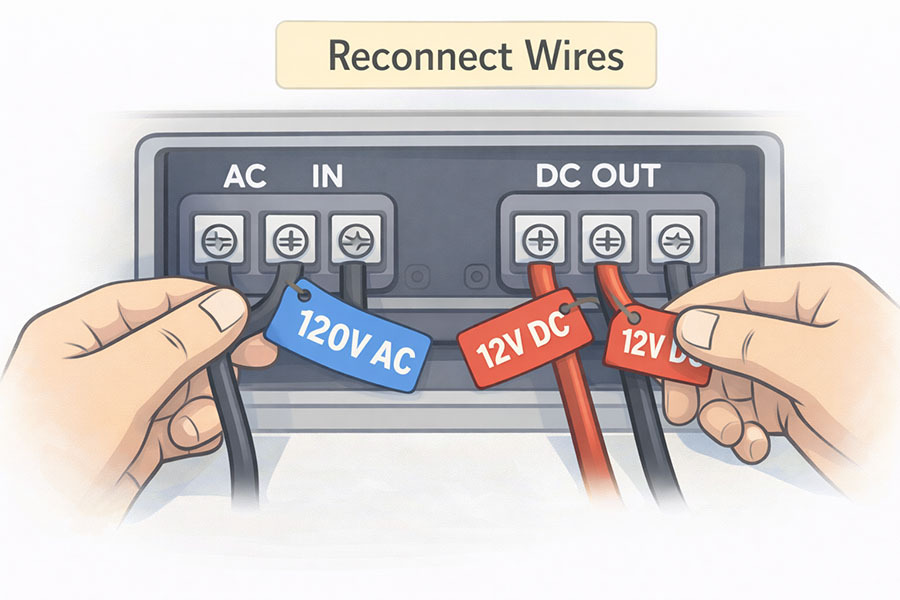
Your RV runs two “worlds” of power: 120V AC (shore power / generator) and 12V DC (batteries). The converter turns 120V AC into 12V DC to run lights, fans, water pump controls, control boards, and to charge your house batteries when plugged in.
If the converter fails, you can still have normal outlets on shore power, but your 12V system may act weak and your batteries won’t charge (or won’t charge correctly).
Signs your RV converter is bad
These are the most common real-world symptoms RVers notice:
- Batteries don’t charge on shore power (voltage stays around ~12.1–12.6V and never rises)
- Interior 12V lights are dim or flicker (especially when the pump or fan runs)
- Battery reads fine when driving (alternator charging) but not when plugged in
- Converter fan never runs (or runs constantly at odd times)
- Burnt smell near the power center (don’t ignore this)
- Repeated fuse issues in the 12V distribution area
Confirm it’s the converter (not the battery)
Before you buy parts, do a simple confirmation pass. This avoids replacing a converter when the actual issue is a battery, fuse, breaker, or wiring connection.
Fast diagnosis checklist
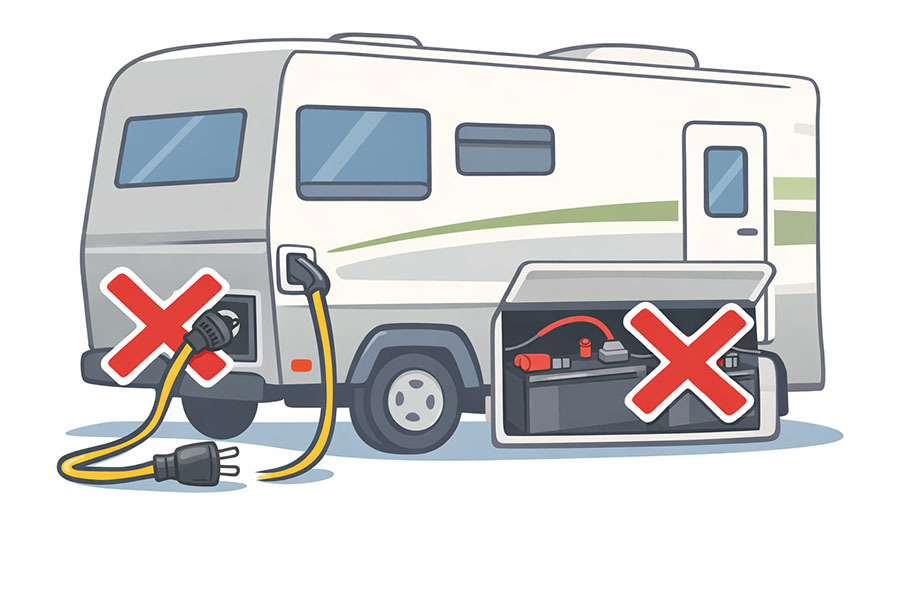
- Check shore power is actually on (pedestal breaker, RV main breaker, GFCI status).
- Inspect the battery connections for corrosion, looseness, or a tripped battery disconnect switch.
- Check 12V fuses in the power center (a blown “reverse polarity” fuse is a common “no charge” cause).
- Measure battery voltage:
- Unplugged/resting: typically ~12.2–12.7V (depends on state of charge)
- Plugged in/charging: typically 13.6–14.4V
If you plug into shore power and you never see voltage rise into the 13s at the battery (and fuses/breakers look good), you’re likely dealing with a converter problem or the wiring path between the converter and the battery.
DIY vs professional RV converter replacement
This is where most people get stuck: the repair is doable in many RVs, but the “right choice” depends on the type of converter and your comfort level.
DIY is a good fit if…
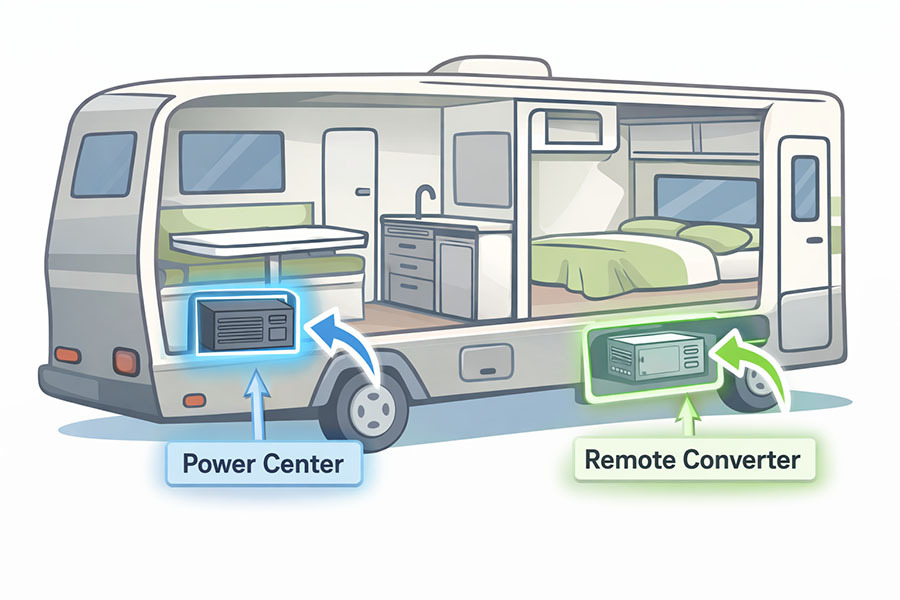
- Converter is a standalone unit (deck-mount / remote mount)
- You can label wires carefully and work slowly
- No visible heat damage or melted wiring
- You’re not changing battery chemistry (lead-acid → lithium)
Hire a pro if…
- Converter is inside an integrated power center
- You have a lithium battery system or plan to upgrade
- You have an inverter/charger combo
- Anything looks scorched, brittle, or confusing
| Factor | DIY | Professional |
|---|---|---|
| Typical cost | $150–$400 parts (most cases) | $350–$900 total (parts + labor) |
| Time | 1–3 hours | 1–2 hours |
| Risk | Moderate (wiring mistakes) | Lower (trained troubleshooting) |
| Best for | Simple, standalone conversions | Power centers, lithium, complex systems |
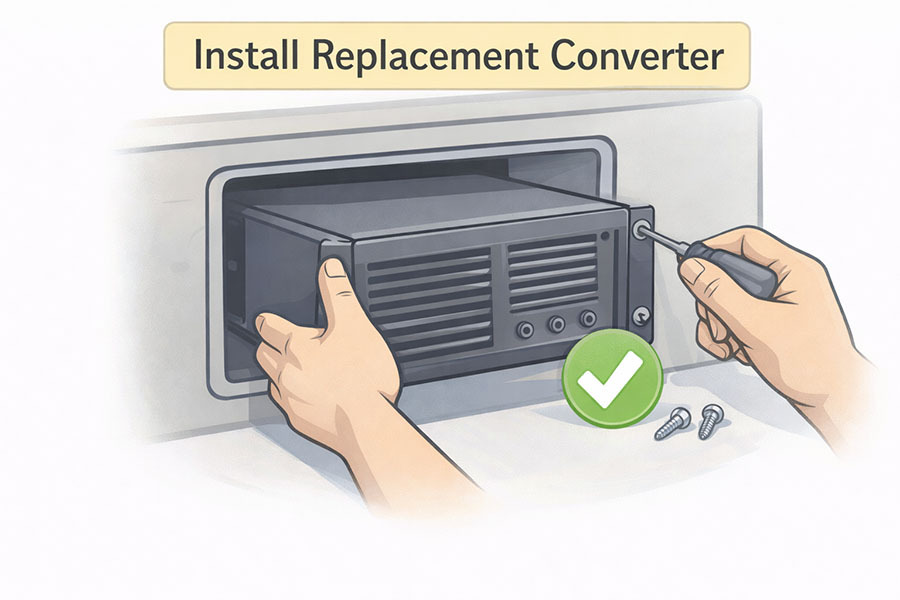
Illustrated step-by-step RV converter replacement
These visuals explain the workflow clearly without diving into risky, model-specific details.

How to choose the right replacement RV converter
Converters aren’t one-size-fits-all. The goal is to match your RV’s needs so you get stable 12V power and proper charging.
Key specs to match
- Amperage rating: Match or slightly exceed your original converter’s output (too small = weak 12V performance).
- Battery type compatibility: Lead-acid profiles vs lithium profiles (important for correct charging behavior).
- Form factor: Standalone converter vs integrated power center module.
- Multi-stage charging: Many modern converters charge better and more gently than older single-stage units.
If you’re unsure about compatibility (especially with lithium systems), it’s often worth confirming with a professional—because the “wrong” charging profile can cause frustrating performance and shorten battery life.
RV converter replacement cost (realistic ranges)
Costs vary by RV layout and whether the converter is integrated into a power center. Here are realistic ballparks most RV owners see:
Parts
- Converter unit: $150–$400 (common range)
- Higher-end / special-fit models: $400–$800+
Labor (if hiring a pro)
- Typical labor: $200–$500
- Complex electrical troubleshooting: can be higher
Pro tip: If a shop quotes “converter replacement” but you’re unsure it’s the root cause, ask what diagnostic checks they’ll perform first (battery health, fuses, charging voltage at the battery, wiring path).
Common RV converter replacement mistakes (avoid these)
- Skipping the diagnosis: A bad battery, a blown fuse, or a disconnected battery switch can look like a failed converter.
- Undersizing the converter: Too few amps can cause weak 12V performance and slow charging.
- Ignoring corrosion: Loose/corroded battery connections can stop charging even with a good converter.
- Not labeling wires: This is how “simple” jobs turn into long troubleshooting sessions.
- No surge protection: Electrical spikes can damage converters and other electronics.
OUR RECOMMENDED PRODUCT
PowerMax PM4-55A RV Converter Charger
A reliable, modern replacement converter trusted by RV owners for stable charging, quiet operation, and excellent long-term performance.
- Price range: Typically $220–$280 (varies by seller)
- High output: 55 amps for faster, more consistent battery charging
- Multi-stage charging: Better battery health vs older single-stage converters
- Quiet operation: Well-reviewed for low fan noise
- Proven reliability: One of the highest-rated RV converters in its class
Why we recommend it:
This model consistently shows up in successful DIY replacements because it delivers proper charging voltage (typically in the 13.6–14.4V range), fits many common RV setups, and has a strong track record with both weekend campers and full-timers.
Why it stands out
- Thousands of positive reviews
- Common direct replacement size
- Trusted brand in RV electrical systems
- Excellent DIY success rate
Note: Always confirm amperage, form factor, and battery compatibility before purchasing. Prices and availability may change.
FAQs
How do I know if my RV converter is charging the batteries?
Can an RV converter fail but still power some 12V items?
What’s the difference between a converter and an inverter?
Do I need a special converter for lithium batteries?
Why are my batteries still not charging after replacing the converter?
More RV electrical guides (recommended)
- RV Electrical System Problems (Pillar Hub)
- RV Hot Skin (What is it?)
- RV Battery Replacement Guide (6V vs 12V vs Lithium) (Coming soon)
- RV Shore Power Plug Burned: Causes & Fixes(Coming soon)