



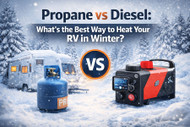
Propane vs Diesel: What’s the Best Way to Heat Your RV in Winter?
Posted by Happy Campers Store on Feb 26th 2026
Propane vs Diesel: What’s the Best Way to Heat Your RV in Winter?
Is Propane the Best Way to Heat Your RV? (East Coast Winter Edition)
Propane furnaces are standard in most RVs — but during extended snow events and sustained freezing temperatures, many experienced RVers switch strategies. In real-world winter conditions, diesel air heaters often become the primary heat source, with propane used as backup and for underbelly protection.
Short Answer: Is Propane the Best Way to Heat Your RV?
No — propane is not always the best option for extended winter camping.
Propane works well for short trips and moderate cold. But for multi-day snow events, boondocking, or sustained sub-freezing temperatures, diesel air heaters are frequently reported as more fuel-efficient, more stable overnight, and less demanding on battery systems.
Propane vs Diesel vs Electric: Winter Comparison
| Heat Option | Best For | Strength | Drawback |
|---|---|---|---|
| Propane Furnace | General winter use | Built-in, heats underbelly (in many RVs) | High propane use + battery drain |
| Diesel Air Heater | Extended cold stays | Low fuel use, steady heat | Requires install, heats interior only |
| Electric Heater | Hookups | Cheap when plugged in | High amp draw |
What East Coast RVers Report During Severe Winter Snow
Across winter storms, Nor’easters, and sustained cold snaps, experienced RVers consistently report:
- 20 lb propane tanks lasting 2–4 days in freezing conditions
- Furnace cycling all night
- Significant 12V battery drain
- Interior condensation from humid coastal air
- Cold floors and uneven heating
The common realization after the first major storm: Propane works — but it becomes expensive and stressful during prolonged cold.
If you're camping during a Nor’easter or sudden snowstorm, heating is only one part of staying safe. Review our complete RV winter storm safety guide for emergency steps, insulation tips, and cold-weather preparation strategies.
Prevent Frozen Systems During Extreme Cold
Heating your RV properly is only part of winter protection. If temperatures stay below freezing, your sewer hose and holding tanks can freeze before you realize it. Read our complete guide on what freezes first in an RV sewer system — and how to safely thaw it .
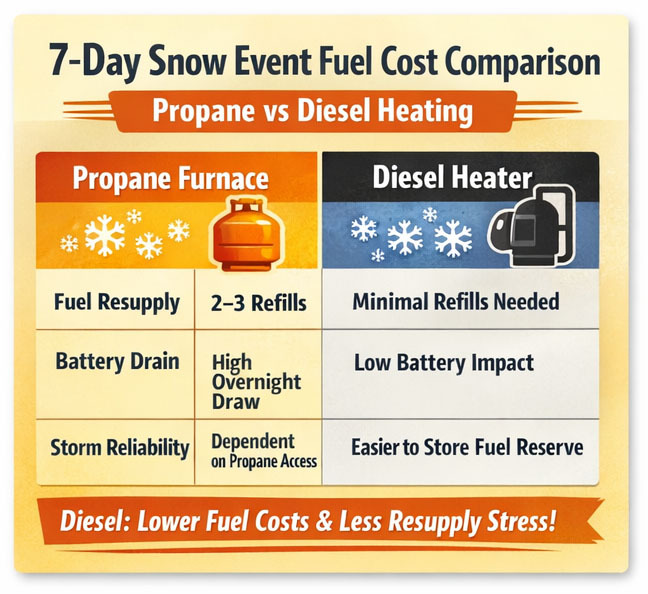
7-Day Snow Event: Propane vs Diesel Fuel Reality
Typical winter scenario:
- Highs: 25–32°F
- Lows: 10–20°F
- Wind exposure
- Heavy overnight furnace cycling
Propane During 7 Days
- 2–3 refills likely
- Storm travel for resupply
- Noticeable battery drain
Diesel During 7 Days
- Lower fuel volume consumption
- Continuous overnight heat
- Reduced battery impact
- Less resupply urgency
Moisture & Condensation: The Hidden East Coast Winter Problem
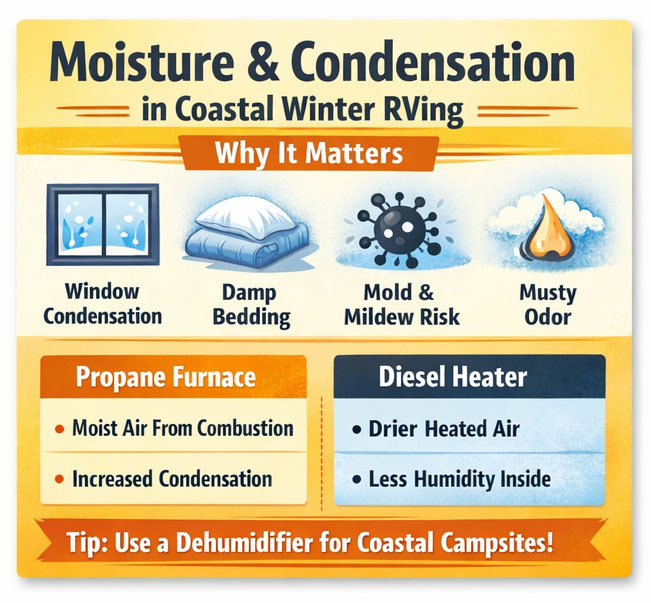
Cold + humid coastal air + heated interior surfaces = condensation buildup.
- Window dripping
- Damp bedding
- Mold risk
- Musty odor
Why Diesel Is Often Described as “Drier”
Diesel air heaters use sealed combustion and vent exhaust externally, which separates combustion from interior air. Many RVers report reduced condensation compared to heavy propane furnace cycling.
Best Real-World Winter Heating Strategy
- Primary: Diesel air heater for steady overnight warmth
- Secondary: Propane furnace for underbelly/tank protection
- Optional: Electric heater on hookups
- Add: Skirting + moisture management
Running electric heaters or diesel systems off-grid often means relying on your generator. If your generator fails in freezing weather, your heating system can quickly become compromised. Here’s our full RV generator troubleshooting and repair guide to help you diagnose issues before temperatures drop dangerously low.
Condensation Can Lead to Mold
Unmanaged winter condensation doesn’t just cause discomfort — it can lead to long-term structural issues and mold growth. Learn where mold most commonly develops and how to prevent it in our guide to mold hotspots and prevention inside RVs .
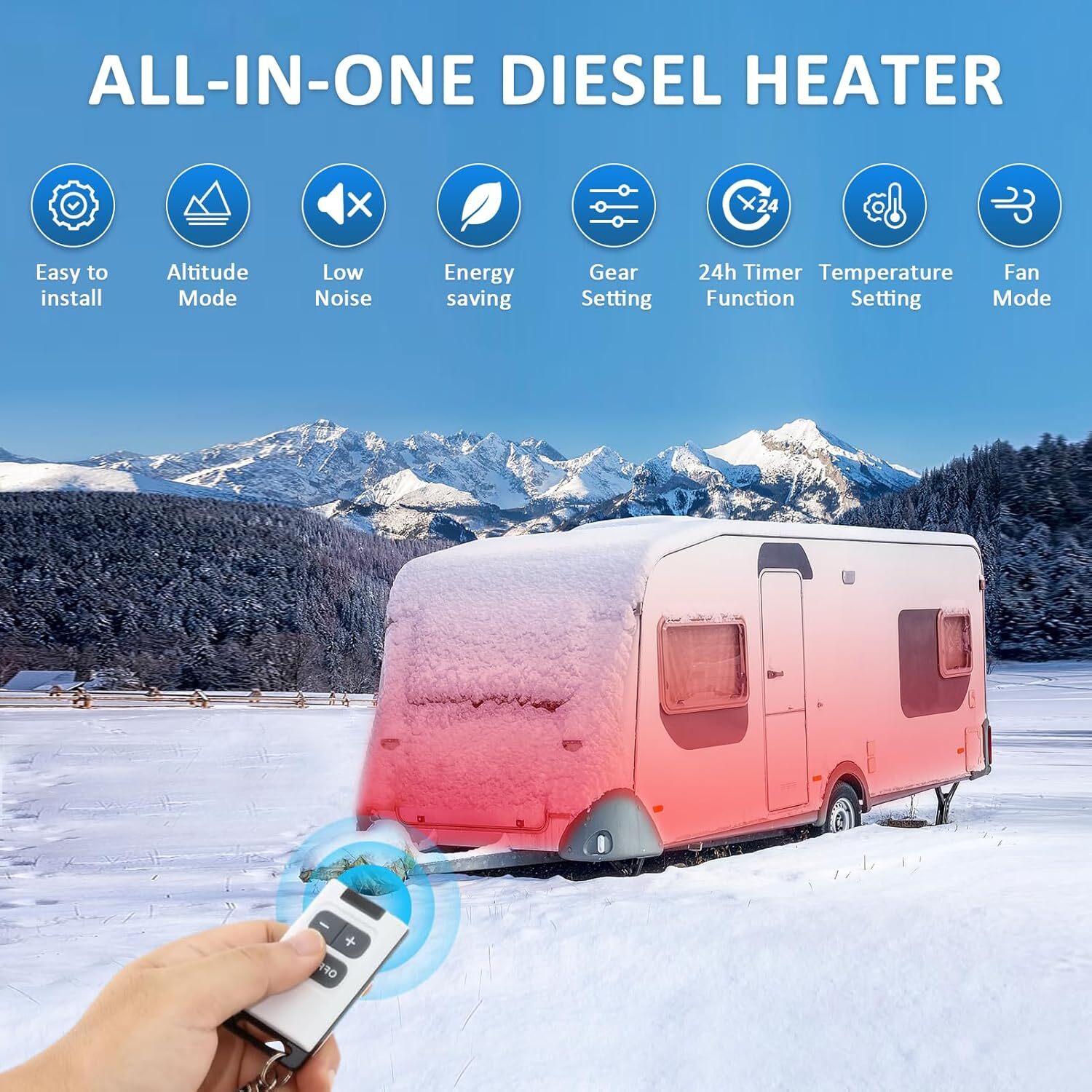
8500W Diesel Heater (12V / 24V / 110V)
High-output 8.5 kW class heater • Multi-voltage compatibility • LCD display + remote control • Designed for larger enclosed spaces
Best for larger RVs or extreme cold setups that require higher heat output and flexible power options.
View on Amazon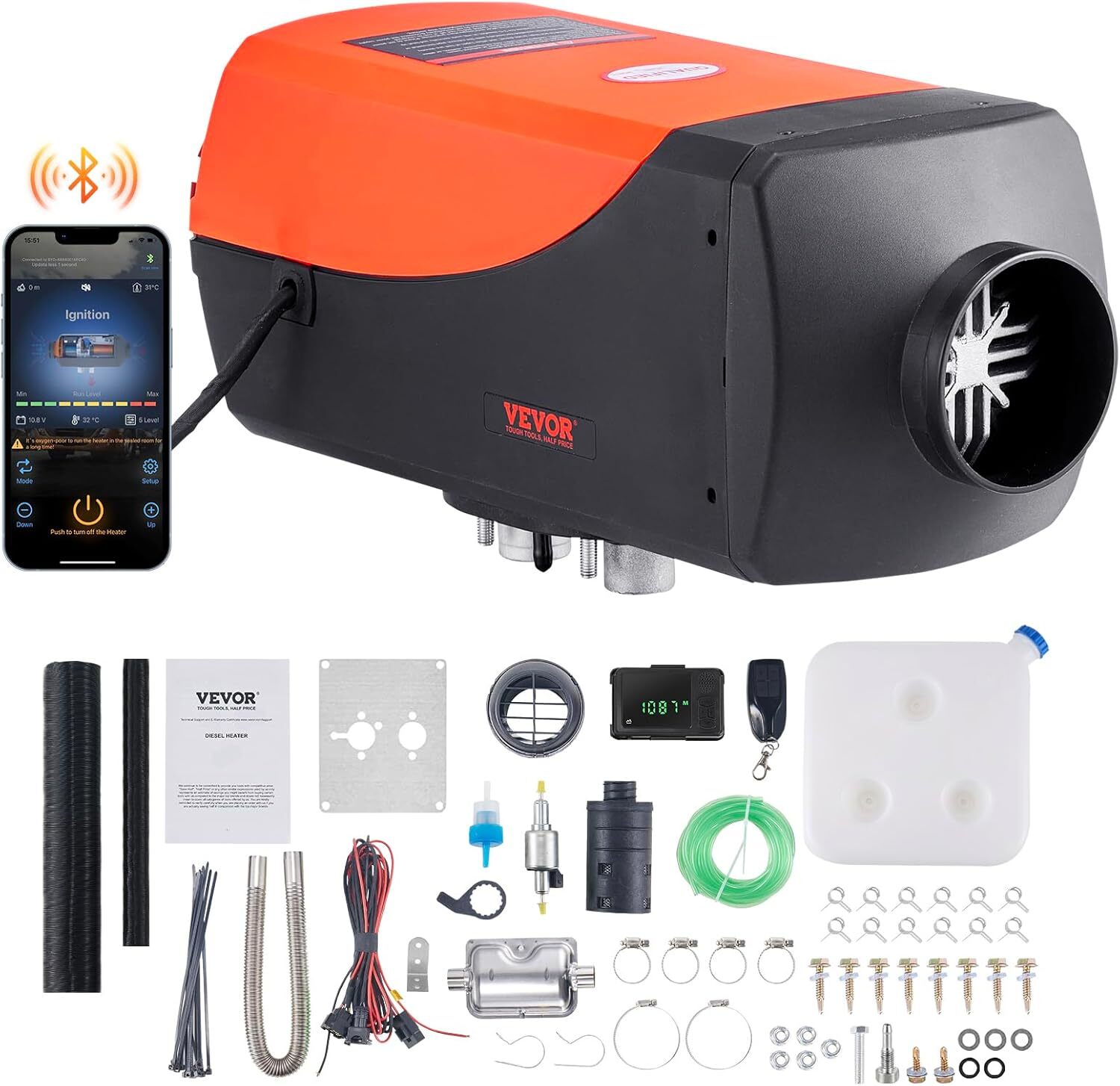
VEVOR Diesel Air Heater 12V 8KW
8 kW heating power • Bluetooth app + remote control • Rapid cabin warm-up • Compact installation footprint
Ideal for mid-sized RVs and winter boondocking setups where efficient diesel heat and smart controls are priorities.
View on Amazon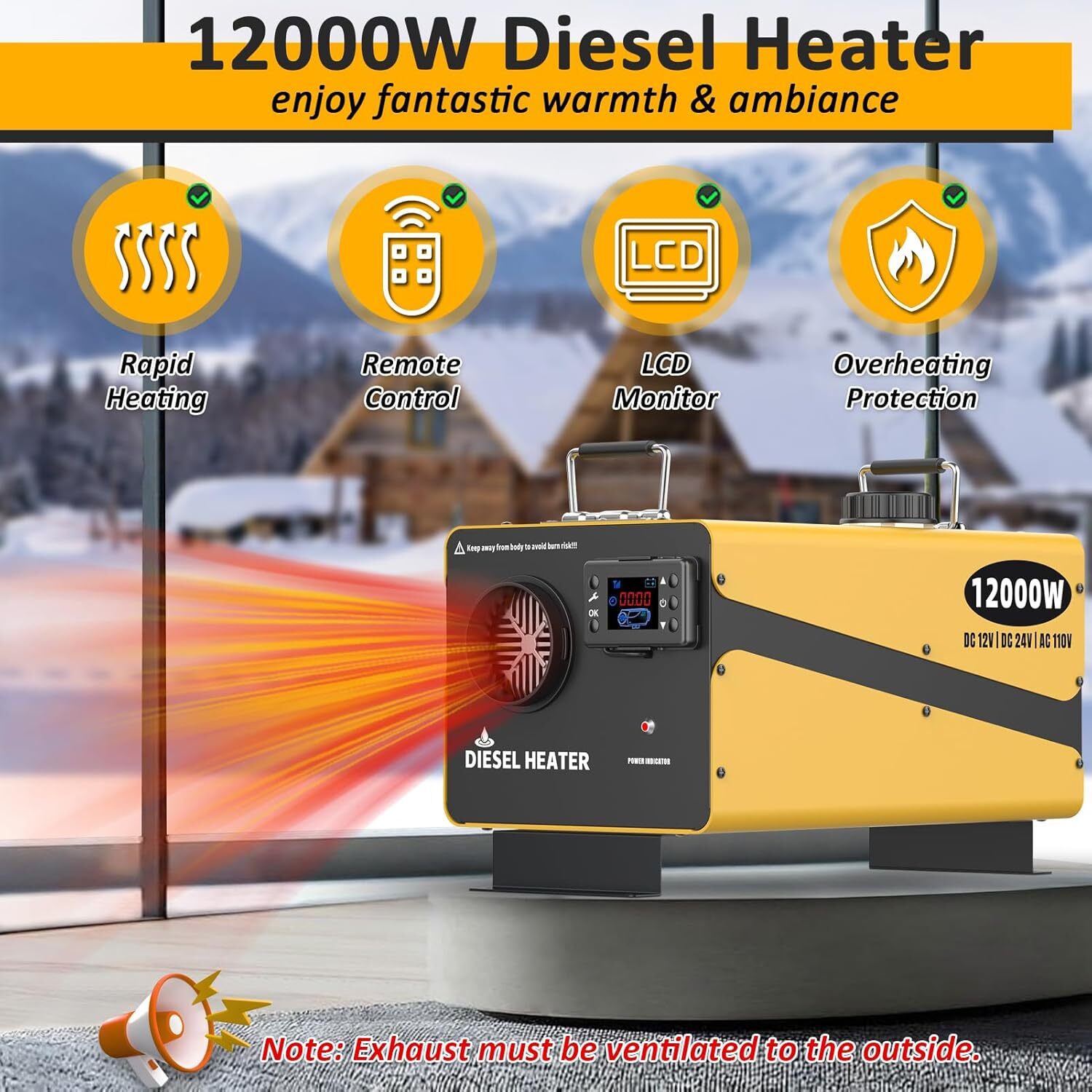
Hcalory Portable Diesel Air Heater
Adjustable 5–8 kW output • App control + altitude mode • Built-in CO alarm • Portable all-in-one design
Best for RVers who want a portable diesel heating system with built-in safety features and flexible output control.
View on Amazon