




RV “Hot Skin”: The Hidden Electrical Danger That Can Shock You Through Your RV’s Frame
Posted by Happy Campers Store on Dec 17th 2025
RV “Hot Skin”: The Hidden Electrical Danger That Can Shock You Through Your RV’s Frame
How to recognize, test for, and fix an RV hot-skin condition before someone gets shocked.
Real-life incident from an RV group
“Was trying to fix a leaking low-point drain when I noticed the frame around the area felt electrified. The water didn’t do anything at first, but as I kept working I could feel electricity running through the water onto my hand. Unless I’m missing something, this isn’t normal.”
If you ever feel a tingle, zap, or “buzz” when you touch your RV’s steps, frame, hitch, or door handle—especially when the ground is wet—that is not normal. It might be a dangerous condition called “hot skin”, where electricity is leaking onto the RV’s metal frame and exterior.
In this guide we’ll break down, in plain English:
- What RV hot skin is and why it happens
- How dangerous it really is (with real electrical safety data)
- Simple tests you can do in seconds before you touch metal parts
- Step-by-step troubleshooting to find whether the problem is your RV or the pedestal
- How to prevent hot-skin incidents with good habits and electrical protection
Quick safety note: This article is for education only. If you measure or feel any shock, unplug immediately and work with a qualified RV technician or licensed electrician.
What Is an RV “Hot Skin” Condition?
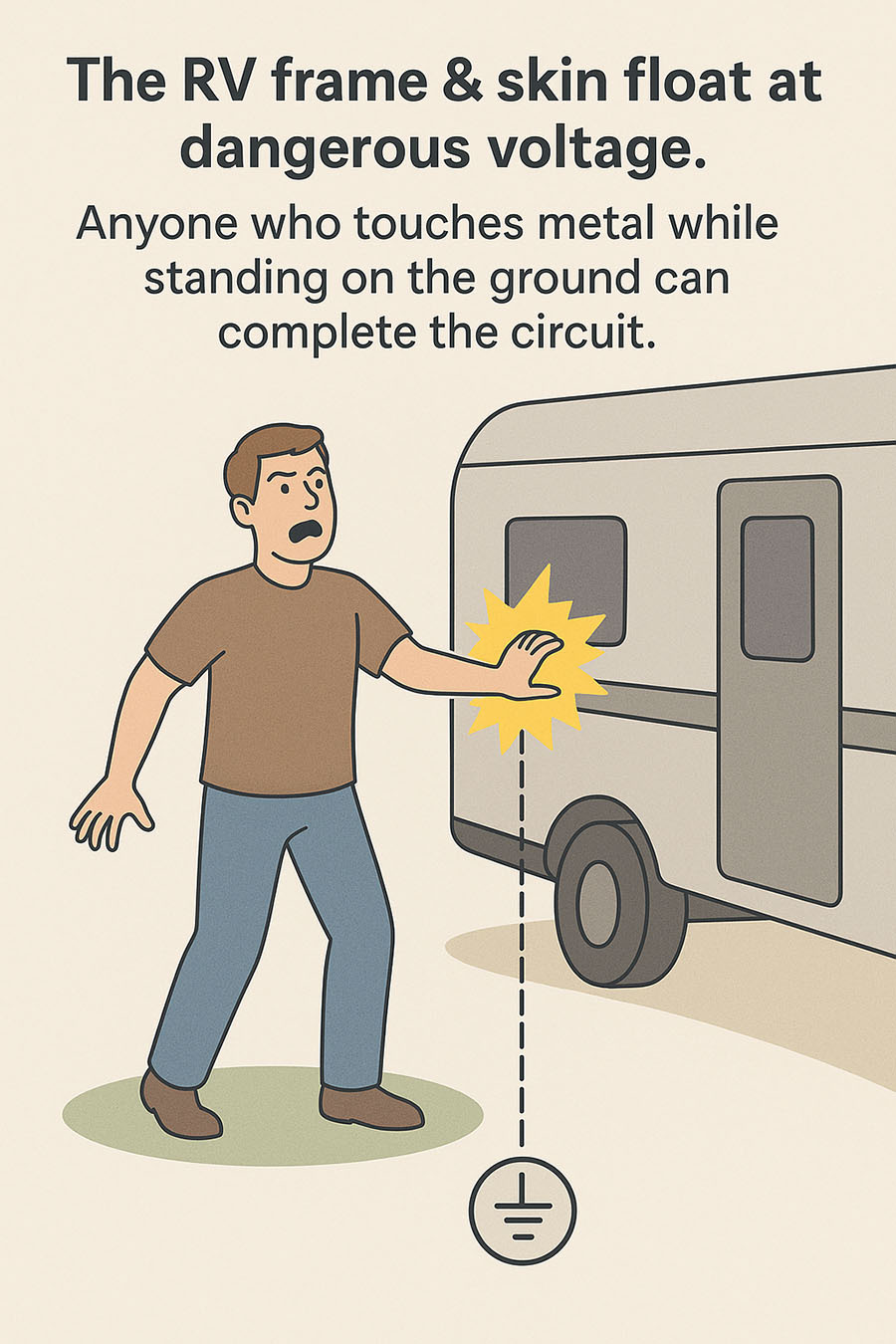
An RV has “hot skin” when its metal frame, chassis, or exterior siding becomes energized with AC voltage relative to the earth around it. In other words, electricity that should be safely contained inside wires and appliances is now sitting on the outside of your rig, waiting for a path to ground—which can be you.
RV electrical expert Mike Sokol often describes a hot-skin event as anything where the chassis measures more than a few volts above earth ground, with readings above about 30 volts considered potentially lethal. Even lower voltages can be dangerous in wet conditions or for kids and pets.
Normal RV
- Shore power hot & neutral carry current.
- Ground wire (EGC) is intact and bonded at the service panel.
- RV frame is at the same voltage as earth (0V difference).
Touching the frame or steps is safe; there is no stray voltage trying to reach the ground through your body.
Hot-Skin RV
- A fault lets live voltage touch the RV frame.
- The safety ground is missing, broken, or compromised.
- The frame floats at 20–120+ volts above earth.
If you touch the frame while standing on the ground (especially wet ground), your body can become the path to earth.
What Causes an RV’s Frame to Become Electrified?
A hot-skin condition always involves two things happening at once:
- A fault that lets live voltage leak onto the chassis or skin.
- A missing, broken, or high-resistance safety ground connection.
Common real-world causes include:
- Damaged shore-power cord or plug (melted blades, cracked insulation, pinched cable).
- Loose, corroded, or broken ground (EGC) connection inside the RV or at the pedestal.
- Miswired power pedestal at the campground (open ground, shared neutrals, other code violations).
- Internal wiring defects such as a screw through a cable or a hot wire rubbing against the frame.
- Failed appliance (water heater, fridge, AC, converter) leaking voltage to its metal case, which is bonded to the chassis.
- DIY electrical work that bypasses or misconnects grounds and neutrals.
How Dangerous Is an RV Hot-Skin Condition Really?
Electricity doesn’t care that you’re “just camping.” It only cares about voltage, current, and the path it can take.
Safety organizations and electrical studies show that very small currents can cause serious injury:
- 1 mA: faint tingle for most people.
- 5 mA: painful shock; most people can still let go.
- 10–20 mA: muscles can seize, making it hard or impossible to let go or swim.
- 30+ mA: can cause respiratory arrest and dangerous heart rhythm problems.
- 50–100 mA: can trigger ventricular fibrillation (often fatal without immediate defibrillation).
In fresh water or on wet ground, your body’s resistance drops, so it doesn’t take a huge voltage to push that much current through you. Many documented hot-skin RVs have measured 40, 60, even 120 volts between the frame and earth.
Bottom line: if you feel any tingle from your RV, treat it as an emergency. A child with bare feet or a wet dog stepping off the ground onto an electrified step could pay the price.
How to Test Your RV for Hot-Skin in Seconds
You don’t need fancy gear to catch most hot-skin problems. Two simple tools cover 99% of situations:
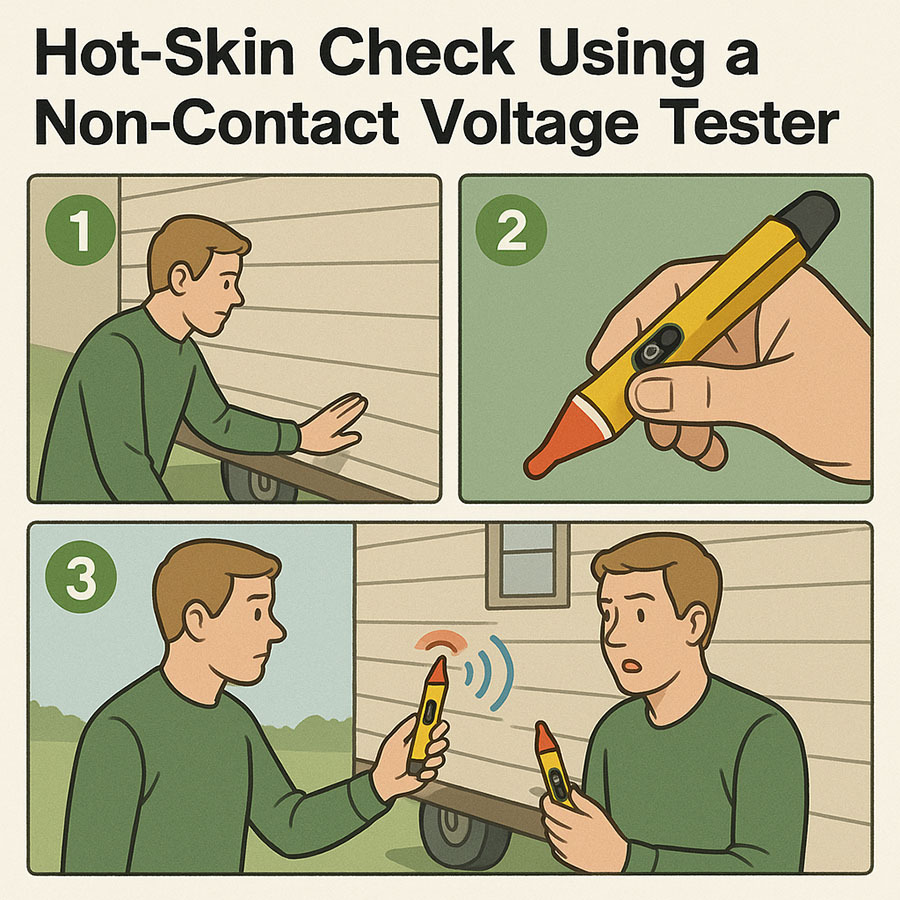
- Non-contact voltage tester (NCVT): a pen-style tester that lights up or beeps near live AC voltage.
- Digital multimeter (DMM): lets you measure how many volts are on the skin relative to earth.
Quick Hot-Skin Check Using a Non-Contact Voltage Tester
- Plug your RV into shore power as usual.
- Turn on the NCVT and verify it works by testing a known live outlet first.
- Hold the tester tip against:
- Entry steps
- Door frame
- Hitch or pin box
- Stabilizer jacks
- Any exposed frame steel
- If the tester lights up or beeps on any of these parts, you likely have voltage on the skin.
- Immediately unplug shore power and follow the troubleshooting steps below.
Measuring Hot-Skin Voltage with a Multimeter
For a more precise check, use a digital multimeter on AC volts:
- Set the meter to AC volts (at least a 200V range).
- Push the black probe into the damp earth or touch a known good ground rod or metal water pipe.
- Touch the red probe to a bare metal part of the RV frame.
- Read the voltage:
- 0–2V: typically normal background noise.
- 5–10V: warning sign — start investigating.
- 10V+: treat as a hot-skin condition; unplug and troubleshoot.
Some RV techs consider anything above about 5 volts relative to earth a problem; others use 10 volts as the “red line.” Either way, if you see double digits, it’s time to stop using that hookup until you find the source.
Step-by-Step: Is It the Campground or Your RV?
Once you’ve confirmed there’s voltage on the skin, the big question is: where is it coming from? Here’s a simple decision tree:
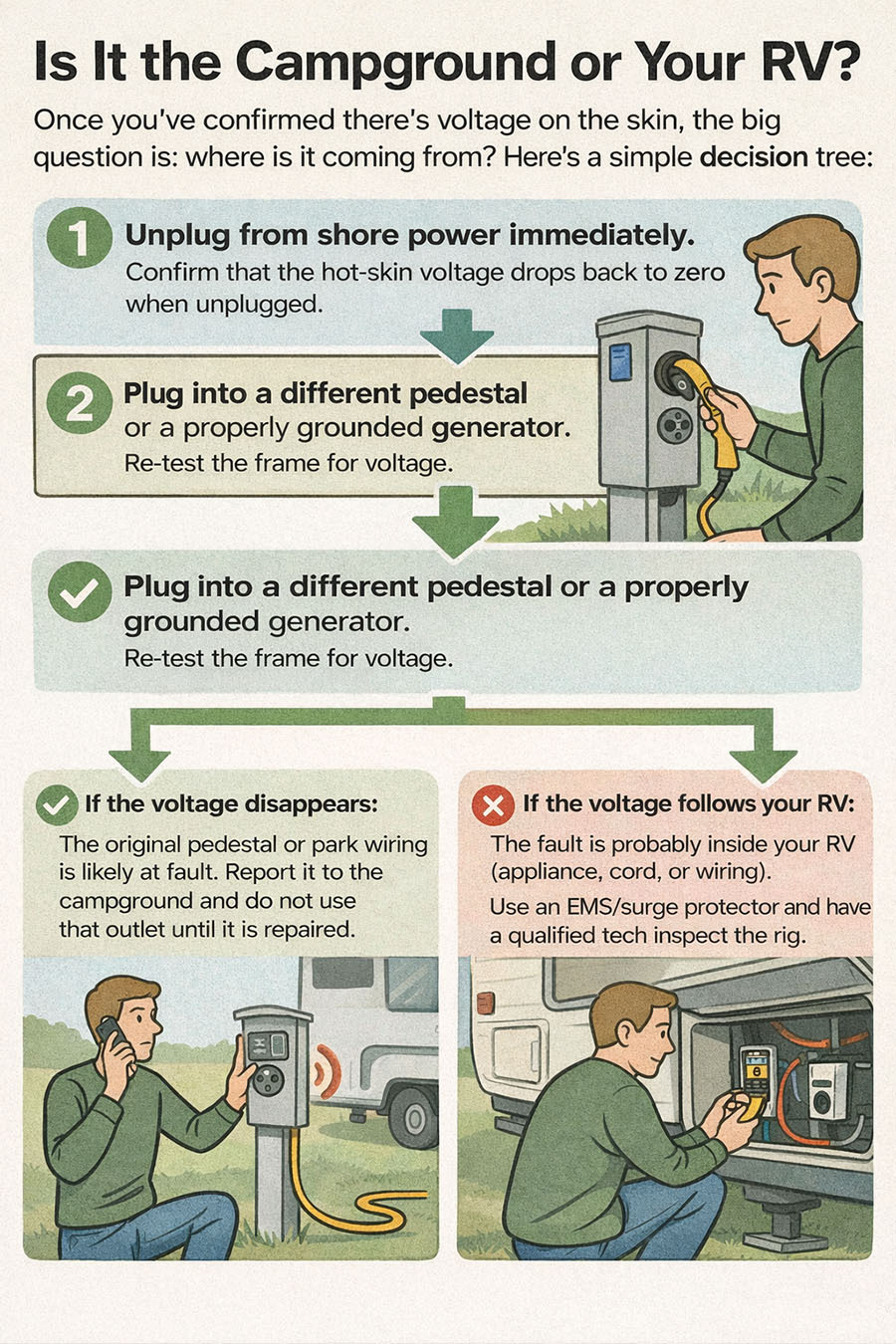
Confirm that the hot-skin voltage drops back to zero when unplugged.
Re-test the frame for voltage.
The original pedestal or park wiring is likely at fault. Report it to the campground and do not use that outlet until it is repaired.
The fault is probably inside your RV (appliance, cord, or wiring). Use an EMS/surge protector and have a qualified tech inspect the rig.
If multiple RVs on the same row all show similar low-level voltage on their frames, that points strongly to park wiring issues. In that case, unplug and consider relocating sites or campgrounds.
Likely Fault Points Inside the RV
- Shore power inlet and cord (burned blades, loose connections).
- Transfer switch or power distribution panel.
- Converter/charger or inverter with internal fault.
- Water heater, refrigerator, or air conditioner with a short to its metal case.
- Pinched or rubbed wires where they pass through frame members.
If you’re not 100% comfortable working in electrical panels, this is the point to involve a licensed electrician or RV electrical specialist.
How to Prevent RV Hot-Skin Incidents
You can’t see electricity, but you can stack the deck heavily in your favor with a few habits and pieces of gear:
- Use an electrical management system (EMS) surge protector at every hookup. A good EMS checks for open ground, open neutral, reverse polarity, high/low voltage, and other campground wiring issues before it lets power into your rig.
- Inspect your shore power cord regularly. Replace any cord with burned blades, soft spots, severe kinks, or cracked insulation.
- Do a 10-second hot-skin test when you arrive. Before kids or pets are running around, test the steps and frame with an NCVT.
- Keep water away from cords and connections. Use drip loops, keep connections off the ground, and avoid letting standing water surround your pedestal.
- Don’t defeat safety devices. Never bypass GFCI outlets, remove EMS units because they “keep tripping,” or rely on cheater plugs that defeat grounds.
- Have your RV’s electrical system inspected periodically. Especially if you own an older rig, bought used, or know there have been DIY modifications.
Want help choosing protective gear? Check out our step-by-step comparison in The Ultimate RV Surge Protector Buyer’s Guide (2025).
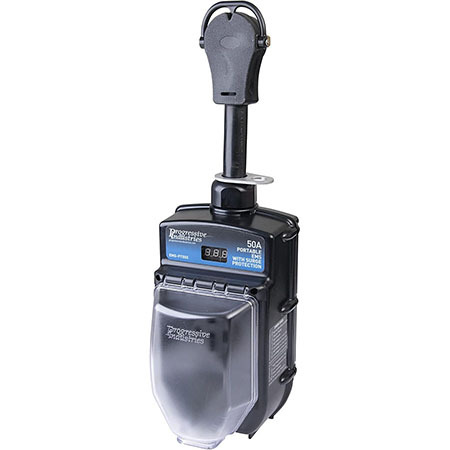
RV EMS / Surge Protector (30A or 50A)
Look for a full-featured EMS that checks for open ground, open neutral, reverse polarity, high/low voltage, and surge events before it allows power into your RV.
- Protects against miswired pedestals
- Automatically disconnects on unsafe voltage
- Digital display to show error codes and line voltage
Printable Arrival Checklist: Hot-Skin & Electrical Safety
Screenshot or print this checklist and keep it by your RV’s control panel. It’s a quick reminder of things to check before you plug in and step onto the metal steps.
RV Electrical Safety Arrival Checklist
- Visually inspect pedestal (no obvious damage, standing water, or melted outlets).
- Plug your EMS surge protector into the pedestal and verify indicator lights are good.
- Only after EMS shows OK, plug your RV’s shore power cord into the EMS.
- Verify main breakers are on and there are no unusual sounds or smells.
- Use a non-contact voltage tester on:
- Entry steps
- Door frame and handle
- Hitch or pin box
- Stabilizers / jacks
- If the tester alarms on any metal part, unplug immediately and troubleshoot.
- Have kids and pets wait until you’ve done the hot-skin test.
- Re-test after heavy rain or if you move sites.
Common Hot-Skin Myths (That Can Get Campers Hurt)
- “It’s just a little tingle, no big deal.”
That “little tingle” means current is already flowing through you. Someone smaller, barefoot, or standing in a puddle might get much more. - “If the breaker didn’t trip, everything is safe.”
Breakers are designed to protect wires, not people. Hot-skin faults are often high-resistance leaks that won’t trip a breaker. - “I’ve always used this cord and adapter; they’re fine.”
Cords age. Connections loosen. What was safe five years ago might not be safe now. - “The campground said their power is okay, so the problem must be my RV.”
Maybe. Maybe not. Many parks have older wiring or mystery modifications. Trust your test equipment more than someone’s opinion. - “Hot-skin only happens on junky old rigs.”
New RVs can have wiring defects, damaged cords, or faulty appliances too. The voltage doesn’t care what year your rig is.
When to Stop Troubleshooting and Call a Professional
Electrical problems are one area where “winging it” is not worth the risk. Bring in a qualified RV technician or licensed electrician if:
- You measure more than about 5–10 volts between the chassis and earth and can’t immediately identify a simple external cause.
- A hot-skin condition keeps returning, even after moving sites or replacing cords.
- You see scorch marks, melted plastic, or smell “hot electrical” around cords, inlets, or panels.
- You’re not confident working inside electrical panels or diagnosing faults.
- Anyone has already been shocked, even briefly.
Explain that you suspect a hot-skin condition and share the voltage readings you measured at the frame. A good tech will know exactly where to start.
RV Hot-Skin FAQ
Can a leaking low-point drain or water line cause an electrical shock?
The water itself usually isn’t the source of the electricity; it just becomes a better conductor. If the surrounding frame or ground is energized, water pouring over your hand or feet can make the shock more noticeable and more dangerous.
Will a standard household surge protector protect against hot-skin voltage?
Not reliably. Basic surge strips are designed mainly for voltage spikes, not miswired pedestals or missing grounds. An RV-specific EMS surge protector is what you need to catch open ground, open neutral, and other wiring faults.
If my rig is on 12-volt battery only (no shore power), can I still have hot skin?
Pure 12-volt systems rarely cause classic hot-skin conditions, but if you’re running an inverter or connected to a generator, it’s still possible to energize the frame. When in doubt, test.
Should I drive an RV that has had a hot-skin problem?
Driving isn’t the issue; plugging in is. Once a qualified tech finds and fixes the fault and you’ve verified safe readings at multiple campsites, the RV can be used normally again.
Is barefoot camping near the RV a bad idea?
Bare feet on wet ground dramatically lower your resistance, which increases the current that can flow through your body if you touch energized metal. It’s one more reason to test for hot-skin at every new site and use proper protection.
No camper plans on dealing with stray voltage or electrical shocks when they head out for a relaxing trip. But just like checking your tire pressure and your LP system, doing a quick hot-skin check can quietly keep your family safe in the background.
Share this guide with friends who RV, and consider adding an NCVT and EMS surge protector to your standard packing list. It’s a small price to pay to make sure the only thing shocking about your camping trip is the view.