




RV Sewer Hose & Holding Tank Freezing: What Breaks First, What Not to Do, and How to Safely Thaw Things Out
Posted by Happy Campers Store on Feb 3rd 2026
RV Sewer Hose & Holding Tank Freezing: What Breaks First, What Not to Do, and How to Safely Thaw Things Out
Updated for severe winter cold snaps • RV winter plumbing safety
Extreme cold doesn’t just freeze RV sewer hoses—it cracks plastic fittings, locks valves, and can even freeze holding tanks. This guide explains why it’s happening (even to experienced RVers), what parts fail first, what not to do when things freeze, and how to safely thaw a frozen RV sewer system without causing costly damage.
Freezing conditions don’t just affect hoses and valves — they also influence how different RV holding tank treatment mechanisms perform. Biologically dependent systems can slow dramatically in low temperatures, while other approaches are less governed by metabolic activity. We examine these environmental sensitivity differences in our RV holding tank treatment scientific comparison whitepaper .
Quick winter takeaways
- Most freezes start at plastic connectors and low spots, not inside the tank.
- Leaving valves open in freezing weather often makes things worse.
- RV antifreeze can freeze, but it doesn’t expand like water.
- Most damage happens during rushed thaw attempts—not during the freeze itself.
Why This Is Happening So Much Right Now
Prolonged cold snaps—not just overnight freezes—are responsible for most winter RV sewer failures. Even when the RV interior is warm, sewer hoses, fittings, and campground connections remain fully exposed to wind and freezing air beneath the rig.
- Wind chill strips heat from hoses and fittings
- Rigid plastic becomes brittle before it visibly freezes
- Standing liquid in elbows or low spots freezes first
- Trickle flow from open valves creates ice dams
Live Winter Storm Tracker (Check Conditions Before Moving)
Use the interactive map on our severe winter storm advisory post to view real-time snow cover, freezing precipitation, wind, and temperature conditions.
The Weak Points That Freeze and Break First
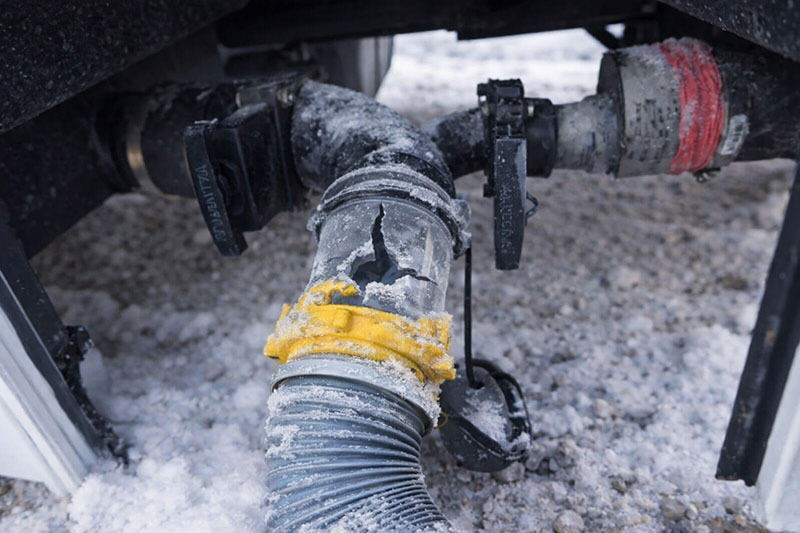
1. RV Waste Outlet & Termination Valve
Trapped liquid between the valve and cap can freeze solid, damaging seals or cracking fittings once temperatures rise.
2. Plastic Sewer Elbows (Especially Clear Elbows)
Clear plastic elbows trap liquid, sit low, and become brittle in cold weather. They frequently crack from minor movement while frozen.
3. Campground Sewer Inlet & Adapter Connections
The campground side is often colder than the RV itself. Thin adapters and exposed fittings freeze and crack here first.
4. Sewer Hose Low Spots
Any sag becomes a liquid trap. Once frozen, it creates an ice plug that blocks flow back toward the tank.
Yes—Holding Tanks Can Freeze Too
Black and gray tanks can freeze when the underbelly is exposed, the wet bay is unheated, or the furnace isn’t warming the tank area.
- Slow or incomplete dumping
- Frozen valve handles
- Gray tank backing up into the shower
- Ice buildup in roof vent stacks causing odor or pressure issues
Does RV Antifreeze Freeze? Yes—and That’s Normal
RV antifreeze prevents burst damage, not freezing. It may turn slushy, but it does not expand.
What NOT to Do If Your RV Sewer System Is Frozen
- Do NOT pour boiling water on frozen hoses or fittings
- Do NOT force frozen valve handles
- Do NOT yank, bend, or kick frozen hoses
- Do NOT use open flame or propane heaters
- Do NOT rely on RV antifreeze to “unfreeze” a blockage
- Do NOT leave black tank valves open in freezing weather
How to Safely Thaw a Frozen RV Sewer Hose, Valve, or Tank
Step 1: Identify Where It’s Frozen
Determine whether the freeze is in the hose, elbow, valve, or tank before applying heat.
Step 2: Thaw Slowly With Gentle Heat
Use lukewarm water applied gradually to the outside, or move removable components to a warmer area.
Step 3: Thaw From the RV Outward
Start at the termination outlet and work toward the campground inlet.
Step 4: Expect Partial Flow First
Dribbles or slow flow usually appear before full drainage.
Step 5: Inspect Everything After Thawing
Check for hairline cracks or leaks once flow returns.
How Long Does Thawing Usually Take?
- Frozen hose or elbow: 2–12 hours
- Frozen termination valve: 4–24 hours
- Frozen holding tank or valve blade: 12–48+ hours
Can You Use the Toilet While Things Are Frozen?
- Generally safe: Light use if tanks and outlets are not frozen
- Use caution: If drainage is slow or inconsistent
- Avoid use: If waste is backing up or tanks are frozen
Freeze Risk Reduction Checklist
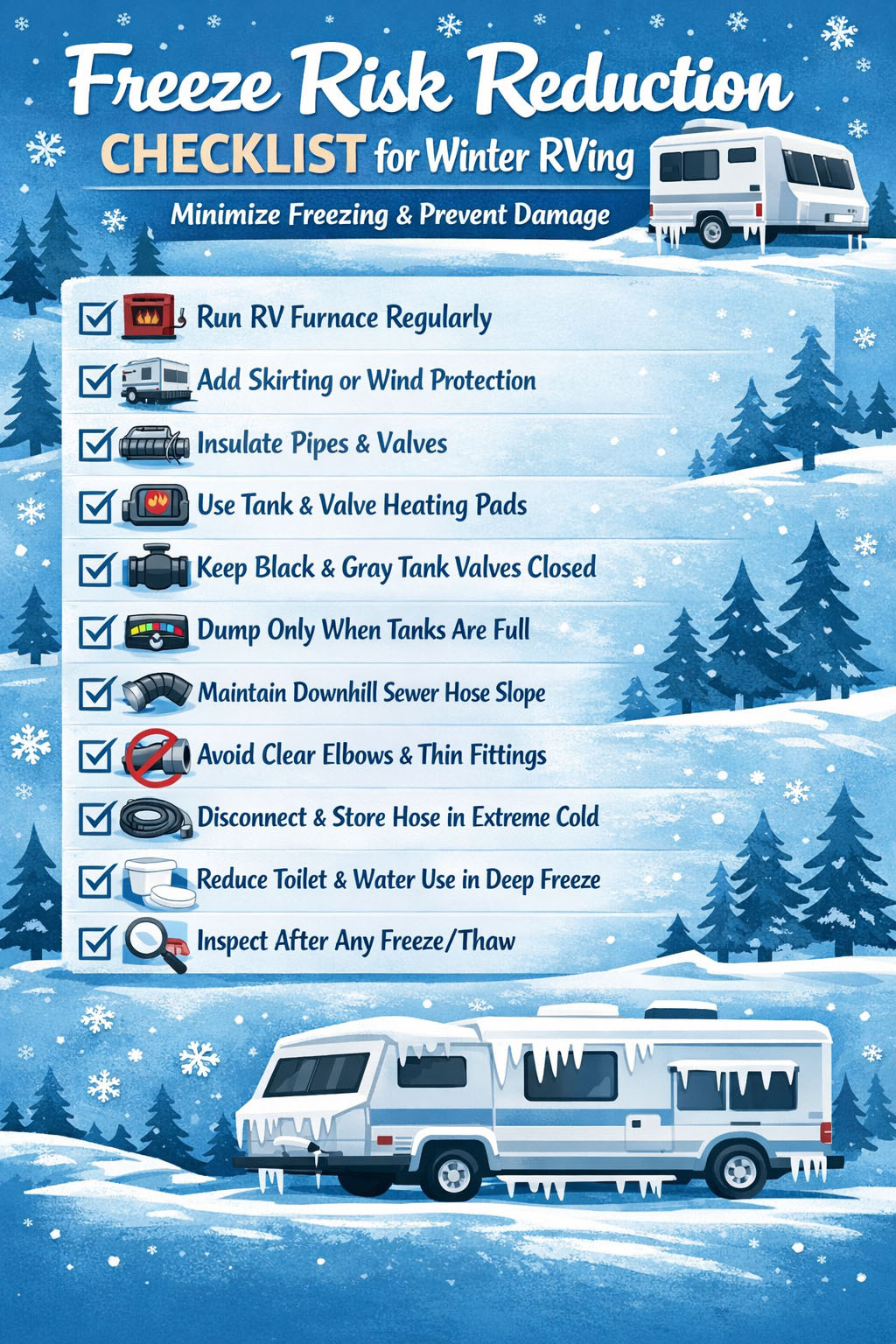
- Run the RV furnace regularly
- Add skirting or wind protection
- Insulate exposed pipes and valves
- Use tank and valve heating pads
- Keep black and gray tank valves closed
- Dump only when tanks are mostly full
- Maintain downhill sewer hose slope
- Avoid clear elbows and thin fittings
- Insulate near the campground inlet
- Disconnect hose between dumps in extreme cold
- Reduce water and toilet use during deep freezes
- Inspect connections after any freeze or thaw
Top 10 Products for Living in Your RV During Freezing Weather
Happy Campers Holding Tank Treatment
Shop Happy CampersRV Tank Heater Pads
View UltraHeat PadsHeated RV Water Hose
Shop Heated HosesRV / Marine Antifreeze
Shop RV AntifreezeRV Skirting (AirSkirts)
Shop RV Air SkirtsFoam Pipe Insulation
Shop RV Pipe InsulationWinter RV Freezing Myths
Myth: RV antifreeze won’t freeze.
Reality: It can freeze—but doesn’t expand.
Myth: Leaving the black tank open prevents freezing.
Reality: Trickle flow freezes faster.