



RV Winter Storm Safety: What to Do If You’re Caught in Snow, Ice, or Extreme Cold
Posted by Happy Campers Store on Jan 27th 2026
Deadly Winter Storm Underway: What to Do If You’re Caught in Severe Weather in Your RV
A major and deadly winter storm is actively impacting large portions of the United States, bringing heavy snow, damaging ice, extreme cold, and widespread power outages across Texas, the Midwest, and the East Coast. As of the latest reports, at least 18 people have died in storm-related incidents, with conditions continuing to deteriorate in some regions.
For RV travelers, this is not routine winter weather. Road closures, ice storms, sub-freezing temperatures, and extended power outages are creating dangerous conditions that can overwhelm both vehicles and onboard systems. If you are traveling, parked, or unexpectedly stuck in your RV, the guidance below focuses on real-time decision making, safety, and lessons from RVers already riding out this storm.
Sources: ABC News, The Weather Channel, The Guardian
- 24% of weather-related vehicle crashes occur on snowy, slushy, or icy pavement — FHWA
- On icy or snowy pavement, 1,300+ people are killed and 116,800+ injured annually — FHWA
- Stopping distances increase 2–6× on snow and ice — NWS / NOAA
- In 2023, 101,390 crashes occurred during snow or sleet — NHTSA
RV note: RV-specific winter crash data is limited, but these federal statistics explain why RVs and trailers face higher risk when traction and stopping distance degrade.
Live Winter Storm Tracker (Check Conditions Before Moving)
Use the interactive map below to view real-time snow cover, freezing precipitation, wind, and temperature conditions.
Official alerts: National Weather Service (NOAA)
Continuous coverage: The Weather Channel – Winter Storm Center
Storm Severity Update (Why This Matters)
- 18+ confirmed storm-related deaths across multiple states
- 800,000+ power outages reported due to ice and downed lines
- Dangerous ice accumulation reported in parts of Texas and the South
- Heavy snow and extreme cold impacting the Midwest and Northeast
- Road closures, flight cancellations, and emergency declarations ongoing
Sources: ABC News, The Guardian
First Decision: Stay Put or Keep Moving?
During severe winter storms involving ice and extreme cold, attempting to “push through” is one of the most dangerous choices RV travelers can make. RVs are heavy, have long stopping distances, and are especially vulnerable to black ice and sudden road closures.
- If roads are icing or refreezing, stay parked
- Stop early before fuel stations and exits become inaccessible
- Avoid overnight driving when temperatures drop further
- Choose locations sheltered from wind when possible
In many cases, staying put for 24–72 hours is significantly safer than risking travel.
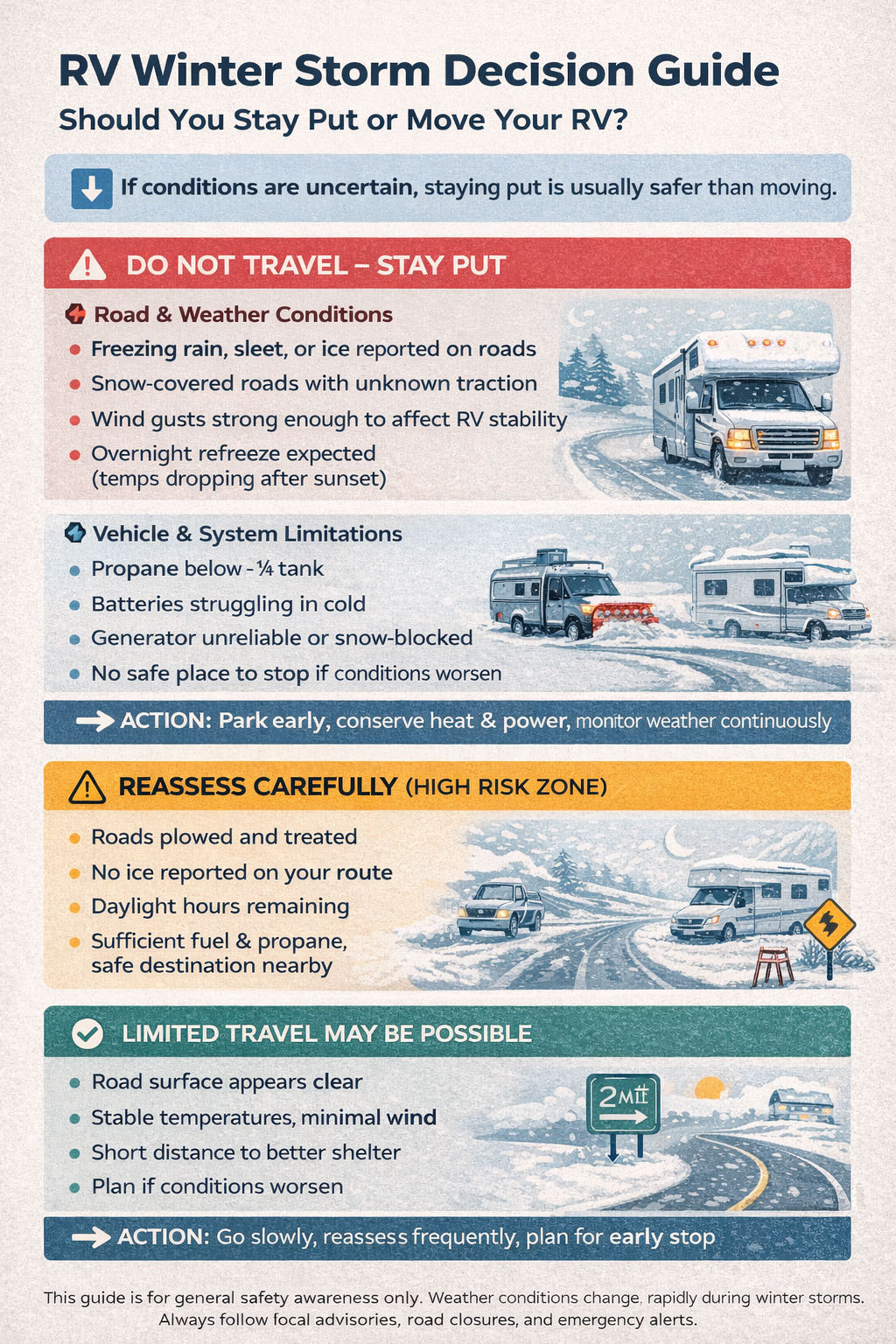
Help other RVers stay safe. You may share this infographic with attribution.
Please link back if you repost or reference this guide.
Heat, Power, and Propane: The Biggest RV Risks Right Now
- Monitor propane levels closely
- Close off unused areas to conserve heat
- Reduce unnecessary electrical loads
- Clear snow from furnace, generator, and exhaust vents
Water, Plumbing, and Waste During a Hard Freeze
- Disconnect and store fresh water hoses
- Run from onboard tanks instead of city connections
- Avoid dumping tanks until temperatures rise above freezing
- Keep interior cabinet doors open to allow warm air circulation
What RVers Are Experiencing Right Now
Reddit – r/RVLiving winter storm discussion
Instagram RV winter storm reel
Final Thoughts
This storm has already proven deadly and disruptive. RV travel during severe winter weather requires patience, restraint, and a willingness to delay plans. The safest decision is often staying put until conditions genuinely improve.
Repeated freeze–thaw cycles can create unpredictable tank conditions, affecting hydration levels and biological efficiency. Our mechanism-based RV tank treatment effectiveness study explores how temperature variability influences system stability inside real-world holding tanks.
Use live weather tools, follow official alerts, and learn from RVers already navigating these conditions. Your safety matters more than making miles.