




WTF Is Going On With Campground Prices in 2026?
Posted by Happy Campers Store on Feb 19th 2026
WTF Is Going On With Campground Prices in 2026?
Why RV Park Fees Are Rising — And What RVers Can Actually Do About It
Updated: February 2026 • Camping costs • RV budgeting
Fast Takeaways
- Prices are rising most in peak-season and destination markets.
- Major drivers include demand, utilities/infrastructure, labor, taxes/insurance, and modern pricing models.
- You can’t control rates — but you can control when/where you stay and how self-sufficient your setup is.
Scroll through any RV Facebook group and you’ll see it:
- “$95 a night for full hookups?!”
- “When did state parks hit $45+?”
- “RVing isn’t affordable anymore.”
Campground prices feel like they’ve exploded. In many areas, they have — especially in high-demand travel corridors, national park gateways, and winter “snowbird” regions. But the story isn’t just “greed.” It’s a mix of demand, operating costs, and how the campground market has evolved.
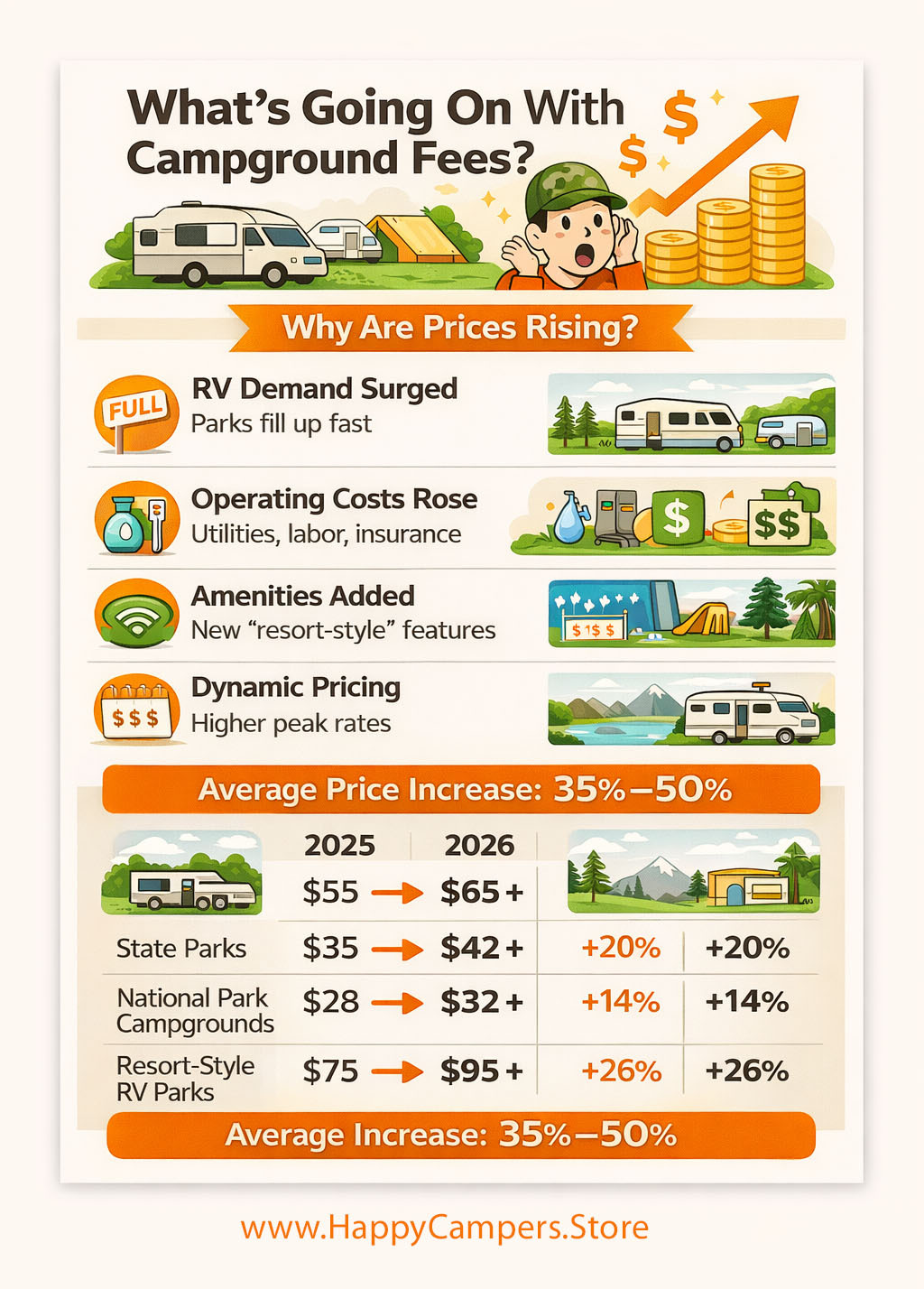
Campground Price Comparison: 2025 vs 2026
Below are representative nationwide averages (actual prices vary by region, season, and amenities). Use this as a directional comparison to show why so many RVers are experiencing “sticker shock.”
| Category | 2025 Avg | 2026 Avg | Change |
|---|---|---|---|
| Private RV Parks | $55 | $65 | +18% |
| State Parks | $35 | $42 | +20% |
| National Park Campgrounds | $28 | $32 | +14% |
| Resort-Style RV Parks | $75 | $95 | +26% |
| Snowbird Destinations (AZ/FL peak) | $85 | $110 | +29% |
What this shows: Destination markets and “resort” parks are rising fastest. Public parks remain more affordable, but increases are still noticeable — especially during peak season.
The Bigger Picture: Pre-2020 vs Today
A lot of the frustration comes from how fast the “old normal” disappeared. Here’s a simple way to see the change:
| Year | Avg Private RV Park Rate |
|---|---|
| 2018 | $38–$45 |
| 2020 | $45–$55 |
| 2023 | $55–$65 |
| 2026 | $65–$85+ (destination markets higher) |
Why Campground Prices Are Rising So Fast
? Share This Infographic
Feel free to share this infographic on your blog, Pinterest, or social media. Please include the attribution link below.
Attribution Link:
Embed Code:
Thank you for linking back to the original article.
There isn’t one cause — it’s a stack of pressures hitting the same market at once.
1) Demand surged, but campground supply didn’t
RVing attracted millions of new travelers, and many popular areas now sell out months in advance. When sites are consistently full, prices rise. Permitting and building new parks is slow, expensive, and often blocked by zoning.
2) Labor costs are higher
Parks rely on seasonal and full-time staff for maintenance, groundskeeping, office operations, and cleaning. Wage increases, staffing shortages, payroll taxes, and insurance costs all raise operating expenses.
3) Utilities and infrastructure are expensive
Full hookups aren’t cheap to provide. Power upgrades, water systems, sewer lines, and ongoing compliance add major costs — especially as many parks upgrade from older infrastructure to support modern rigs.
4) Modern ownership and pricing models
More parks are using hotel-style pricing: peak-season premiums, midweek vs weekend spreads, and “best sites cost more.” Some parks also changed ownership, which can bring new revenue strategies.
5) Booking platforms and added fees
Reservation systems can add transaction fees, cancellation penalties, and “convenience” charges. Sometimes it feels like the campground raised prices — when part of the increase is the booking layer on top.
6) Property taxes, insurance, and land values
In many areas, land values and property taxes increased significantly, and insurance costs are up across the board. Those increases eventually show up in nightly rates.
Where Your $90 Night Actually Goes
Every park is different, but this simplified example helps explain why nightly rates can climb even when owners aren’t “getting rich.”
| Cost Category | Approx Share |
|---|---|
| Utilities & Infrastructure | 20–30% |
| Labor | 20–25% |
| Property taxes | 10–15% |
| Debt / mortgage | 10–20% |
| Admin & booking systems | 5–10% |
| Maintenance & profit | Remaining |
What RVers Can Actually Do About Rising Fees
Reality check: You can’t control campground pricing — but you can control how often you pay peak rates.
1) Travel shoulder season (and midweek)
Midweek stays and shoulder seasons can cut costs dramatically. In many markets, weekend demand alone creates a big spread between “normal” and “peak” pricing.
2) Go one town further than the “headline” destination
National park gateways and resort corridors charge premiums. Often, going 20–45 minutes out drops the rate while keeping your itinerary intact.
3) Ask about weekly/monthly math
If you’re staying longer, monthly rates can be far cheaper than nightly pricing. Always ask about extended-stay discounts and how utilities are handled.
4) Use memberships strategically
Discount networks can help frequent travelers, but the value depends on where you travel and how you camp. If you rarely stay in eligible parks, memberships won’t pencil out.
5) Increase self-sufficiency to avoid premium hookup nights
Solar, better water planning, and smarter dump timing can reduce the number of full-hookup nights you “have” to buy. The more flexible you are, the less surge pricing controls you.
Optional internal links:
• RV maintenance & tank care resources
• Boondocking / self-sufficient camping tips
• Find RV Propane When Traveling
Bottom Line
Campground prices aren’t rising randomly. They’re responding to demand, operating costs, infrastructure upgrades, and modern pricing strategies. The good news is you can still RV affordably — but it takes smarter timing, smarter location choices, and a bit more self-sufficiency than it used to.
FAQ
Why are campground fees so high in 2026?
Fees have increased due to higher demand, higher labor costs, rising utilities and infrastructure expenses, and limited campground supply growth. Peak-season and destination markets experience the biggest jumps.
Are RV parks price gouging?
In many cases, higher rates reflect higher operating costs and demand-based pricing. That said, pricing varies widely by ownership model, region, and season — and some parks do push premium pricing when demand stays high.
Will campground prices go down?
Prices may stabilize if demand softens, but significant decreases usually require more supply (new parks), a major drop in travel demand, or broader economic conditions that reduce discretionary travel.
Is RV camping still affordable?
Yes — especially if you travel midweek or shoulder season, stay outside “headline” destinations, use weekly/monthly rates, and build more self-sufficiency so you’re not forced into premium hookup nights.