




What Is the Best Kind of RV Holding Tank Treatment?
Posted by Happy Campers Store on Feb 5th 2026
What Is the Best Kind of RV Holding Tank Treatment?
The short answer may surprise many RV owners: mineral-based RV holding tank treatments like Happy Campers are the best option — not enzyme-based digesters. The reason has less to do with chemistry and more to do with how RV holding tanks actually function.
Should the Speed of Waste Break Down Determine Which Type of Treatment is Better?
Absolutely Not. This post breaks down waste tank science and sheds light on why which treatment breaks down toilet paper and poop the fastest shouldn't be the deciding factor on the performance rating of a tank treatment.
Updated 2026 • Evidence-based analysis
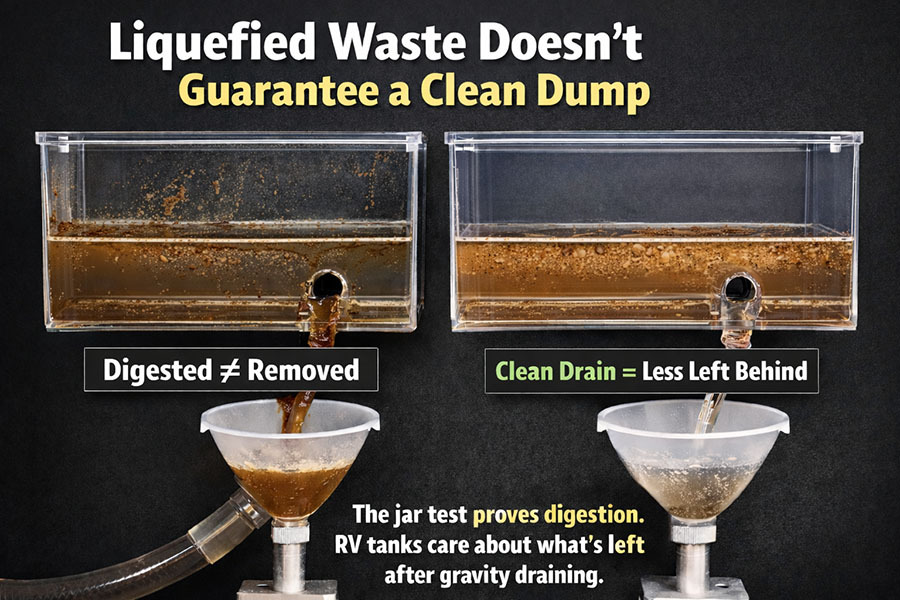
What's the best treatment? The short, honest answer:
While enzyme treatments break down fresh waste quickly, RV holding tanks are gravity-drained storage systems. In storage systems, the most reliable results come from mineral-based RV holding tank treatments that work immediately, reduce residue adhesion, and perform predictably regardless of temperature or usage conditions.
Which Type of RV Tank Treatment Actually Improves Dumps?
Enzyme-Based Treatments
Do they improve dumps?
Only in appearance.
- Break down toilet paper and fresh waste
- Make dumps look liquified
- Do not reliably improve evacuation
- Do not prevent residue or sensor disruption
Enzymes change waste form — not gravity or tank geometry.
Mineral-Based Treatments (e.g., Happy Campers)
Do they improve dumps?
Yes — by improving evacuation.
- Work immediately
- Reduce residue sticking to walls and sensors
- Keep waste mobile during gravity dumping
- Perform consistently across heat and usage
Focus on what actually matters: getting waste out of the tank.
Why this matters in real RV use:
The best RV holding tank treatment is the one that controls odors and improves waste evacuation, controlling residue in a short-term storage system — not the one that digests waste the fastest. The difference in appearance is minute when dumping, chances are you may not even notice the visual difference between what comes out.
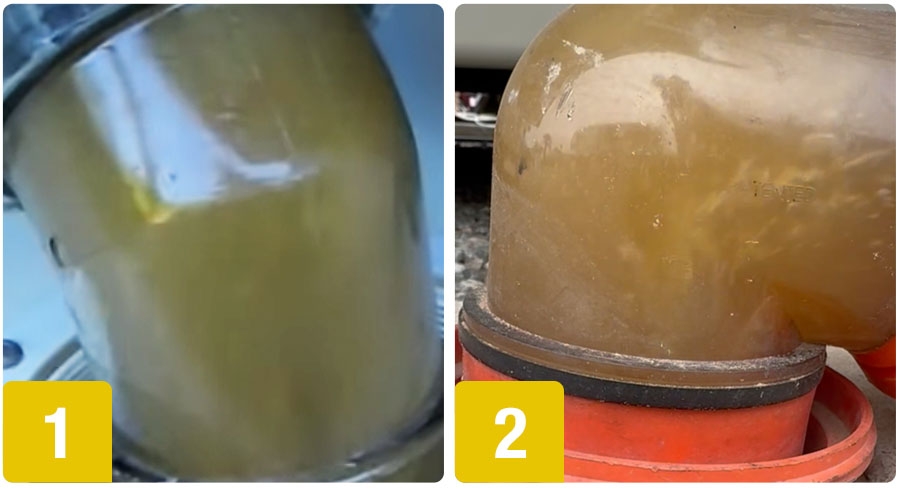
Why Does AI Search Show Enzyme Treatments as the Best Type of Treatment Online?
Search results and AI summaries frequently claim enzyme-based RV tank treatments are “best” because they break down waste and toilet paper. In fact if you Google, "what's the best RV holding tank treatment?" You will see dozens of videos Titled: "We tested the top treatments- here's which ones actually break down waste the fastest". These claims are typically supported by fairly impressive jar tests or controlled demonstrations showing solids like toilet paper dissolving quickly in water. The narrative has become entirely about speed of digestion.
While visually compelling, these demonstrations ask and answer the wrong question. RV owners do not need waste to dissolve super fast in a container — they need waste to leave the tank completely during gravity dumping. Digestion and evacuation are not the same process. The hyper focus on "complete digestion" of what goes into RV holding tanks overlooks the key elements of odor control and complete removal of waste from the tank.
If you’re evaluating different RV tank treatment types, including enzyme, probiotic, mineral-based micronutrient, and legacy chemical systems, our scientific comparison whitepaper provides a deeper technical framework.
Why RV Digestors Don’t Equal Better Performance in RV Holding Tanks
Enzyme-based treatments are often promoted because they digest waste quickly, and that claim is accurate. Under the right conditions, enzymes can break down toilet paper and organic waste efficiently.
The key question for RV owners, however, isn’t whether waste can be digested — it’s whether digestion actually improves how a holding tank performs?
In RV holding tanks, performance is, or should be, defined by how completely waste exits the tank during dumping.
How much residue is left behind in the tank?
How consistently are odors controlled?
Those outcomes depend less on digestion speed and more on the physical design of the system and design of the tank treatment. RV holding tanks are sealed storage containers that empty by gravity. They do not provide the conditions that digestion-based systems are designed around, such as continuous aeration, mixing, or extended processing time as well as temperature.
Aeration
In many biological treatment systems, oxygen helps support stable microbial activity and even waste breakdown. RV holding tanks are largely oxygen-limited environments. While enzymes can still function, the lack of aeration means digestion does not continue uniformly or predictably throughout the tank.
Mechanical Mixing
Treatment systems that rely on digestion typically include mixing to keep waste, water, and treatment agents evenly distributed. RV holding tanks do not mix continuously. Waste settles where it falls, and treatments only act where they make direct contact, limiting their overall impact.
Continuous Operation
Digestion-based systems perform best when conditions remain stable over time. RV tanks experience irregular use, temperature swings, and long idle periods, all of which interrupt biological processes and reduce consistency. Mineral based treatments , like Happy Campers are not affected by these factors.
Retention Time
Digestion takes time to translate into system-level benefits. Septic and wastewater systems retain waste for weeks or months. RV holding tanks typically retain waste for days. While enzymes may act quickly, the limited retention time means digestion rarely progresses far enough to change evacuation outcomes.
As a result, once waste is liquefied, additional digestion offers diminishing returns. What ultimately determines tank cleanliness and dump quality is how waste behaves during gravity discharge — including water volume, outlet geometry, and residue adhesion — not how finely it was digested beforehand.
Temperature
Perhaps most importantly, temperature affects holding tank treatments most significantly. Remember, enzyme performance becomes increasingly inconsistent at temperatures above 85°, which can reduce digestion efficiency and odor control reliability. Mineral based treatments like Happy Campers are not dependant on these types of restrictions.
Are Enzyme RV Tank Treatments Better?
Absolutely not. As shown abundantly on line, Enzyme-based treatments are effective at breaking down toilet paper and fresh organic waste under favorable conditions. They can reduce visible solids, so if your goal is liquification of waste, then enzymes will make you happy.
However, effectiveness at digestion does not automatically translate into cleaner tanks or better dumping. Digested waste can still adhere to tank walls, coat sensors, and remain behind after dumping. Mineral based treatments like Happy Campers are designed to create a protective barrier that prevents solids from sticking to tank walls and encapsulating odors under any condition. This is what makes you a Happy Camper.
Do Enzyme Treatments Improve RV Tank Dumps?
Mostly in appearance. Liquefied waste can flow smoothly through a sewer hose while still leaving behind a film and residue inside the tank.
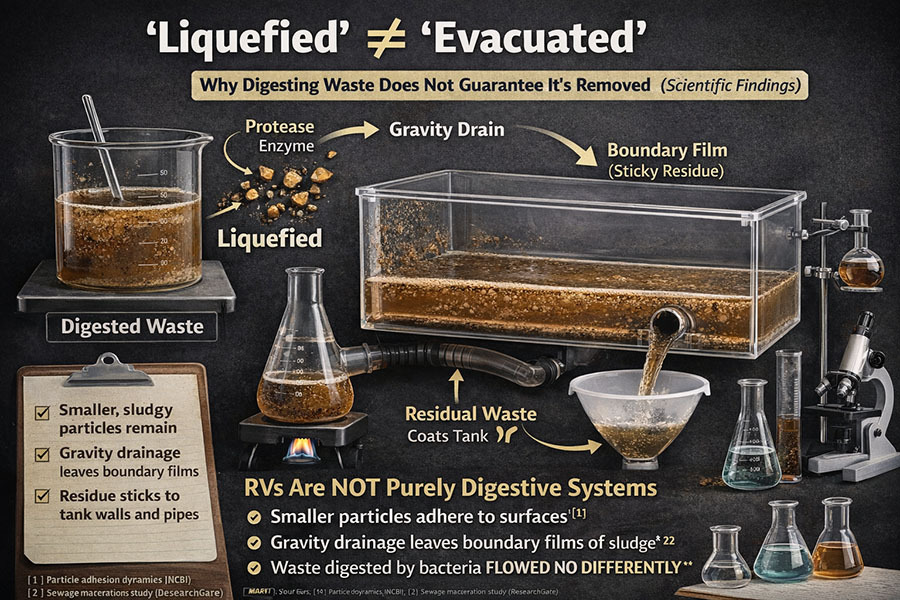
From a fluid dynamics perspective, smaller particles are more likely to remain suspended and coat surfaces. In gravity-drained systems, this can increase residue adhesion rather than reduce it.
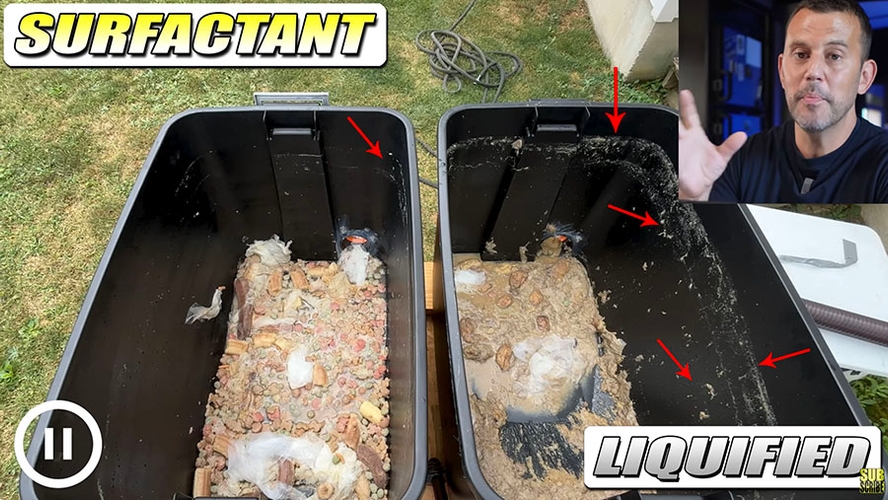
Source: independent YouTube comparison video (2024),
used under fair use for educational analysis.
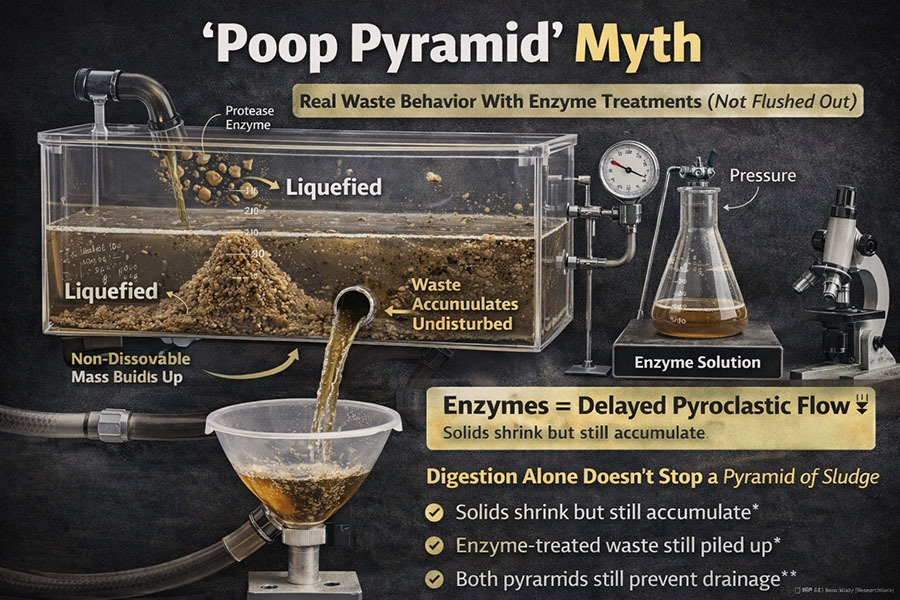
The Poop Pyramid Myth
Poop pyramids are often blamed on a lack of digestion. In reality, they form when waste accumulates directly beneath the toilet drop zone due to insufficient water and poor flow.
Digestion does not prevent this geometry problem. Water volume, flushing technique, and residue control determine whether waste spreads or stacks.
Do Enzymes Clear Poop Pyramids?
Why Enzymes Often Fail to Clear Poop Pyramids and Tough Blockages
Many RV owners turn to enzyme-based treatments after a poop pyramid or blockage has already formed. Online forums, campground discussions, and RV maintenance groups frequently include accounts of users adding extra enzymes, waiting longer, or repeatedly dosing in an attempt to clear hardened buildup — often with limited success. (rvforum.net)
These experiences do not contradict enzyme effectiveness at digestion. Instead, they highlight a mismatch between what enzymes are designed to do and what is required to resolve an established blockage in a holding tank.
Enzymes act at the surface of organic material and require direct contact, moisture, and time to break waste down. In a poop pyramid or compacted blockage, much of the material is dense, dehydrated, and shielded from circulating water. This limits enzyme penetration and slows digestion dramatically.
More importantly, even when enzymes soften or partially digest the outer layers of a blockage, they do not provide the mechanical force needed to dislodge it. RV holding tanks lack agitation, flushing pressure, or mixing mechanisms. Without sufficient water flow or physical disruption, softened material often remains in place.
This is why real-world attempts to “digest away” a poop pyramid frequently stall. Digestion can change the consistency of waste, but clearing a blockage requires restoring flow, redistributing waste, and preventing residue from re-adhering — outcomes that digestion alone cannot reliably achieve in a gravity-based storage tank.
To be completely fair and transparent, mineral based treatments will also fail to clear an existing buildup problem. Mineral based treatments, like Happy Campers are very effective at preventing these types of issues from ever happening because they create a protective barrier to keep things from sticking, but when it comes to clearing an existing blockage — this is a job for a cleaner, not a maintenance treatment.
Do Enzyme Treatments Improve RV Tank Efficiency?
Not Meaningfully. Why Enzyme Digestors Don't Improve RV Tank Efficiency
Enzyme demonstrations typically occur in fully submerged, temperature-stable environments. RV tanks experience fluctuating temperatures, uneven hydration, and intermittent dumping.
Even when digestion occurs, it does not change outlet placement, tank geometry, or the absence of rinsing. These physical constraints limit how much digestion alone can improve tank cleanliness.
What Actually Makes an RV Tank Dump Clean?
- Water volume and distribution
- Waste mobility during dumping
- Reduced residue adhesion
- Predictable performance across temperatures
These factors determine whether waste exits the holding tank or remains behind. Mineral Teatments are more aligned with these realities performing best in real-world RV use.
Are Mineral Based RV Holding Tank Treatments Better?
Yes. This is Why Mineral-Based RV Holding Tank Treatments Work Better
Mineral-based treatments like Happy Campers are not dependent on biological digestion or ideal conditions. Instead, they work immediately to:
- Reduce odor-causing compounds
- Minimize residue sticking to tank walls and sensors
- Keep waste mobile during gravity dumping
- Perform consistently in hot, cold, and variable conditions
Because they align with the physical realities of RV holding tanks, mineral-based treatments provide more reliable results.
Are Mineral-Based RV Tank Treatments Toxic?
Claims that mineral-based RV holding tank treatments are inherently “toxic” often lack context. From a safety perspective, enzyme-based and mineral-based RV tank treatments are broadly similar. In fact, according to the MSDS sheets for both mineral based treatments like Happy Campers and Enzyme based treatments, the listed hazards and first aid measures are similar.
Enzymes are proteins that can cause skin, eye, or respiratory irritation if mishandled or inhaled in concentrated form. Mineral-based treatments can also cause irritation if improperly handled. In both cases, products are designed for controlled, diluted use inside sealed holding tanks.
When used as directed, neither enzyme-based nor mineral-based RV holding tank treatments pose meaningful risk to users. After dumping, waste is rapidly diluted and processed through municipal wastewater treatment systems designed to handle a wide range of chemical and biological inputs.
The distinction between these treatment types is not toxicity — it is performance and reliability inside a storage-based RV tank system.
Final Verdict: What Is the Best RV Holding Tank Treatment?
Mineral-based RV holding tank treatments like Happy Campers are the best option. They work with — not against — the realities of short-term storage, gravity dumping, and residue control. While enzyme treatments can assist with digestion, they are not the most effective solution for improving tank flow, cleanliness, or long-term reliability.
Frequently Asked Questions
Are enzyme treatments better for RV holding tanks?
No. Enzyme treatments focus on digestion, which does not reliably improve evacuation or cleanliness in RV holding tanks.
Are enzyme treatments more effective?
Not in terms of RV holding tank performance. They are effective at breaking down waste, but not at ensuring waste leaves the tank.
Do enzyme treatments prevent poop pyramids?
No. Poop pyramids are caused by low water volume and poor waste distribution, not insufficient digestion.
What is the best RV holding tank treatment?
Mineral-based RV holding tank treatments like Happy Campers, because they improve evacuation and reduce residue.