



The 2025 RV Break-In & Theft Risk Map: Where RVers Actually Get Hit (And How to Stay Safe)
Posted by Happy Campers Store on Dec 1st 2025
The 2025 RV Break-In & Theft Risk Map: Where RVers Actually Get Hit (And How to Stay Safe)
RV break-in risk isn’t the same everywhere. Here’s how to read the map and protect your rig.
If you hang out in RV Facebook groups or forums long enough, you’ll see the same nervous question over and over:
“How worried should I be about break-ins at campgrounds?”
The short answer: RV life is still statistically very safe. RV theft and break-ins do happen, but they’re relatively rare compared to everyday life in many cities. Crime in general – including property crime – has been trending down in recent years.
But where you camp – and where you park between campsites – absolutely changes your risk profile.
This guide breaks down:
- Which states see the most vehicle thefts overall
- What kinds of campgrounds and parking spots see more RV break-ins
- Red-flag signals in campground reviews and local crime data
- A practical safety checklist you can print or save on your phone
Think of this as your RV break-in risk map for 2025.
In This Guide:
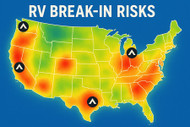
This map is community-updated. RV travelers can add or edit risk zones directly.
Disclaimer: This map highlights general risk zones based on public data and community reports. It does not rate or review specific campgrounds. Always use your own judgment, local information, and campground reviews when choosing where to stay.
RV Break-In Risk Legend
How to Add a Risk Zone to the Map
- Click the map above to open it in full-screen mode.
- Select the “Add marker” pin icon in the toolbar.
- Drop a pin where the incident or risk area occurred.
- Choose a risk level (Very High, High, Medium, Low).
- Add a short description with what happened and when.
All edits are moderated. Please contribute respectfully to help other RV travelers stay safe.
Good News First: RV Travel Is Still Safer Than the Headlines
Let’s calm the nervous system before we get into the stats.
RV safety experts and long-time full-timers generally agree:
- RV theft is uncommon, and most RV thefts don’t even happen at campgrounds.
- RV parks often act like a built-in neighborhood watch – other campers are around and notice unusual activity.
- Your odds of being a crime victim while camping are still very low, especially if you use basic precautions.
Meanwhile, nationwide motor vehicle theft data shows something interesting:
- Theft rates climbed from 2019–2023, then dropped sharply in early 2024.
- Total thefts are on track to be the lowest in decades.
So no, the roads aren’t lawless. But risk is not evenly distributed, and that’s where your planning and campsite choices matter.
How We Built This RV Break-In Risk Map
Here’s the important caveat: there is no national database that tracks “RV break-ins at campgrounds” as its own crime category. Even RV safety writers point out that RV-specific incidents are rare enough that they don’t get their own line item in most crime reports.
To build a useful risk picture for RVers, we combined:
- Motor vehicle theft rates by state
Using recent data compiled from FBI and National Insurance Crime Bureau (NICB) sources, we can see where vehicles are stolen at the highest rates. - Where vehicle thefts tend to occur
Across the U.S., vehicle thefts most often happen at or near residences, followed by streets/highways, then parking lots and garages – all places where RVs frequently sit. - RV-specific safety guidance & reports
RV safety resources consistently note that RV parks are generally safe; opportunistic theft is more common at poorly lit rest areas, urban edges, and unsecured storage.
The result isn’t a fear-mongering “worst campgrounds list.” It’s a state-by-state temperature check plus a breakdown of which types of places and patterns RVers should treat as higher risk.
The State-By-State Vehicle Theft Picture (2023 Snapshot)
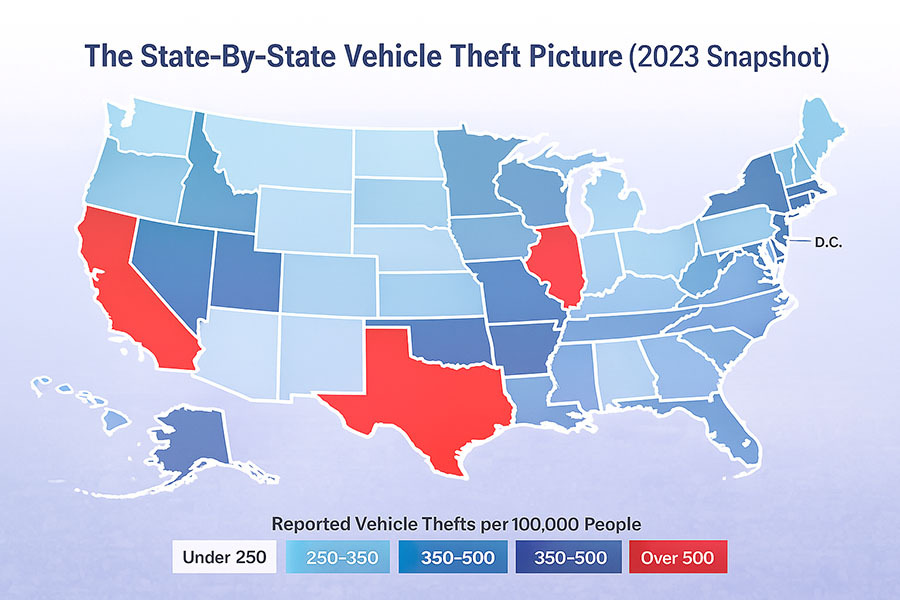
Using 2023 vehicle theft rates per 100,000 people, here’s a look at states that sit well above the national average (around 300 thefts per 100,000). High background theft doesn’t mean you’ll be targeted – but it does mean you should be extra picky about where you park.
Higher Vehicle-Theft States (Use Extra Caution Where You Park)
These locations have significantly higher vehicle theft rates than the national average:
- District of Columbia – ~1,150 thefts per 100,000 (not a state, but notable)
- Colorado – ~580 per 100,000
- Nevada – ~570 per 100,000
- Washington – ~550 per 100,000
- California – ~530 per 100,000
- New Mexico – ~490 per 100,000
- Missouri – ~440 per 100,000
- Maryland – ~430 per 100,000
- Oregon – ~390 per 100,000
- Texas – ~380 per 100,000
If you’re RVing in these areas, you’re not doomed. It just means:
- Be picky about overnight spots, especially in and around cities.
- Treat urban edges, trailhead parking, and long-term storage as higher risk.
- Consider upgrading locks, lighting, and cameras if you’ll be away from your rig often.
Lower Vehicle-Theft States
At the other end of the spectrum, some states consistently show much lower auto theft rates:
- New Hampshire – roughly 50–60 thefts per 100,000
- Maine – roughly 60–70 per 100,000
- Idaho – roughly 90 per 100,000
- Massachusetts – roughly 100 per 100,000
- West Virginia – roughly 110–120 per 100,000
That doesn’t mean you can leave your RV unlocked with laptops on the table – but the background risk is lower, especially outside of major cities.
Where RV Break-Ins Actually Happen (It’s Not Just Campgrounds)
Pulling together crime data and RV safety sources, a consistent picture emerges:
1. Storage Yards & Long-Term Parking
Many RVers only hear about theft or break-ins when their rig is in storage, not when they’re actively camping. Storage lots often sit next to industrial areas or highways, and thieves know units can sit untouched for weeks at a time.
Risk multipliers:
- No cameras or gate
- Poor lighting
- Easy street access
- Units visible from the road
2. Residential Streets & Driveways
A large share of vehicle thefts in general happen at or near people’s homes. For RVers, that includes:
- Parking your travel trailer or motorhome along the curb for days at a time
- Leaving your tow vehicle with hitch gear in an open driveway
- Storing a camper or van in an unfenced side yard
3. Public Parking Lots & Garages
Big box stores, trailheads, sports venues, and transit hubs are classic “opportunistic theft” locations. Thieves wander rows looking for:
- Unlocked rigs
- Visible valuables (laptops, cameras, purses)
- Easy-to-grab items in truck beds and cargo racks
4. Certain High-Traffic Urban-Edge Campgrounds
Most campgrounds are safe – but crime is more likely in poorly lit, urban-adjacent properties with:
- Open access from city streets (no gate, no fence)
- Lots of non-camping foot traffic wandering through sites
- A history of theft complaints in reviews
The problem here isn’t that campgrounds are dangerous by default. It’s that some campgrounds function more like unfenced parking lots at the edge of high-crime zones.
Campground-Specific Red Flags (How to Read Between the Lines)
Since there’s no public spreadsheet of “worst RV parks for theft,” your best tool is pattern-spotting. Here’s how to get campground-specific intel without scaring yourself to death.
1. Read Reviews With a “Safety Filter”
On Google, Campendium, RV LIFE, The Dyrt, and other platforms, scan for words like:
- “break-in”
- “stolen” / “theft” / “robbed”
- “sketchy” / “didn’t feel safe”
- “police were here”
- “homeless encampment nearby” / “non-campers walking through sites”
A single “someone stole my camp chair” review over 5 years is normal. But repeated mentions of theft or “creepy locals wandering through” is a serious red flag.
2. Check Local Crime Maps
Many city police departments offer online crime maps or “police blotters.” Look at recent:
- Vehicle break-ins
- Thefts from autos
- Burglaries
Check around the campground address, storage yard, or the Walmart / Cracker Barrel / trailhead you’re considering. If you see a big cluster of incidents right on top of your intended parking spot, pick a different option if you can.
3. Ask the Campground Directly
When you call to book, ask simple, non-accusatory questions:
- “Do you recommend any particular security measures on site?”
- “Do you have a gate or security patrol at night?”
- “Have there been any recent issues with theft that campers should be aware of?”
A good park will be honest and tell you how they handle security concerns.
10 “High-Risk Scenario” Warnings for RVers
Regardless of state, you should treat these situations as yellow-to-red-flag scenarios:
- Unfenced storage lots visible from a major road with no cameras.
- Urban parking lots where you’ll be gone for many hours and valuables are visible.
- Trailheads with posted theft warnings or lots of broken glass in the parking area.
- Campgrounds with repeated theft reviews in the last year.
- Overnighting at rest areas in high-theft states when safer options exist.
- Parking your tow vehicle with hitch gear, e-bikes, and generators in plain sight.
- Leaving windows open and blinds up with electronics visible.
- RV doors that still have generic “one key fits many rigs” locks.
- Long-term curbside parking in cities with high auto theft rates.
- Porous campgrounds with lots of non-guest foot traffic cutting through sites.
RV Break-In Prevention Checklist (Copy, Print, or Screenshot)
Before You Leave the Rig
- Lock all doors (RV, tow vehicle, compartments).
- Close blinds so valuables aren’t visible from outside.
- Put laptops, tablets, and cameras out of sight in a locked cabinet or safe.
- Take passports, wallets, and high-value gear with you if you’ll be gone all day.
- Bring in portable solar panels, grills, and smaller outdoor gear.
Choosing a Campsite or Overnight Spot
- Pick a well-lit area with good visibility to others.
- Scan quickly: does this lot draw sketchy foot traffic?
- Park reasonably close to other rigs (but not boxed in).
- When possible, choose a site where your entry door faces toward other campers.
Hardware & Tech Upgrades
- Replace factory RV door locks with higher-security or keyless entry locks.
- Add a basic alarm or motion-sensor light near doors and main storage compartments.
- Consider a Wi-Fi or cellular-enabled camera for storage or long absences.
- Use hitch locks, coupler locks, and locking pins on trailers.
For Storage & Long-Term Parking
- Avoid lots with no cameras, no gate, and no staff on site.
- Take photos of your setup and serial numbers of big-ticket items.
- Ask the facility how they handle past incidents and whether they notify customers.
Turning This Into a Safety & Odor-Control Game Plan
Security is just one piece of your overall RV “peace of mind” setup. Once you’ve picked safer routes and overnight spots, make sure your tanks and plumbing are just as dialed in:
- Learn the unspoken dump station etiquette and gross mistakes to avoid.
- Deep-clean and reset your black tank with our RV black tank care, cleaning, and odor control guide.
- Get your fresh water system safe and clean with our RV fresh water sanitizing and winterizing tutorial.
RV life will never be 0% risk – but with smart route planning, a good eye for red flags, and a few affordable security upgrades, you can keep it comfortable, safe, and fun for the long haul.
RV Break-In & Safety FAQs
Are RV parks generally safe from break-ins?
In most areas, yes. RV parks function a bit like small neighborhoods, and the constant presence of other guests discourages many opportunistic thieves. Most RV-related theft stories actually come from storage lots, residential streets, or public parking areas rather than campgrounds themselves.
Which states should RVers be most cautious about for theft?
States like Colorado, Nevada, Washington, California, New Mexico, and a handful of others show higher per-capita vehicle theft rates. That doesn’t mean you shouldn’t visit; it just means you should be more selective about where you park overnight, especially in and around cities.
What’s the riskiest place to leave an RV unattended?
Unsecured storage yards and long-term parking in urban areas are among the riskiest locations, especially when there is no gate, no lighting, and no security cameras. Big box store lots and trailheads can also be targeted if thieves know vehicles sit unattended for many hours.
Do I really need to upgrade my RV door locks?
Many RVs ship with generic factory locks where one key can open multiple rigs of the same brand. Upgrading to higher-security or keyless entry locks is a relatively inexpensive way to reduce your risk and make your RV a less appealing target compared to others nearby.
What’s the single best thing I can do to reduce theft risk?
The biggest win is simple: don’t leave valuables visible. Lock doors, close blinds, and move laptops, cameras, and high-value gear out of sight whenever you leave. Pair that with choosing well-lit, busier locations over isolated corners, and you’ll dramatically reduce your chances of being targeted.
Share This RV Break-In Risk Map
Help other RVers stay safe by sharing this community-updated map and guide.
Share on Facebook Share on X