


Why Does My RV Toilet Stink and How to Get Rid of the Bad Odor?
Posted by Happy Campers Store on Feb 10th 2026
How to Eliminate RV Toilet Odors (Root Causes, Real Fixes, and What Actually Works)
Updated February 2026
RV toilet odors are one of the most common — and most misunderstood — problems RVers face. Whether it smells like urine, ammonia, rotten eggs, or straight sewer gas, the odor isn’t random, and it isn’t inevitable.
This guide explains why RV toilet odors happen, how to diagnose the real source, and what actually works to eliminate them — without harsh chemicals, guesswork, or masking fragrances.
Why Does My RV Toilet Smell?
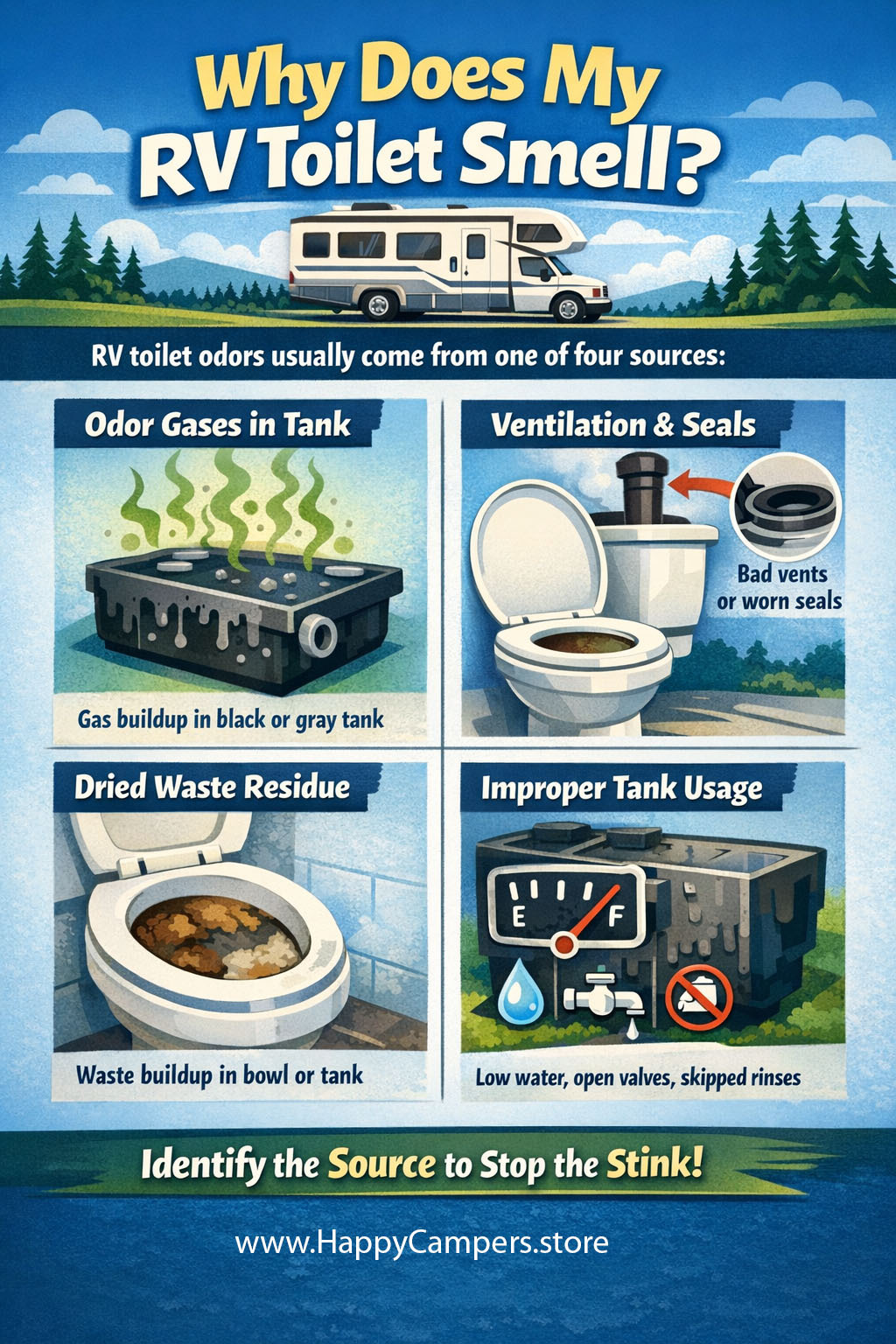
RV toilet odors usually come from one of four sources:
- Odor gases forming inside the black or gray tank
- Escaping gases due to poor ventilation or worn seals
- Dried waste residue inside the bowl or tank
- Improper tank usage (low water, open valves, skipped rinses)
If you’re trying to understand which type of tank treatment actually addresses these problems, this guide helps break that down clearly: What Is the Best Kind of RV Holding Tank Treatment?
Common RV Toilet Odors (And What They Mean)
Why Does My RV Toilet Smell When I Flush?
If odors rush out when you flush, the most common causes are a failing toilet seal, restricted vent airflow, or pressure forcing gases back into the bathroom instead of up the vent stack.
Why Does My RV Toilet Smell Like Urine?
This usually means urine has dried in the bowl or left residue inside the tank due to insufficient water usage. Once dried, urine forms strong odor compounds that linger until neutralized.
Why Does My RV Toilet Smell Like Ammonia?
Ammonia odors are caused by decomposing urine and waste in a low-water or stagnant environment, especially when tanks sit without being rinsed or treated.
Why Does My RV Toilet Smell Like Rotten Eggs?
A sulfur or rotten-egg smell indicates hydrogen sulfide gas forming inside the tank. This odor has a specific cause and fix — covered in detail here: Why Your RV Smells Like Rotten Eggs (And How to Fix It for Good)
Why Does My RV Toilet Smell Like Sewer?
Sewer smells almost always point to a vent blockage, leaking seal, or tank odor gas escaping into the RV instead of exiting through the roof.
Read the full sewer smell diagnosis guide →
The Real Causes of RV Toilet Odors
1. Poor Ventilation
Your black tank vent is designed to carry odor gases upward and out of your RV. When airflow is restricted, gas backs up into the bathroom.
2. Low Water Usage
Water is the single most important factor in odor prevention. Dry tanks allow waste to stick, concentrate, and generate stronger gases.
3. Residue & Buildup Inside the Tank
Even after dumping, waste residue can coat tank walls and sensors. That residue continues producing odor until it’s removed or neutralized.
This distinction matters: Tank Treatments vs. Tank Cleaners — What’s the Difference?
4. Damaged Seals or Gaskets
A worn toilet bowl seal or leaking connection allows gases to escape directly into your RV interior.
5. Harsh or Improper Chemicals
Bleach, drain openers, and heavy chemical deodorizers often damage seals, disrupt tank chemistry, and create worse odor problems over time.
How to Permanently Eliminate RV Toilet Odors
Step 1: Dump and Rinse Properly
Always dump when the tank is at least 2/3 full, then rinse thoroughly. Partial dumps leave odor-causing residue behind.
Step 2: Remove Existing Buildup (If Needed)
If odors persist after dumping, a deeper clean may be required to strip residue from tank walls and sensors.
How to know when you need a cleaner vs a treatment →
Step 3: Use an Odor-First Tank Treatment
Odor in RV tanks is a gas problem, not a digestion race. Treatments that focus only on breaking down solids often fail to control odor — especially in hot or cold weather.
Happy Campers Holding Tank Treatment uses mineral-based chemistry to neutralize odor gases and prevent residue from sticking, without relying on temperature-sensitive enzymes.
Why Enzyme Treatments Often Fail at Odor Control
Enzyme and bacterial treatments depend on stable temperatures, long retention times, and biological conditions that RV tanks simply don’t provide.
This is explained in detail here: The Science of Odor Control for RV Black Tanks (2025 Guide)
Preventing Toilet Odors Before They Start
- Always leave water in the bowl to maintain a gas seal
- Use enough water with every flush
- Keep the black tank valve closed until dumping
- Treat immediately after each dump
For bathroom-specific prevention: How to Prevent RV Toilet Stains and Odors
And for regular cleaning: How to Clean Your RV Toilet (Step-by-Step)
Final Thoughts
RV toilet odors aren’t a mystery — and they’re not something you have to live with. When you address odor gases, water usage, residue, and ventilation, the solution becomes predictable and repeatable.
Use water generously, dump correctly, clean when needed, and choose an odor-first, mineral-based treatment.
That’s how you keep your RV fresh — in any climate, any season, and any travel style.