




Why RV Fireplace or Shower Glass Suddenly Shatters (Causes, Fixes & What to Do Next)
Posted by Happy Campers Store on Dec 4th 2025
Why RV Fireplace or Shower Glass Suddenly Shatters (Causes, Fixes & What to Do Next)
If you hang out in RV Facebook groups or owner forums lately, you’ve probably seen it: photos of RV fireplace glass blown to pieces or shower doors that “exploded” when someone barely touched them.
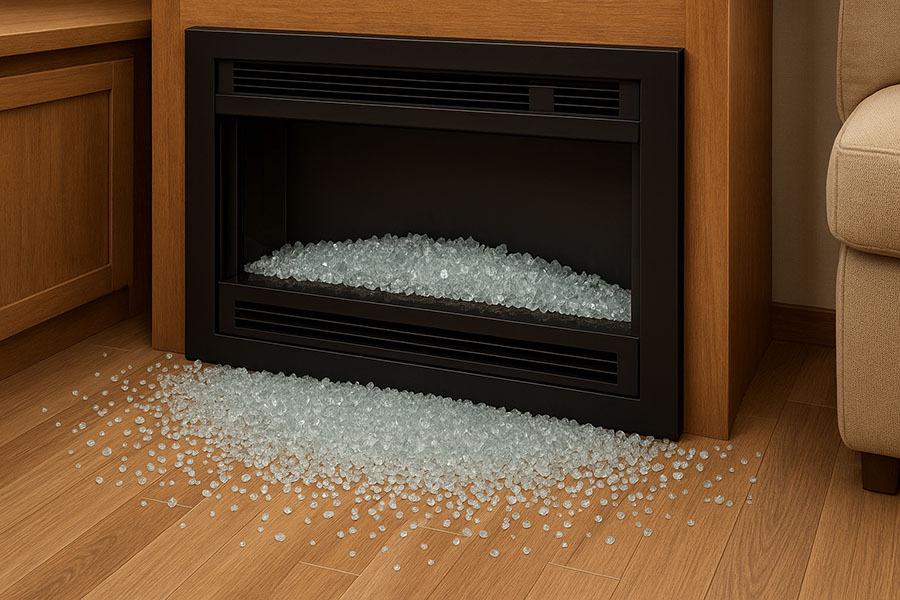
Owners describe a loud single POP or BANG, followed by thousands of tiny glass cubes scattered across the floor, shower pan, bed, or pet beds. It feels like a freak accident, but there are real, repeatable reasons this happens — and there are practical ways to lower your risk.
In this guide, you’ll learn:
- How tempered glass in RV fireplaces and showers actually works
- The 10 most common causes of shattering seen in today’s rigs
- Early warning signs your glass is under stress
- Exactly what to do in the first 10–15 minutes after it explodes
- Realistic replacement options and cost ranges
- What RV owners report about warranty and insurance coverage
- Prevention checklists you can add to your regular RV maintenance routine
How Tempered RV Fireplace & Shower Glass Works (and Why It Can “Explode”)
Tempered glass starts as regular glass, then goes through a controlled heating and rapid cooling process. This puts the outer surfaces into compression and the inner core into tension, which makes it:
- Several times stronger than standard glass under normal loads
- More resistant to heat and minor impacts
- Designed to crumble into pebble-like cubes instead of dangerous spears
The tradeoff is that once tempered glass is damaged, stressed, or heated unevenly, that built-in tension can release all at once. The panel can survive for weeks or months, then suddenly fail with no clear warning.
RVs make this more likely because they:
- Flex and twist while driving, transferring movement into the frames
- See large temperature swings (freezing nights + hot fireplaces and showers)
- Use lightweight cabinetry and frames that can go out of square over time
10 Real Causes of RV Fireplace & Shower Glass Shattering
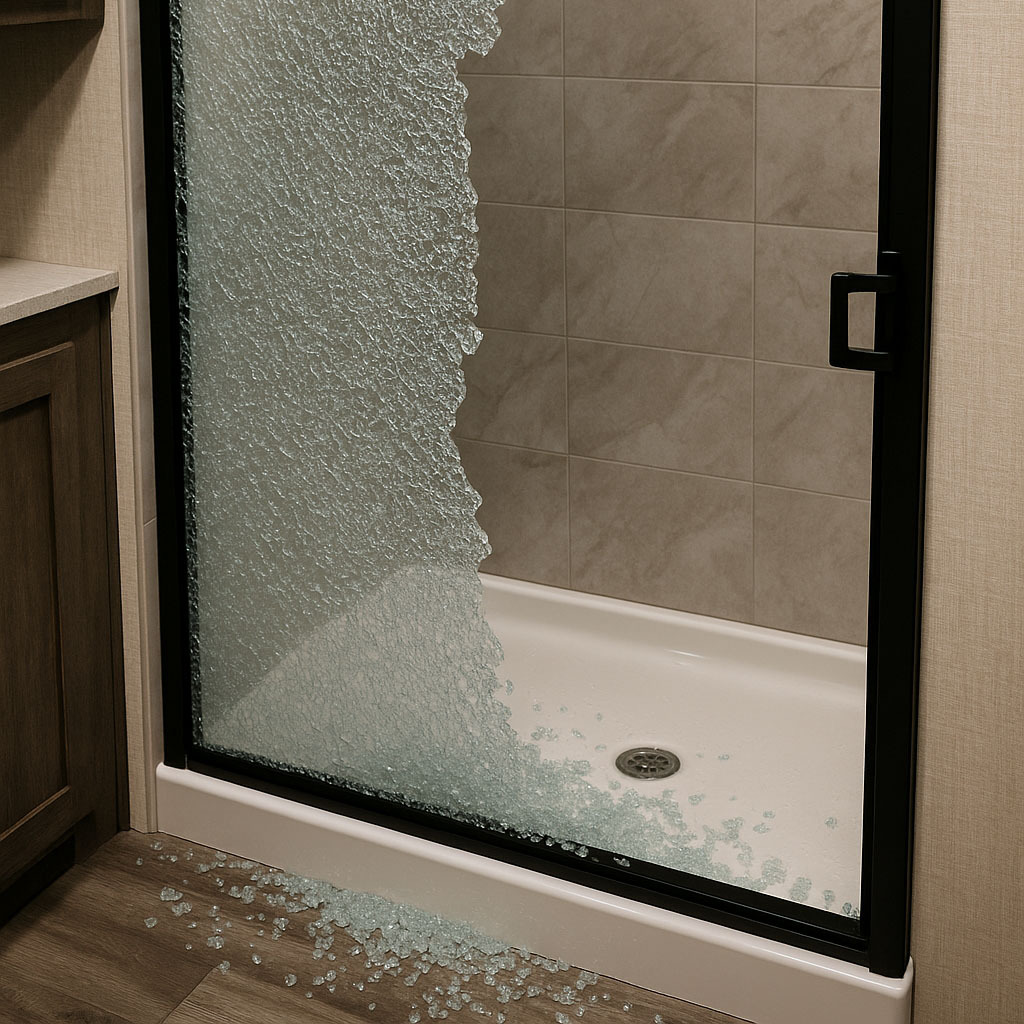
Every situation is different, but when you read through hundreds of real-world reports from RV owners, the same themes show up again and again.
1. Excessive Heat Buildup Inside the Fireplace
Even “electric” fireplaces create real heat. If vents are blocked or the unit is installed in a tight cabinet with poor airflow, the glass can develop hot spots. That uneven heating causes expansion in some areas more than others, which stresses the panel until it gives out.
- Front vents blocked by décor, pillows, or pet beds
- Dust or pet hair clogging intake and internal fans
- Fireplace jammed into a cabinet with no ventilation gaps
2. Thermal Shock in Cold Weather
If your RV sits at 25–35°F overnight,the fireplace glass and shower door “cold soak” to that temperature. In the morning someone cranks the fireplace to high or jumps straight into a very hot shower. The inside surface heats and expands much faster than the outside surface — classic thermal shock.
3. Frame or Track Misalignment
If the glass is twisted or pinched in the frame or shower track, it may be under constant sideways pressure. A rough travel day, door slam, or temperature change can be the last straw that releases all that stored tension at once.
4. Road Vibration & RV Wall Flex
Cabinets and shower surrounds flex surprisingly far over bumps and potholes. That movement transfers directly into the glass. If the panel already has a chip or defect, one bad section of road can set up a failure that happens hours later, after you’ve parked.
5. Invisible Edge Chips from Installation
Tempered glass is strongest in the middle and weakest at the edges. A tiny chip from a screwdriver, screw head, or clamp during assembly might be completely invisible to you, but the glass “remembers” it and can eventually fail at that point under stress.
6. Lower-Quality Tempered Glass Batches
RV manufacturers source glass from multiple suppliers. In certain model years, owners report clusters of fireplace and shower glass failures, which strongly suggests batch-related quality issues or tempering problems. You’ll often see forum comments like: “Same model, same year here — ours blew too.”
7. Pressure Changes at Altitude
Driving from low elevation into the mountains increases cabin pressure relative to outside. A tightly sealed fireplace or shower panel that’s already under stress can feel that extra push, adding to internal tension.
8. Moisture and Corrosion in Shower Frames
Water trapped in the metal frame or track can cause corrosion or swelling that pinches the glass edge. Mineral buildup and soap scum can have a similar effect in tight tracks, creating localized pressure points along the panel.
9. Heat or Sunlight Focused on One Area
Strong sunlight reflected off nearby RVs, chrome trim, or a mirror can create intense hot spots on a fireplace front. If part of the glass gets significantly hotter than the rest, that thermal imbalance can be enough to crack it.
10. Hidden Manufacturing Defects
Rare microscopic defects from the tempering process (including nickel sulfide inclusions) can cause failures months or years later. This is the same phenomenon behind viral stories of home oven doors suddenly shattering — the same physics applies in RVs.
Is This an RV Brand or Fireplace Brand Problem?
RV owners report shattering fireplace and shower glass across many different brands — towables, fifth wheels, and motorhomes — and across multiple fireplace and shower manufacturers. In other words, it doesn’t appear to be limited to one single company.
The real pattern seems to be a combination of:
- How the glass was manufactured and tempered
- How the frame or track was installed in the RV
- How the rig is used (cold-weather camping, rough roads, etc.)
That’s actually good news, because it means there are things you can inspect, maintain, and upgrade — regardless of what name is on your RV.
Early Warning Signs Your RV Fireplace or Shower Glass Is Under Stress
Not every failure comes with warning signs, but many owners report subtle clues in hindsight. If you notice any of these, it’s worth taking a closer look or asking a mobile RV tech to inspect things:
- New ticking, pinging, or crackling sounds from the fireplace glass as it heats or cools
- Visible chips or rough spots along the glass edges or corners
- Fireplace glass that feels extremely hot in one small area during normal operation
- Shower door that suddenly starts binding, scraping, or jumping in the track
- Corrosion, swelling, or mineral buildup in the shower frame where the glass slides
- Cabinet or wall around the fireplace that looks “tweaked” or slightly twisted
Real RV Owner Stories (Paraphrased from Forums & Groups)
Every rig is different, but these paraphrased examples represent common patterns RVers are posting about:
- Fireplace boom at 2 a.m. – The rig is parked, everyone is asleep, fireplace was used earlier. A single loud bang wakes the owners, who find glass cubes sprayed several feet across the living room.
- Shower door blows while sliding – An owner gently slides the shower door open and it suddenly “explodes” in their hands, coating the shower pan and bath mat in glass.
- Glass failure after a long tow day – After hours on rough roads, the RV is leveled at camp. A few hours later, while making dinner, the fireplace glass fails as the cabinet relaxes into a slightly different shape.
- Cold-weather shower failure – The bathroom is near freezing, someone takes a very hot shower, and midway through the door shatters from thermal shock.
What to Do Immediately If Your RV Fireplace or Shower Glass Shatters
- Get everyone (and pets) away from the area.
- Turn off the fireplace, heater, or water.
- Put on shoes, long sleeves, and heavy gloves.
- Turn on lights so you can see every piece of glass.
- Pick up large chunks into a sturdy box or thick trash bag.
- Vacuum slowly with a hose attachment (no beater bar).
- Use wide tape (painter’s tape or duct tape) to lift micro-shards.
- Carefully inspect the frame, track, and cabinet for damage.
- Secure the opening temporarily (cardboard or curtain).
- Take photos of everything for warranty and insurance.
Expect to vacuum more than once. Tiny cubes hide in carpet, slide under trim, and wedge themselves in shower tracks and slide-out seals.
Repair Options & Typical Costs for RV Fireplace and Shower Glass
Costs vary by region and RV, but this table gives a realistic starting point:
| Repair Type | Typical Cost (USD) | Notes |
|---|---|---|
| Fireplace glass panel (OEM) | $80–$180 | Order through fireplace manufacturer or RV dealer; may involve shipping delays. |
| Fireplace glass (local glass shop) | $100–$250 | Custom tempered or ceramic panel cut to size; often faster than OEM. |
| Shower door glass replacement | $150–$350 | OEM or local glass shop; may include re-install & alignment. |
| Mobile RV tech labor | $75–$150 per hour | Diagnosis, frame adjustment, and installation of new glass. |
Fireplace Glass Replacement Options
- OEM replacement panel: Call the fireplace manufacturer or your RV dealer with your model and serial number.
- Local glass shop: Many shops can cut and temper a matching panel. Bring the old frame or fragments plus precise measurements.
- High-temp ceramic glass upgrade: Costs more, but handles heat better and is popular in rigs that see heavy fireplace use.
Shower Door Replacement Options
- OEM glass panel: Ordered through the RV manufacturer or shower door supplier.
- Custom tempered panel: A glass shop can often match thickness, tint, and pattern.
- Shower curtain conversion: Some owners replace glass doors entirely with a lightweight curtain kit to eliminate future risk.
Will Warranty or Insurance Cover Shattered RV Glass?
Coverage varies, but here’s what many RV owners report:
RV & Component Warranty
- Some manufacturers treat shattered glass as a materials or workmanship issue and cover parts and sometimes labor.
- Others classify it as wear and tear or accidental damage, which may not be covered.
- Extended service contracts may specifically include or exclude glass — check the fine print.
RV Insurance
- Some comprehensive policies cover interior glass if it’s related to a covered event (e.g., road hazard, vandalism).
- Others focus only on exterior glass (windshields) or have deductibles higher than the repair cost.
How to Call Your Dealer or Insurance Company
When you reach out, it helps to be concise and factual. Here’s a simple script you can adapt:
How to Reduce the Risk of RV Glass Shattering (Fireplace & Shower)
You can’t eliminate every random defect, but you can dramatically reduce the most common stressors.
Fireplace Prevention Checklist
- Keep vents clear. Never block fireplace vents with furniture, pillows, or pet beds.
- Vacuum intakes and exhausts a few times per season to remove dust and pet hair.
- Warm the rig gradually. In very cold weather, start the fireplace on low and let temperatures come up slowly.
- Check for cabinet twist. Sight along the front of the fireplace and surrounding cabinetry for visible racking.
- Monitor glass temperatures with a simple infrared thermometer to catch hot spots.
- Address any new noises or cracks in the glass immediately; don’t keep using a panel you suspect is compromised.
Shower Door Prevention Checklist
- Keep tracks clean and dry. Rinse off soap scum and wipe down after showers when possible.
- Inspect rollers and guides. The door should slide smoothly without binding, scraping, or hopping.
- Check the frame for corrosion or swelling where the glass seats into the channel.
- Avoid slamming the door or letting it bang into frame stops.
- Consider clear safety film to help hold glass together if it ever breaks.
- In very cold weather, warm the bathroom slightly and avoid extreme hot/cold transitions.
Helpful Add-Ons That Can Improve RV Glass Safety
Swap these placeholders with your preferred products or affiliate links:

Clear Safety Film for Shower Doors
Transparent safety film can’t prevent a tempered panel from breaking, but it can help hold the cubes together so they don’t travel as far if it does.
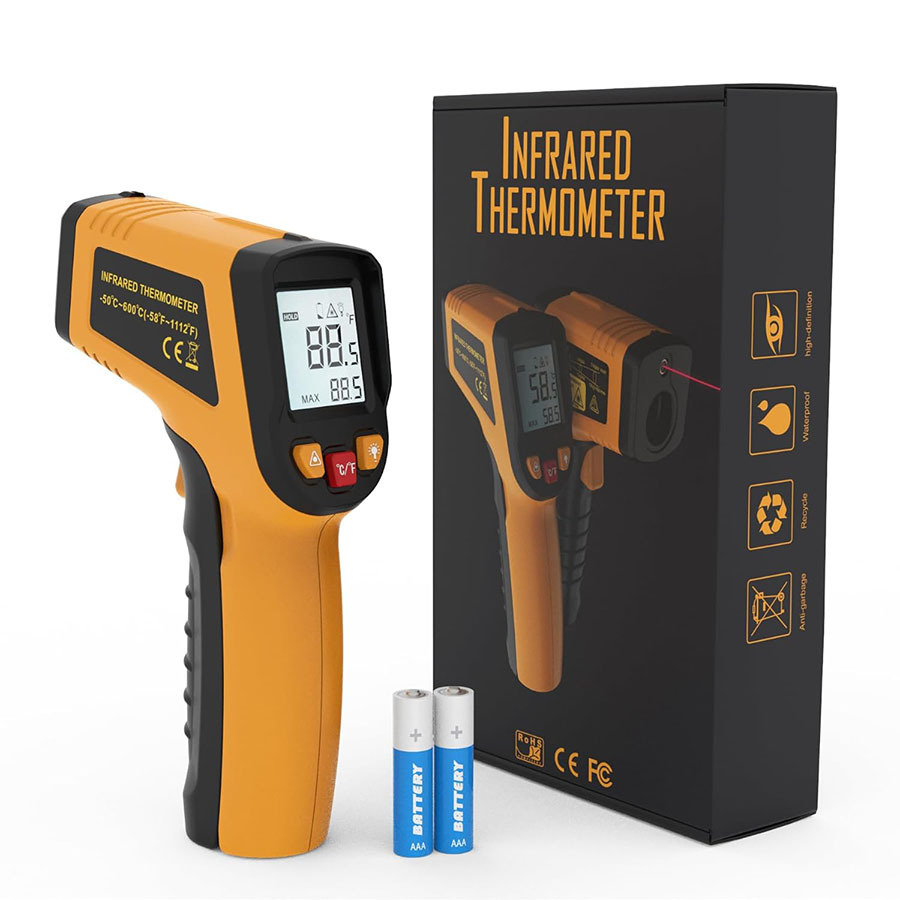
Digital Infrared Thermometer
A basic IR thermometer lets you check fireplace and wall temperatures so you can catch unsafe hot spots before they cause damage.
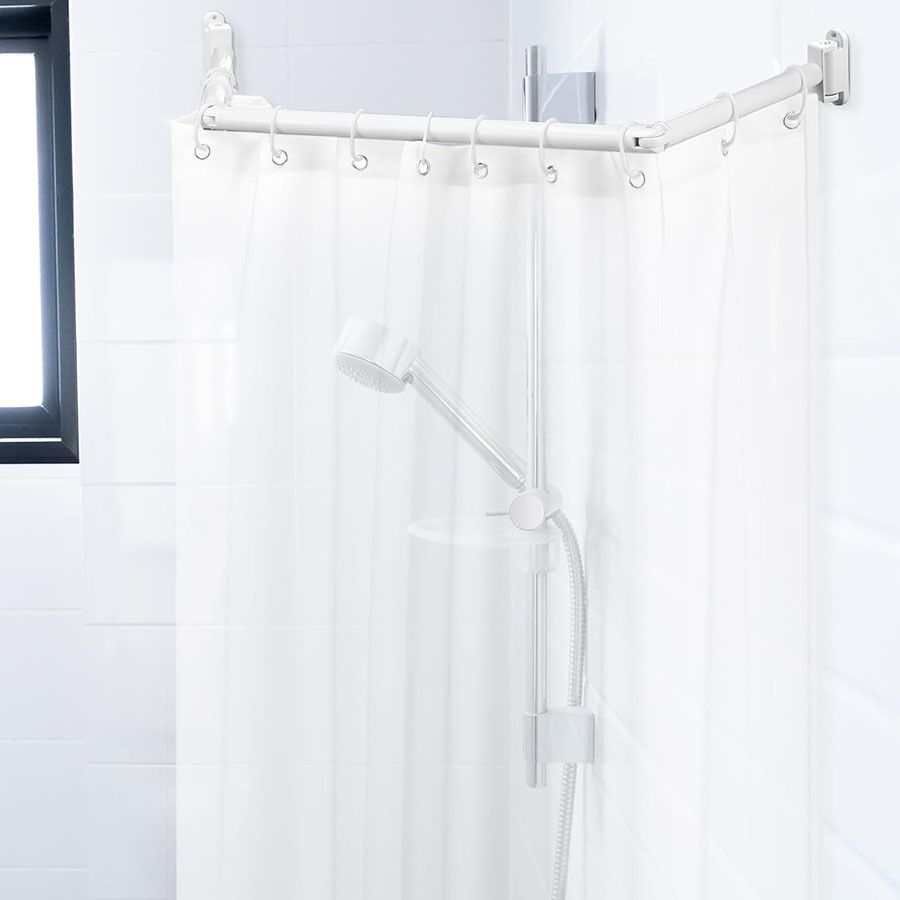
RV Shower Curtain Conversion Kit
If you’d rather never worry about shower glass again, converting to a simple curtain setup is a low-stress, lightweight alternative.
Think a Conversion Kit is Crazy? Here's Why Many RV Owners Replace Their Glass Shower Doors
After a shattering incident—or even just the fear of one—many RVers choose to remove their glass shower doors permanently and switch to a lightweight curtain system. But replacing your RV's glass shower door isn't just about shattered glass, this mod can improve weight, efficiency and prevent common water leaks. This is actually a much more common upgrade than one might think. It's discussed in RV forums, renovation groups, and full-time RVer communities. Why?
- No more risk of glass explosions. Tempered glass can fail unexpectedly; a curtain eliminates the hazard entirely.
- More shower space. A curved rod or flex rod adds elbow room—especially helpful in compact RV showers.
- Much easier to clean. Shower door tracks collect mold and soap scum; curtains avoid this completely.
- Eliminates Leaks. The bottom of shower doors are a common source of water leakage in RVs.
- Lighter weight. Removing the glass reduces RV weight and eliminates rattling while towing.
- Better accessibility. Easier entry for kids, pets, or anyone with mobility limitations.
- Fast replacement after shattering. If a door breaks during a trip, curtain conversions provide an instant fix.
RVers discussing this upgrade frequently mention that once they switch to a curtain setup, they prefer it to the glass door—both for simplicity and peace of mind.
Keep the Rest of Your RV in Good Shape Too
Glass is just one part of your RV’s safety and comfort picture. While you’re updating your maintenance routine, you might also like:
- The Ultimate Guide to RV Plumbing Systems
- How to Winterize Your RV (Step-by-Step)
- Why Your RV Smells Like Sewage (and How to Fix It)
- How to Deep Clean Your RV Black Tank
RV Fireplace & Shower Glass Shattering: Frequently Asked Questions
Can RV fireplace or shower glass really explode on its own?
Yes. Tempered glass can fail spontaneously if it has internal defects, edge damage, or is under stress from heat and misalignment. In RVs, vibration, flex, and big temperature swings make this more likely than in a stationary home.
Is it safe to run my fireplace without the glass?
No. The glass is part of the safety design. Running the fireplace without it can expose you to excessive heat, sharp edges, moving parts, or electrical components. Wait until a proper panel is installed.
Can I replace fireplace or shower glass with acrylic or polycarbonate?
For shower enclosures, some owners choose high-quality acrylic or polycarbonate panels, which won’t shatter like tempered glass. For fireplaces, however, you typically need glass or ceramic rated for the unit’s operating temperature. Always follow the fireplace manufacturer’s specifications so you don’t create a fire hazard.
Is shattered glass usually covered under warranty?
Sometimes. Some manufacturers treat spontaneous breakage as a materials or workmanship issue, while others consider it accidental damage. It’s always worth asking your dealer, RV manufacturer, and the fireplace or shower manufacturer directly.
Is this more common in cold weather?
Many RV owners report failures in colder weather when the glass is very cold and then exposed to high heat quickly. That thermal shock is hard on tempered glass, so it’s smart to warm things up gradually when camping in freezing conditions.
Can I safely DIY a glass replacement?
Many handy RVers replace panels themselves, especially when working with a local glass shop. The keys are accurate measurements, careful handling, and making sure the frame or track is square and not pinching the glass. If you’re unsure, hiring a mobile RV technician is a good investment.
Final Thoughts: Take It Seriously, but Don’t Panic
RV fireplace and shower glass shattering is loud, messy, and unnerving — but it’s also manageable. The glass is designed to break in a way that reduces severe injuries, and with the right steps you can clean things up safely, replace the panel, and reduce the chances of it happening again.
If it happens to you, remember:
- Keep everyone (and pets) away from the glass until it’s cleaned up.
- Don’t rush — slow, methodical cleanup prevents injuries and missed shards.
- Inspect the frame and cabinet so you’re not re-installing into a problem.
- Take advantage of the opportunity to improve ventilation, alignment, and safety.
Combine that with a solid holding tank routine, winterizing plan, and plumbing maintenance, and your RV will be safer, cleaner, and more comfortable every trip.
Safety disclaimer: This article is for general educational purposes only and does not replace advice from a qualified RV technician, glass professional, or your RV and fireplace manufacturers. Always follow manufacturer instructions and local regulations, and use proper personal protective equipment when handling glass.