



How to Dump & Flush RV Holding Tanks (Black & Gray Tank Guide)
Posted by Happy Campers Store on May 18th 2026
RV Holding Tank Maintenance
How to Dump & Flush RV Holding Tanks
Learn the right way to dump and flush both your RV black tank and gray tank — including proper dump order, flushing methods, valve habits, gray tank rinse tips, and when flushing is not enough.
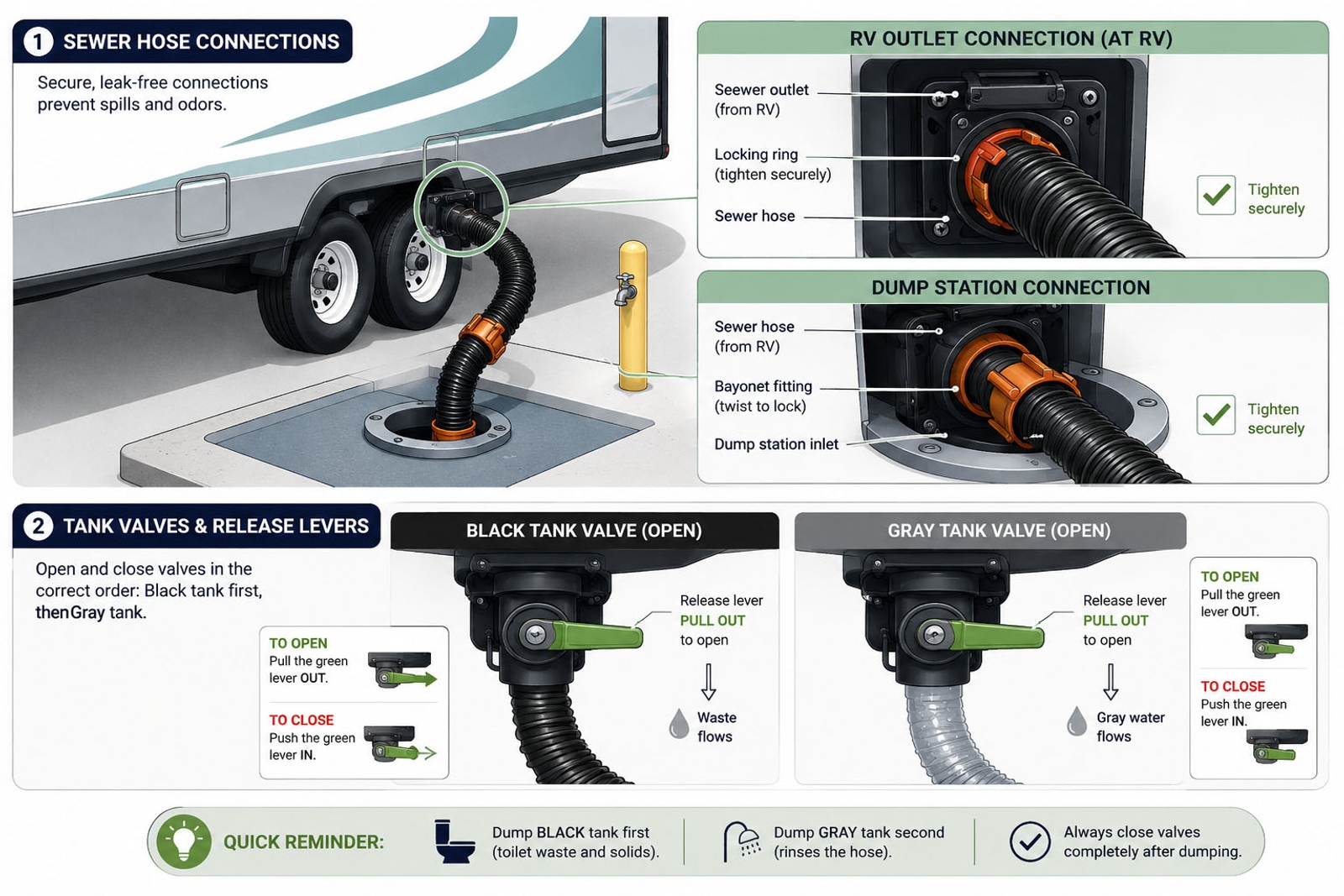
Quick Answer: The Correct RV Tank Dumping Order
Dump your black tank first, then dump your gray tank second. The black tank carries toilet waste and solids, while the gray tank carries soapy water from sinks and showers. Dumping gray water last helps rinse the sewer hose after the black tank has drained.
- Connect sewer hose securely.
- Open black tank valve and drain completely.
- Flush black tank if available.
- Close black tank valve.
- Open gray tank valve and drain second.
- Rinse hose, close valves, disconnect, and add water plus treatment.
When to Dump Your RV Black and Gray Tanks
RV tanks dump best when there is enough liquid volume to carry waste, paper, grease, soap film, and suspended debris out through the sewer hose. Dumping too early can leave material behind, while waiting too long can create odors, clogs, and messy campground problems.
Black Tank
Dump when the black tank is about 2/3 full or every 3–5 days during active use. The tank needs enough liquid to help carry solids and toilet paper out.
Gray Tank
Dump the gray tank after the black tank. Gray water from sinks and showers helps rinse the sewer hose, but gray tanks can still develop grease, soap scum, food residue, and drain-line odor.
Where You Can Dump RV Holding Tanks
Always dump RV black and gray tanks at an approved RV dump station, campground sewer hookup, municipal dump station, or approved home sewer/septic cleanout where local rules allow it.
- Campground dump stations: Usually the easiest option.
- RV parks with full hookups: Dump at your site connection when allowed.
- Travel centers or rest areas: Many offer RV dump stations.
- Home septic or sewer cleanout: Only if permitted and done carefully.
- Never dump on the ground: Black and gray water can contaminate soil and groundwater.
Why You Dump the Black Tank First and the Gray Tank Second
The black tank contains toilet waste, toilet paper, and solids. The gray tank contains sink and shower water, which usually includes soap and rinse water. Dumping the black tank first allows the dirtiest waste to leave the RV before gray water rinses the sewer hose.

Black Tank First
Removes toilet waste and solids while the sewer hose is cleanly connected and fully supported.
Gray Tank Second
Uses soapy sink and shower water to help rinse remaining waste from the hose before disconnecting.
Step-by-Step: How to Dump RV Holding Tanks
- Put on disposable gloves. Keep a separate bin for sewer tools and never mix sewer equipment with freshwater gear.
- Attach the sewer hose to the RV outlet. Make sure the connection is locked and secure.
- Attach the other end to the dump station or sewer inlet. Use a proper sewer adapter when needed.
- Support the hose if needed. A gradual downward slope helps flow.
- Open the black tank valve fully. Let the tank drain until flow slows to drips.
- Flush the black tank if available. Use a built-in flush, rinser, or controlled rinse cycle.
- Close the black tank valve. Confirm it is fully closed before opening gray.
- Open the gray tank valve. Let gray water rinse the sewer hose.
- Close the gray tank valve. Rinse the sewer hose before disconnecting if the station allows it.
- Add water and treatment. Leave water in the tank and add your regular holding tank treatment after dumping.
How to Flush an RV Black Tank
Black tank flushing helps rinse loose waste, toilet paper, and residue from the tank after dumping. It can also help reduce buildup around the tank outlet and sensor probes.
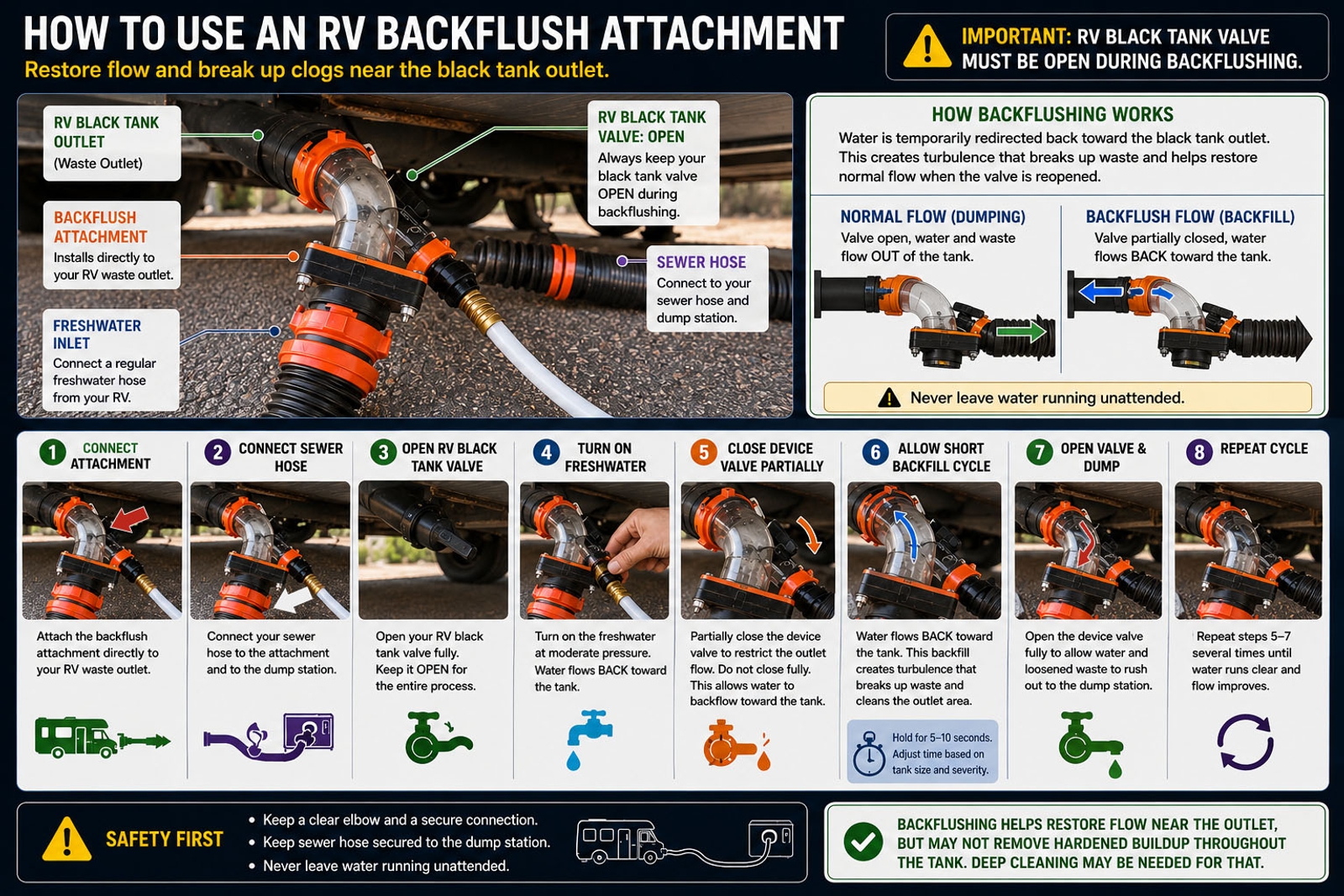
Built-In Black Tank Flush
Connect a dedicated non-potable hose to the black tank flush inlet. Follow your RV manual and never leave the flush running unattended.
Toilet Rinse Wand
If your RV does not have a flush inlet, a tank rinser wand through the toilet can help rinse tank walls and loosen debris.
- Use a dedicated rinse hose, not your drinking water hose.
- Rinse in short cycles and monitor the clear elbow.
- Never walk away while flushing.
- Stop when the water runs reasonably clear.
How to Flush an RV Gray Tank
Gray tanks need flushing too. Even though they do not hold toilet waste, gray tanks commonly collect grease, soap film, food particles, toothpaste, body oils, hair, and biofilm from sink and shower drains.

Gray Tank Flushing Tips
- Dump the gray tank after the black tank to rinse the sewer hose.
- Run warm water through kitchen and bathroom drains before dumping when possible.
- Use enough water to move grease, soap film, and drain residue.
- Do not pour grease or food scraps down the sink.
- If gray tank odor returns quickly, the tank or drain lines may need deep cleaning.
Common RV Dumping and Flushing Mistakes
- Leaving the black tank valve open: Liquids drain away and solids can build into a pyramid.
- Dumping too early: Low liquid volume makes it harder for solids to evacuate.
- Skipping black tank flushing: Residue can remain on tank walls and sensors.
- Forgetting the gray tank: Gray tanks can develop grease film, soap scum, and drain-line odor.
- Using the freshwater hose for sewer rinsing: Always use a dedicated non-potable hose.
- Assuming clear water means clean: Hidden buildup can remain even after rinse water looks clear.
When Dumping and Flushing Are Not Enough
Dumping removes loose tank contents. Flushing rinses some residue. But neither process always removes buildup attached to tank walls, sensors, outlet areas, drain lines, grease film, or compacted waste.

- Flow is strong
- Odors do not return quickly
- Sensors are reasonably accurate
- No recurring clogs are present
- Odors return after dumping
- Tank sensors stay stuck
- Drainage is slow or weak
- Gray tank smells come back quickly
- Rinse water clears but problems remain
Best Practices After Dumping RV Holding Tanks
Consistent dumping habits, proper hydration, and regular flushing help support cleaner tank conditions and reduce recurring odors, buildup, and sensor problems.
Keep Black Valve Closed
Leave the black tank valve closed until you are ready to dump so liquids remain inside the tank.
Use Plenty of Water
Water helps suspend waste, improve drainage, and reduce buildup inside holding tanks.
Dump Black First
Always dump the black tank before the gray tank so gray water helps rinse the sewer hose.
Flush Thoroughly
Flushing helps remove loose residue and supports cleaner tank walls and sensors.
Protect Gray Tanks
Avoid pouring grease, food scraps, and harsh cleaners into kitchen and shower drains.
Deep Clean When Needed
Persistent odors, weak drainage, buildup, and false sensor readings may require corrective cleaning.
Maintain Cleaner RV Holding Tanks Long-Term
After dumping and flushing, add water and a consistent holding tank treatment to help support better odor control and reduce recurring buildup.
View RV Holding Tank Treatments →Continue Learning About RV Holding Tank Maintenance
Explore additional RV tank maintenance, diagnosis, cleaning, and odor prevention guides.
RV Holding Tank Maintenance System
Learn the full Happy Campers approach to maintaining cleaner tanks long-term.
RV Tank Smell Diagnosis Guide
Diagnose black tank, gray tank, sewer, and drain odors correctly.
Deep Cleaning RV Holding Tanks
Learn when buildup requires corrective cleaning beyond routine flushing.
Tank Clog vs Compaction Diagnosis
Learn the difference between true clogs, compaction, and outlet blockage.