


RV holding tank maintenance works best when you follow the correct order: diagnose the problem, deep clean when buildup already exists, then maintain clean tank conditions consistently. RV holding tank maintenance is the routine process of managing water levels, dumping habits, flushing, odor control, tank treatment use, and periodic deep cleaning to help prevent odors, clogs, false sensor readings, poor drainage, and buildup. The most important thing to understand is that maintenance and corrective cleaning are not the same. A holding tank treatment helps maintain clean tank conditions, but it is not meant to remove years of sludge, grease film, hardened residue, or compacted waste already inside the tank. This guide explains the complete Happy Campers approach: learn how the system works, diagnose problems correctly, deep clean when needed, then use proper maintenance habits to keep black and gray tanks performing better long term. One of the most common misconceptions in RV tank maintenance is assuming a holding tank treatment can correct years of accumulated buildup. Treatments are designed to help maintain clean tank conditions. When existing sludge, grease film, sensor contamination, scale, or compacted waste are already present, corrective deep cleaning may be necessary before a maintenance program can perform effectively.The Happy Campers Holding Tank Maintenance System™
How to Maintain RV Black and Gray Holding Tanks
Effective RV Holding Tank Maintenance Starts With A Clean Tank
The Happy Campers Holding Tank Maintenance System
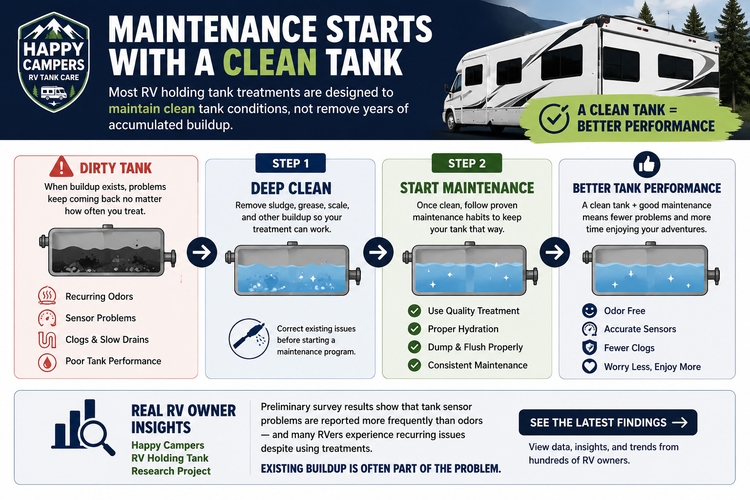
RV holding tank problems are easiest to solve when you approach the system in the correct order: learn the basics, diagnose issues correctly, dump and flush properly, deep clean when needed, and maintain clean tanks consistently.
Learn the RV Tank System
Understand how black and gray tanks work, how buildup forms, and why water, flushing, cleaning, and treatment all matter.
RV Holding Tank Maintenance →Diagnose Tank Problems
Identify whether odors, clogs, drainage issues, toilet problems, or sensor problems are coming from the tank or another part of the RV waste system.
Diagnose RV Tank Problems →Dump & Flush Properly
Use proper dumping, flushing, hydration, and rinse techniques to help prevent buildup and recurring odors.
Dump & Flush Tanks →Deep Clean When Needed
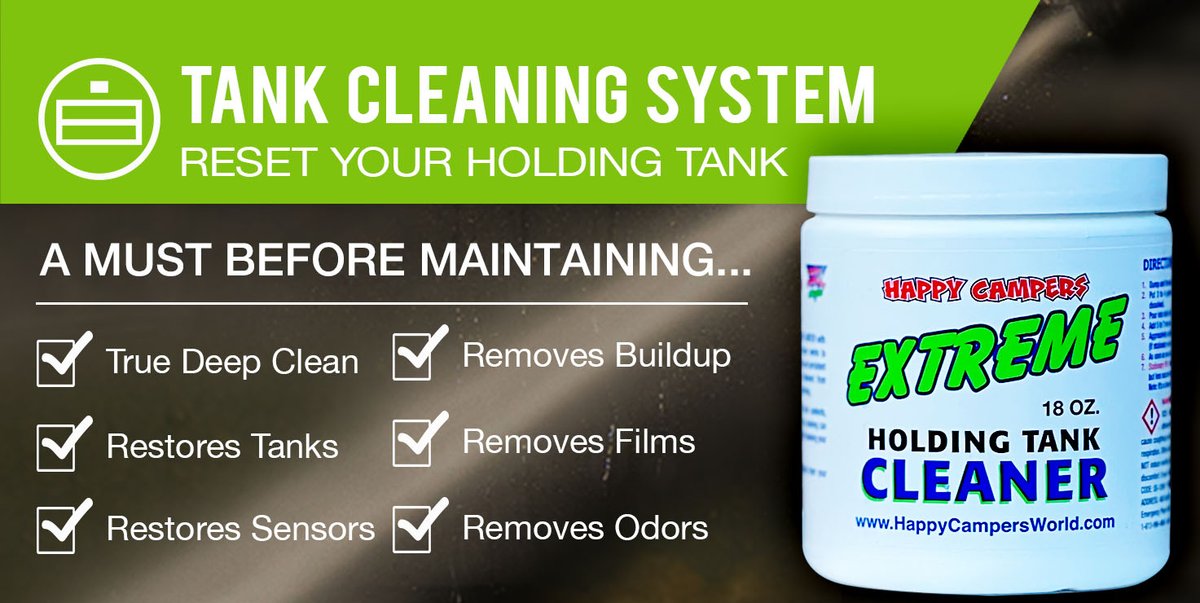
Remove sludge, grease film, compacted buildup, and sensor contamination when normal maintenance is no longer enough.
Deep Clean Tanks →Maintain Clean Tanks
Use proper treatment, hydration, and maintenance routines to help prevent odors and future buildup.
View Tank Treatments →RV Black & Gray Tank Maintenance Checklist
Use this RV black tank and gray tank maintenance checklist as a simple routine for keeping tanks cleaner, reducing odor problems, preventing recurring buildup, and recognizing when deeper corrective cleaning may be necessary.
After Every Dump
- Flush or rinse the black tank thoroughly.
- Add water back into the tank before storage or use.
- Add holding tank treatment according to tank size and conditions.
- Confirm black and gray tank valves are fully closed.
- Check for lingering odors after the dump is complete.
During Each Trip
- Use enough water with every toilet flush.
- Keep the black tank valve closed until it is time to dump.
- Avoid letting waste sit in a dry or under-hydrated tank.
- Watch for slow draining, odor changes, or sensor changes.
- Use treatment consistently rather than only after problems appear.
Monthly or Seasonally
- Inspect toilet seals and the toilet-to-floor area for odor leaks.
- Check roof vents, vent caps, and air admittance valves when odors persist.
- Confirm tank sensors are not showing repeated false readings.
- Flush gray tanks when sink or shower odors appear.
- Review dumping and hydration habits if issues keep returning.
When Maintenance Isn't Enough
If problems persist despite proper maintenance, existing buildup may need to be removed before normal maintenance can resume.
- Diagnose the real cause before adding more treatment.
- Deep clean if buildup, sludge, grease film, or sensor contamination may be present.
- Consider professional hydrojetting for severe compaction or stationary RVs.
- Return to normal maintenance only after the tank has been reset.
Maintenance and Deep Cleaning Are NOT the Same Thing
One of the most common RV tank mistakes is assuming regular dumping and treatment automatically means the tank is clean inside.
Routine maintenance helps maintain a clean tank. But once sludge, grease film, residue, compacted waste, sensor contamination, or hidden buildup already exist inside the tank, deep cleaning may be necessary before normal maintenance products can perform effectively again.
A holding tank treatment is designed to help maintain clean tank conditions. It is not designed to remove years of accumulated buildup, grease film, scale, or compacted waste that already exists inside the tank.
That is why recurring odors, clogs, poor drainage, false sensor readings, and buildup problems often continue even after repeated rinsing and treatment use.

Real RVers Are Reporting Recurring Tank Problems
Early responses from the Happy Campers RV Holding Tank Research Project show that tank sensor problems are being reported more often than odor problems. That matters because false sensor readings often point to film, buildup, residue, or contamination inside the tank rather than a simple odor-control issue.
This is why maintenance should begin with diagnosis. If the tank is already dirty inside, adding more treatment may not solve the underlying problem until the buildup is removed.
View the RV Holding Tank Research Project →Learn the RV Holding Tank System
Modern RV holding tank maintenance is more than simply dumping tanks and adding treatment. Understanding how dumping, hydration, diagnosis, deep cleaning, and ongoing maintenance work together helps prevent many common RV tank problems before they start.
These guides explain how RV black and gray tank systems work, how waste behaves inside holding tanks, and how proper maintenance practices help prevent odors, clogs, buildup, and sensor problems.
Diagnose RV Tank Problems Correctly
Odors, drainage issues, toilet problems, false sensor readings, and clogs often have different root causes. Proper diagnosis is the first step toward solving RV holding tank problems correctly.
Proper Dumping & Tank Flushing
Proper dumping and rinsing help reduce buildup, improve waste evacuation, and support better long-term holding tank performance.
Deep Clean RV Holding Tanks
When odors, sludge, grease film, sensor contamination, or recurring buildup problems already exist, corrective deep cleaning may be necessary before normal maintenance can work effectively again.
RV Black Tank Maintenance
RV black tank maintenance depends on water, proper dumping, consistent treatment use, and avoiding dry waste accumulation. The black tank should not be treated like a dry trash container. It needs enough liquid to help waste move out during dumping.
If black tank odors, clogs, pyramids, or false sensor readings continue, diagnose whether buildup or compaction is already present before relying on routine treatment alone.
Diagnose Black Tank Clogs →RV Gray Tank Maintenance
RV gray tank maintenance focuses on controlling soap residue, grease film, food particles, and drain odors. Gray tank problems are often different from black tank problems because buildup can come from sinks, showers, and daily washing habits.
If gray tank odors appear near sinks or showers, check drains, P-traps, air admittance valves, and tank buildup before assuming the odor is coming from the black tank.
Diagnose Gray Tank Smells →RV Holding Tank Maintenance Explained
Watch real-world demonstrations covering dumping techniques, deep cleaning, buildup removal, odor prevention, and long-term RV holding tank maintenance practices.
Maintain Cleaner RV Holding Tanks Long-Term
The best RV holding tank performance comes from combining proper dumping habits, accurate diagnosis, corrective deep cleaning when needed, proper hydration, and consistent maintenance treatment practices.
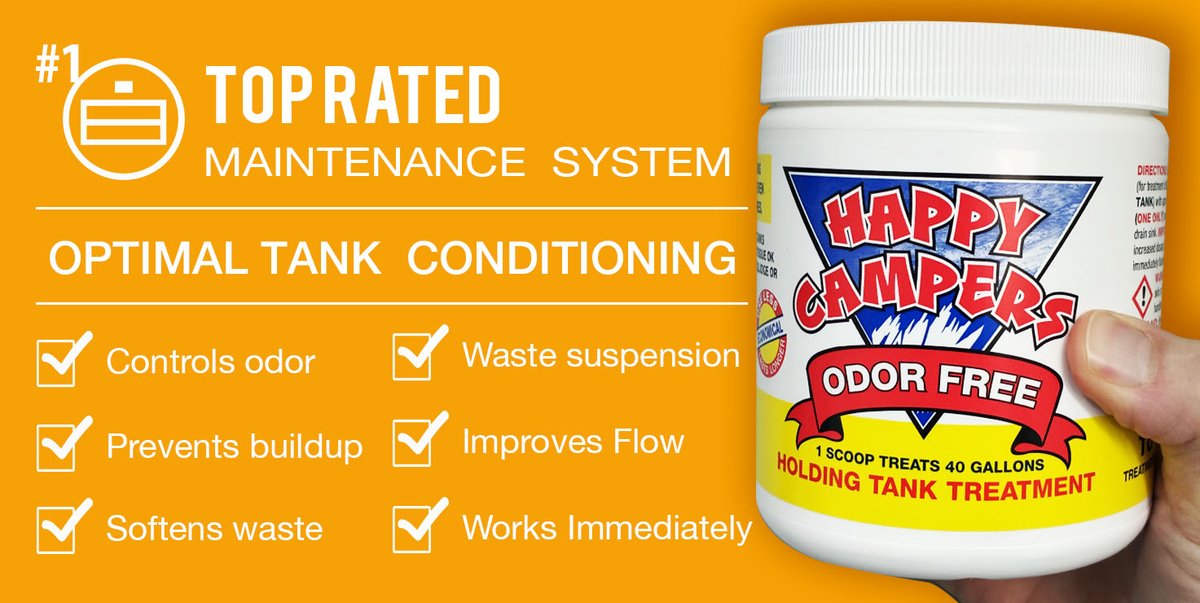
Happy Campers mineral-based holding tank treatments are designed to help support odor control stability and maintain cleaner tank conditions across a wide range of RV travel environments.