



The Best Way to Clean RV Holding Tanks | Deep Clean Black & Gray Tanks
Posted by Happy Campers Store on Nov 10th 2025
The Happy Campers Holding Tank Management System
The Best Way to Clean RV Holding Tanks
How to Deep Clean Black Tanks, Gray Tanks & Restore Tank Sensors the Right Way
Rinsing, flushing, backflushing, ice cubes, and dish soap can help move loose debris — but they are not the same as true holding tank deep cleaning.
Signs Your RV Holding Tanks Need Deep Cleaning
If any of these sound familiar, your holding tank may not actually be clean — even if the rinse water looks clear.
Clear Water Doesn’t Always Mean a Clean Tank
Dumping removes loose waste. Rinsing moves suspended debris. But hidden buildup can stay attached to tank walls, outlet areas, corners, and sensor probes.
That leftover buildup can trap odors, restrict waste flow, cause recurring clogs, and create false sensor readings.
A holding tank can appear clean while hidden layers of residue, sludge, grease film, and buildup remain inside.
Common RV Tank “Deep Cleaning” Methods That Aren’t Actually Deep Cleaning
These methods can be useful — but they are often mistaken for true deep cleaning.
Most DIY methods help move loose debris. True deep cleaning removes the hidden buildup attached to holding tank surfaces.
Running Clear Does NOT Always Mean Clean
One of the most common RV holding tank misconceptions is assuming a tank is clean simply because the rinse water appears clear.
In reality, hidden buildup can remain stuck to tank walls, sensors, corners, and low-flow areas long after tanks appear “flushed.”
This real-world example shows why odor problems, sensor issues, and recurring tank performance problems can continue even after repeated rinsing and dumping.
Need a True Holding Tank Deep Cleaner?
Happy Campers Extreme Cleaner is designed specifically for corrective deep cleaning when odors, buildup, clogs, or dirty sensors show your tank needs more than routine maintenance.
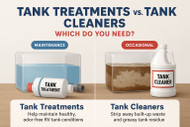
Learn About Extreme Cleaner →Tank Treatments and Tank Cleaners Do Different Jobs
RV Holding Tank Treatments
- Used regularly for maintenance
- Help control odors
- Help prevent future buildup
- Support ongoing tank performance
RV Holding Tank Cleaners
- Used when tanks are dirty or problematic
- Help loosen hidden buildup
- Deep clean tank surfaces and sensors
- Restore flow and performance
A treatment helps maintain a clean tank. A cleaner helps restore a dirty one.
One of the most common RV tank mistakes is using a maintenance treatment in a tank that already has hidden buildup, sludge, residue, or sensor contamination inside it.
Many RV owners assume their tank is clean because it has been flushed or rinsed regularly — but hidden buildup can still remain on tank walls and sensors over time.
If the tank itself is dirty, even the best treatment may struggle to control odors properly until the buildup is removed first.
How Extreme Cleaner Deep Cleans RV Holding Tanks
Extreme Cleaner targets the hidden buildup that rinsing, flushing, and backflushing can leave behind.
How to Clean RV Holding Tanks the Right Way
Start With an Empty Tank
Completely dump and drain the holding tank before starting. A cleaner works best when it can directly contact buildup on the tank walls, floor, sensors, and outlet areas instead of being diluted by a full tank.
Add Cleaner + Plenty of Warm Water
Add Extreme Cleaner along with enough warm water to fill the tank approximately 1/3 to 1/2 full. The added water is important because it helps the cleaner reach tank walls, corners, sensors, and hardened buildup areas during agitation.
Drive to Agitate the Tank
One of the most important cleaning steps is allowing the cleaner and water to slosh throughout the tank while driving. Driving helps the cleaner contact buildup on all interior surfaces and break loose sludge, film, grease, residue, and compacted waste.
For best results, many RV owners add cleaner before leaving for their next destination, drive for approximately 45 minutes or longer, then dump and rinse the tank upon arrival.
Allow Proper Soak Time
Let the cleaner continue soaking long enough to penetrate sludge, grease film, hardened residue, mineral deposits, compacted waste, and sensor contamination. Older tanks with heavy buildup may benefit from longer soak periods and multiple cleaning cycles.
Rinse the Tank Thoroughly
This step is critical. The cleaner helps loosen buildup — but rinsing is what actually removes it from the tank.
After dumping, thoroughly rinse and flush the holding tank to help remove suspended debris, loosened sludge, film residue, and remaining cleaner solution. Incomplete rinsing may leave loosened contamination behind.
Tank backflushing can be extremely helpful during this step because it helps carry loosened debris out of the tank more effectively.
Maintain Tank Performance Going Forward
Once the tank is truly clean, ongoing maintenance helps prevent odors, buildup, sensor fouling, and flow restrictions from returning. Proper maintenance treatments work best when they are maintaining a clean tank — not trying to restore a dirty one.
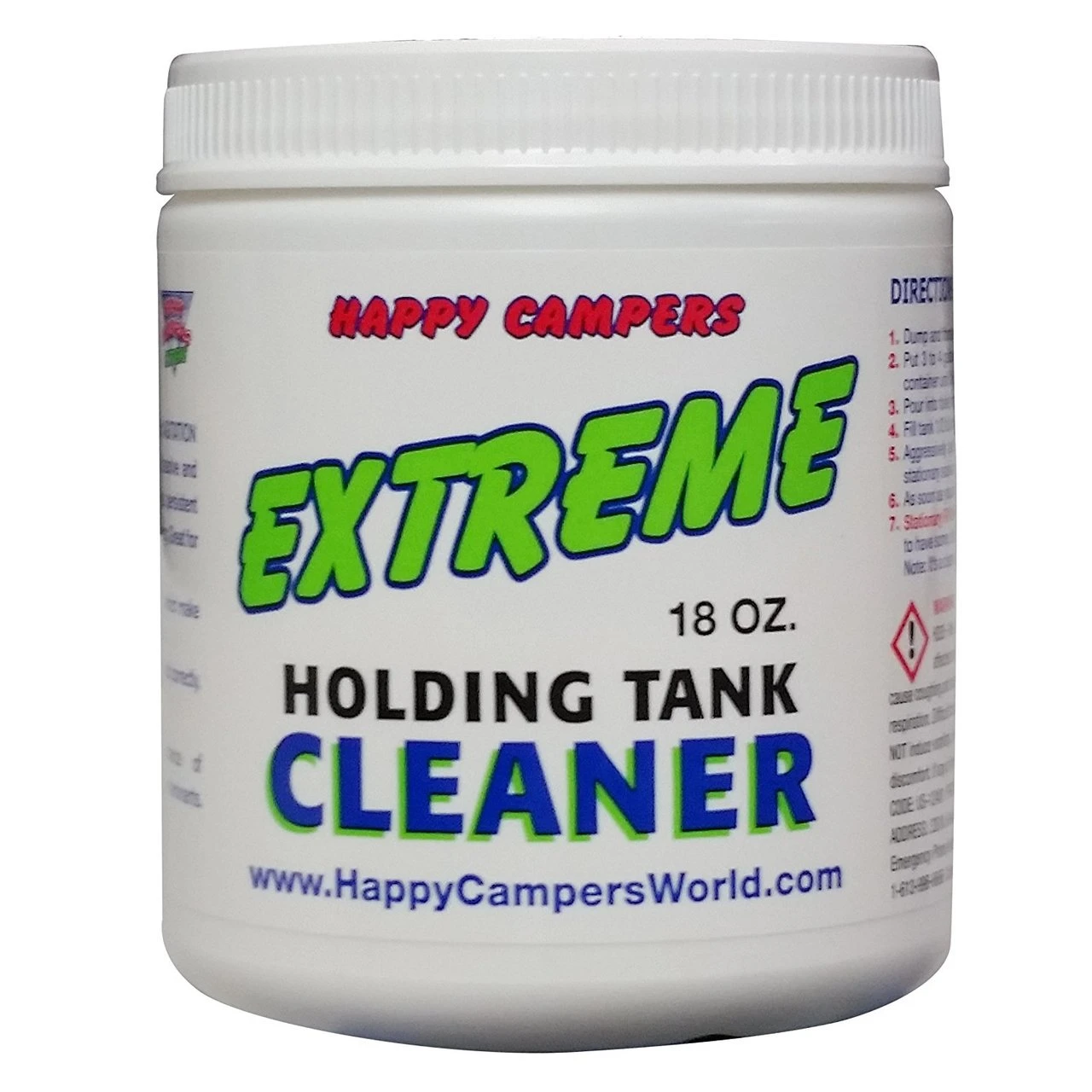
Use the Right Cleaner for Corrective Deep Cleaning
Extreme Cleaner is formulated to help loosen hidden sludge, grease film, residue, hardened waste, and buildup that ordinary rinsing leaves behind.
Why Thorough Rinsing Is One of the Most Important Parts of Deep Cleaning
RV holding tank cleaners help loosen buildup, sludge, grease film, residue, and compacted waste — but the loosened material still needs to be flushed out of the tank.
That’s why rinsing is a critical part of the deep cleaning process.
Proper Rinsing Helps:
- Flush loosened buildup out of the tank
- Improve waste flow
- Reduce recurring odors
- Help restore sensor performance
- Prevent residue from settling again
Helpful Rinsing Methods:
- Built-in tank flush systems
- Backflushing after soaking
- Multiple rinse cycles
- Warm water rinses
- Driving to agitate loosened buildup
Deep cleaning works best when buildup is loosened first — then thoroughly rinsed and flushed from the holding tank system.
Why Multiple Cleaning Cycles Often Work Better Than One Heavy Dose
Many dirty RV holding tanks clean in stages. The first cleaning cycle may loosen surface buildup and expose deeper sludge, residue, grease film, or compacted waste underneath.
While the Extreme Cleaner container is designed to clean one holding tank up to 40 gallons, many RV owners achieve excellent results by starting with a lighter cleaning cycle first — especially when the true condition of the tank is unknown.
Start With a Lighter Cleaning Cycle
For many holding tanks up to 40 gallons, starting with approximately 1/4 to 1/2 container is often enough for an effective initial cleaning cycle.
This approach allows the cleaner to begin loosening buildup while leaving additional product available for future rinse-and-repeat cleaning cycles if needed.
Heavily Neglected Tanks May Need Multiple Passes
Tanks with years of buildup, recurring odor problems, sensor fouling, sludge accumulation, or compaction often respond better to multiple cleaning cycles rather than using the entire container all at once.
Repeated cleaning, driving agitation, soaking, dumping, and rinsing cycles can gradually remove layers of buildup over time and restore tank performance more effectively.
Proper soak time, tank agitation while driving, thorough rinsing, and repeated cleaning cycles often matter more than simply adding more cleaner at once.
Why Mobile RVs Often Clean More Effectively Than Stationary RVs
Driving creates natural tank movement and agitation, helping the cleaning solution contact tank walls, corners, sensors, and buildup areas more effectively.
If You Can Drive the RV
- Allow the cleaner to soak
- Drive carefully to create agitation
- Help loosen residue and buildup
- Dump and rinse thoroughly afterward
If Your RV Is Stationary
- Use longer soak times
- Use additional rinse cycles
- Consider repeated cleaning cycles
- Severe buildup may require professional cleaning
Long-term stationary RVs with severe buildup or hardened waste may require professional hydro-jet or tank cleaning service before normal maintenance products can perform effectively again.
Backflushing Helps Clear Clogs — But It Is Not the Same as Deep Cleaning
Backflushing is extremely useful for dislodging clogs, improving flow, and helping move loosened debris out of the tank.
But by itself, it does not remove hidden buildup layers attached to tank walls and sensors.
The best results happen when buildup is loosened first — then rinsed and backflushed from the tank.
Why Deep Cleaning Helps Restore RV Tank Sensors
Dirty sensors often happen when sludge, grease film, waste residue, or buildup coats the sensor probes.
Proper deep cleaning can help remove that conductive residue so sensors may work more accurately again.
RV Tank Sensors Are Not Always Reliable Indicators of Tank Cleanliness
Deep cleaning can help restore dirty sensors — but RV holding tank sensors are notoriously imperfect systems.
How Dirty Tanks Affect Sensors
- Waste residue bridges sensor probes
- Grease and sludge create conductive film
- Buildup traps moisture around sensors
- False “full” readings become more common
Other Reasons Sensors Fail
- Corroded probes
- Loose or damaged wiring
- Grounding problems
- Faulty monitor panels
- Poor factory sensor placement
RV Tank Sensors: Why They Fail, Lie & Misread
Learn why false readings happen, why clean sensors can still misread, and how buildup, wiring, moisture, and tank design affect sensor accuracy.
Explore RV Tank Sensor Guide →What Real RV Holding Tank Deep Cleaning Results Look Like
Hidden buildup often remains inside tanks long after rinse water appears clear.
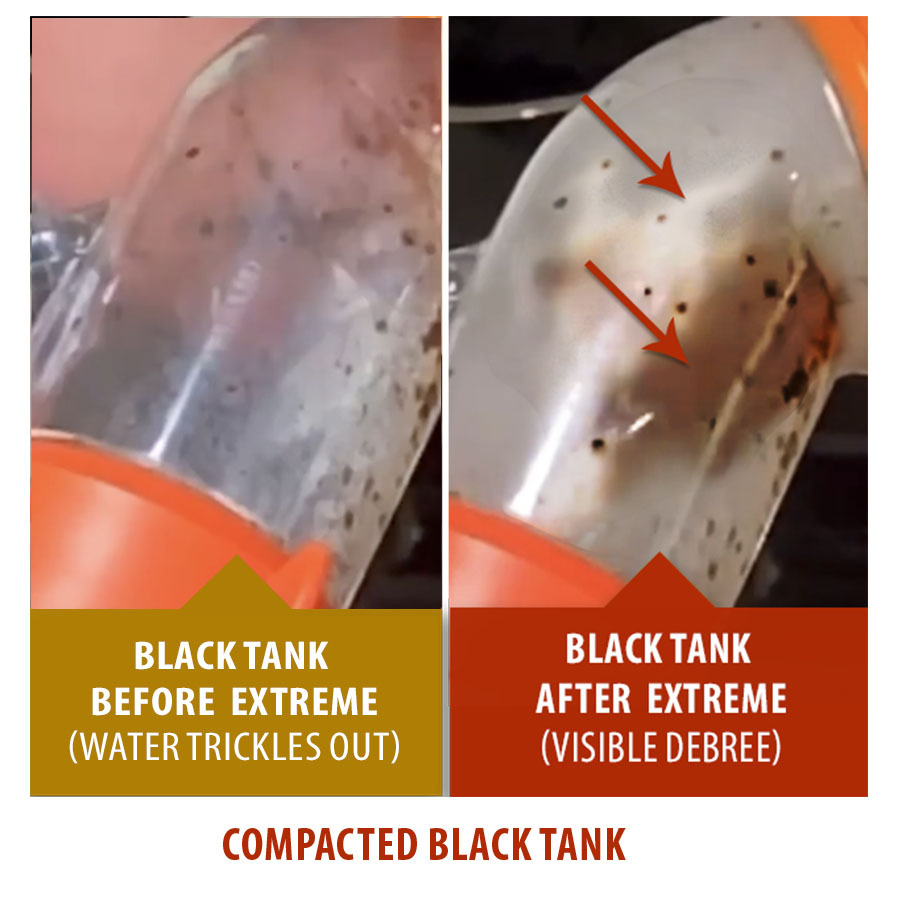
Compacted Waste Removal
Hidden buildup can remain even after repeated rinsing.
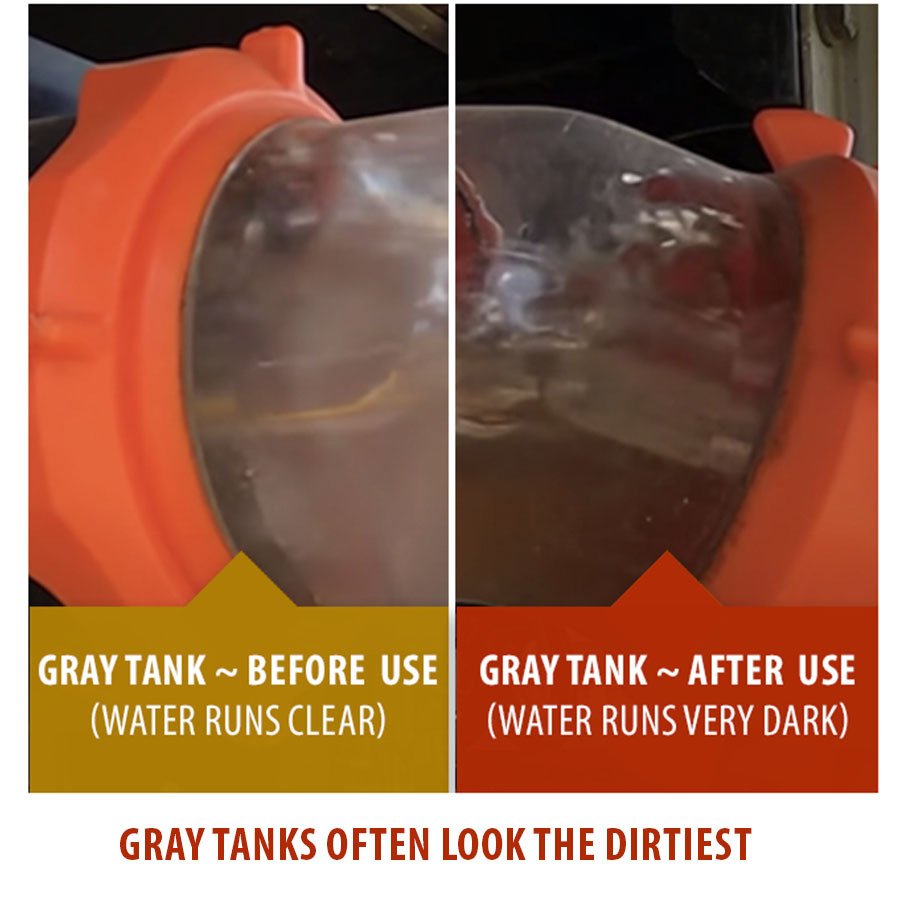
Gray Tank Cleaning
Grease film and sludge can collect inside gray tanks too.
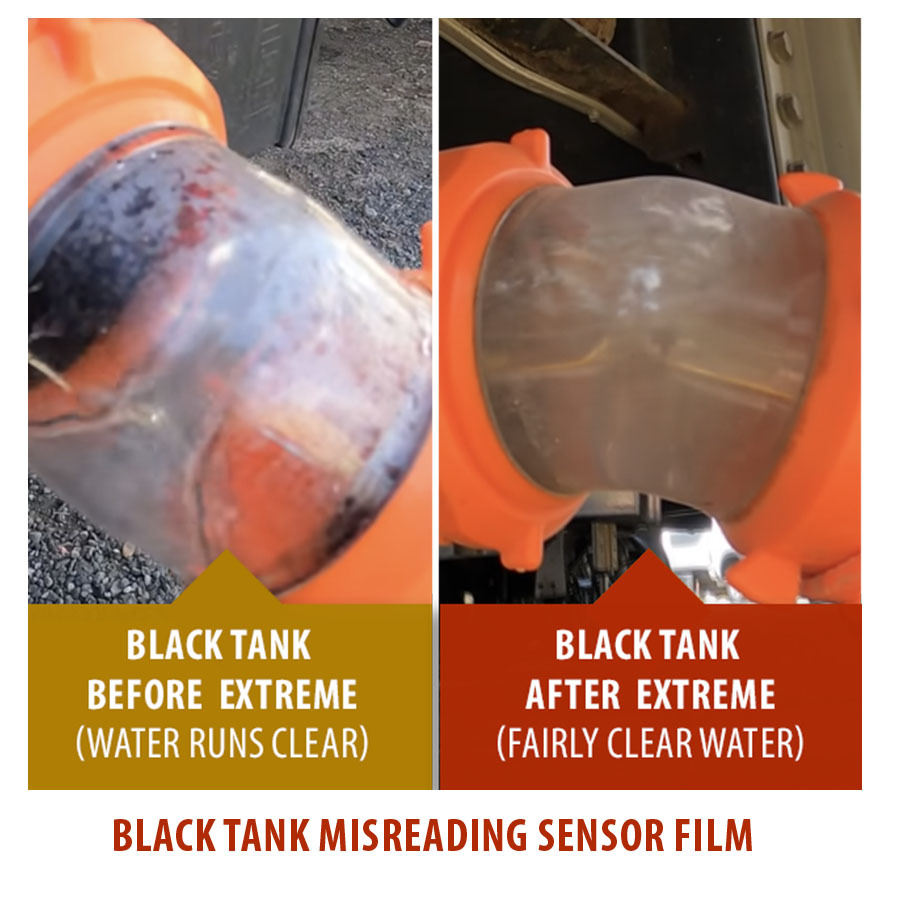
Sensor Cleaning
Dirty probes may need multiple rinse cycles to improve accuracy.
Ready to Deep Clean Your RV Holding Tanks the Right Way?
Extreme Cleaner helps loosen and remove hidden buildup, sludge, grease film, hardened waste, and odor-causing residue from black and gray tanks.
RV Holding Tank Cleaning Infographic
Save this visual guide for the next time your holding tanks need a true deep clean.

RV Holding Tank Cleaning FAQs
Does backflushing clean an RV tank?
Backflushing helps move loosened debris and clear soft clogs, but it is not the same as deep cleaning.
Why does my RV tank still smell after rinsing?
Rinsing may remove loose waste while hidden residue and buildup remain attached to tank surfaces.
How much Extreme Cleaner should I use?
Many tanks up to 40 gallons can often be cleaned effectively with 1/4 to 1/2 container per cycle.
Does driving help clean the tank?
Yes. Driving creates agitation that helps the cleaner contact tank walls, corners, and buildup more effectively.
Can gray tanks develop buildup too?
Yes. Gray tanks commonly develop grease film, soap residue, biofilm, and odor-causing buildup.