



How to Prevent Sludge in Your RV Black Tank (Plus Early Buildup Tips)
Posted by Happy Campers Store on Jul 1st 2025
How to Prevent Sludge in Your RV Black Tank (Plus Early Buildup Tips)
RV black tank sludge starts small—but if you don’t catch it early, it can lead to clogs, odors, and costly repairs. Fortunately, preventing sludge is easier than you think. With just a few changes to your tank routine, you can avoid buildup altogether—or break it down before it gets out of hand.
What Causes Black Tank Sludge?
Sludge forms when solid waste accumulates in your RV’s black tank without enough water to break it down. This usually happens when:
- You leave the black tank valve open while hooked up
- Too little water is used during flushes
- Toilet paper or waste sticks to tank walls
- You skip regular treatment or flushing schedules
Over time, this creates a thick, sludgy layer at the bottom of your tank—making it harder to dump and easier for odors to build up.
Sludge formation is often influenced by retention time, hydration variability, and how treatment systems behave between dump cycles. Differences in mechanism can affect whether material evacuates cleanly or accumulates along tank surfaces. We explore these environmental stability factors in our RV holding tank treatment scientific comparison whitepaper .
How to Prevent Sludge in Your RV Black Tank
Prevention starts with simple, repeatable habits. Here’s how to keep your tank clean and sludge-free:
1. Keep the Black Tank Valve Closed
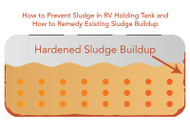
Leaving the valve open lets liquid waste drain out, but leaves solids behind. This forms a hard pyramid of waste in the tank. Always keep the valve closed until you’re ready to dump a full tank.
2. Use Plenty of Water When Flushing
Flush longer and add extra water during each toilet use. Water helps suspend solids and prevents buildup on tank walls and bottom.
3. Use a Mineral-Based Holding Tank Treatment
Happy Campers is a non-bacterial, non-chemical holding tank treatment that liquefies waste, neutralizes odor, and works in hot and cold weather. It’s 100% septic-safe and a great proactive sludge prevention tool.
4. Add Water After Every Dump
Always reintroduce 2–3 gallons of water into the black tank after dumping. A dry tank bottom causes immediate sludge on your next flush.
Early Signs of Sludge (And How to Break It Down)
If your sensors are acting up, draining is slow, or you notice early odors, here’s a light remediation method before it becomes a serious problem:
- Double-dose Happy Campers into the tank
- Fill with warm water to just over half-full
- Let it sit overnight while parked level
- Dump and rinse the next morning
This method breaks down soft buildup before it turns into a clog—no deep cleaning needed.
What to Avoid
- No bleach or chemicals: These damage seals and disrupt tank balance
- No “flushable” wipes: They do not break down properly and create buildup
- No dry tanks: Always add water after dumping
If sludge becomes hardened or sensors fail completely, you may need a full RV black tank deep clean.
How Do You Know If You Already Have Hardened Buildup?
Even if you’re doing everything right now, many RV owners already have some level of hardened sludge or compacted buildup in their black tank from past habits.
The challenge is that this type of buildup isn’t always obvious. In fact, your tank can appear to be working normally — even when there’s a problem developing inside.
Common Signs of Hardened Buildup:
- Tank runs clear quickly when rinsing — but issues persist
- Persistent odors even after dumping and flushing
- Reduced tank capacity (fills up faster than expected)
- Inconsistent or inaccurate sensor readings
- Slow or uneven draining without a full clog
These are all signs that waste may have compacted and hardened along the tank walls or bottom, creating a layer that normal rinsing can’t remove.
? One of the biggest misconceptions is that clear water means a clean tank — but that’s not always the case.
Over time, this hidden buildup can trap odor-causing compounds, reduce usable space, and lead to ongoing performance issues.
? If you’re noticing these signs, a deep cleaning may be needed to fully reset your tank.
? See What Hidden Buildup Actually Looks Like
Still not sure if this applies to your tank? This real-world example shows exactly how misleading a “clean-looking” tank can be.
In this case, the tank was rinsing clear — just like many RV owners experience.
? But during a deep clean, over 2.5 gallons of hardened buildup came out.
This is the kind of hidden residue that can cause ongoing odors, reduced capacity, and sensor issues — even when everything appears normal.
? Watch the video below to see what was really inside the tank.
Need Help with a Blocked Tank?
Final Tip: Make Maintenance a Routine
The best way to prevent sludge is to stay consistent:
- Keep your tank valve closed
- Use plenty of water
- Treat with Happy Campers every time
- Dump when two-thirds full
- Add water after each dump
These habits will prevent most problems before they start—giving you more time to enjoy the open road without worrying about what's below deck.
Recommended Product:
Happy Campers RV Holding Tank Treatment – Powerful, odor-free, enzyme-free, and fully septic-safe.