



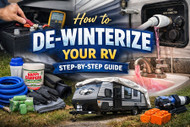
How to De-Winterize Your RV: Step-by-Step Spring Startup Guide
Posted by Happy Campers Store on Apr 15th 2026
How to De-Winterize Your RV: Step-by-Step Spring Startup Guide
To de-winterize an RV, remove the cover, inspect for damage, reconnect the battery, fill the fresh water tank, flush antifreeze from the plumbing, test the water pump, fill and check the water heater, inspect for leaks, and prepare your holding tanks for your first trip.
Spring is here, which means it’s time to bring your RV out of winter storage and get it ready for camping season. If you winterized your RV properly, de-winterizing is simply the process of safely reversing those steps, checking your systems, and making sure everything works before your first trip.
In this guide, we’ll walk through exactly how to de-winterize an RV step by step, including how to flush RV antifreeze, reconnect power, check for leaks, and prep your tanks for the season.
Prefer to watch it instead? Follow along with our full video walkthrough below:
RV De-Winterizing Checklist: Quick Step-by-Step Overview
- Remove the RV cover and inspect the exterior
- Reconnect and test the battery
- Check for signs of leaks, pests, or damage
- Fill the fresh water tank
- Flush antifreeze from all water lines
- Turn on and test the water pump
- Fill and inspect the water heater before turning it on
- Check all plumbing connections for leaks
- Prep your black and gray tanks for your first trip
- Pack essential supplies and do a final walkthrough
This is the basic RV de-winterizing checklist most owners can follow each spring. Below, we’ll break down each step in more detail.
Download Your Free RV De-Winterizing Checklist
Getting your RV ready for the season doesn’t have to be overwhelming. Use this clean, printable checklist to make sure you don’t miss a single step—from flushing your water system to prepping your tanks for your first trip.
✔ Step-by-step spring startup guide
✔ Printable and easy to follow
✔ Perfect for your first trip of the season
What Do You Need to De-Winterize an RV?
To de-winterize an RV, you typically need a charged battery, access to water, basic hand tools, and enough time to inspect and test your plumbing and electrical systems. You may also want towels, a flashlight, and your preferred holding tank treatment for trip prep.
- RV water hose
- Fresh water supply or filled tank
- Charged RV battery
- Basic tools for access panels
- Towels or rags for leaks
- Flashlight for inspection points
- Tank treatment for startup prep
How to De-Winterize an RV Step by Step
1. Remove Your RV Cover and Inspect the Exterior
Start by removing your RV cover carefully and inspecting the outside of the rig. This gives you a chance to spot damage before putting any of the systems back into use.
Look for:
- Roof damage or soft spots
- Loose sealant around seams and fixtures
- Cracks around vents or trim
- Signs of water intrusion
- Evidence of rodents or pests
If anything looks questionable, it’s better to address it now than discover it during your first camping trip.
2. Reconnect and Check the RV Battery
Reconnect the battery and make sure it is holding a charge. This is one of the first things to check when bringing your RV out of storage because many other systems depend on 12V power.
- Reconnect terminals securely
- Check for corrosion
- Confirm battery charge level
- Test interior lights or monitor panel
If the battery is weak or not charging properly, or if you need to replace any batteries, address that before moving on.
3. Check for Damage Before Running Systems
Before using your RV after winter, inspect areas where problems commonly show up after storage. Winter weather, sitting water, and pests can all cause issues that are easy to miss.
Check:
- Under sinks
- Inside storage compartments
- Around plumbing access panels
- Near the water pump
- Floor corners and lower cabinets
4. Fill the Fresh Water Tank
Once everything looks good, add water to your fresh tank so you can begin flushing and testing the plumbing system. This gives you a controlled way to run water through the RV even if you are not hooked up at a campsite.
Adding water now allows you to:
- Prime the plumbing system
- Test the water pump
- Flush antifreeze from the lines
- Check for leaks under pressure
Should You Deep Clean Your RV Tank Before Your First Trip?
If your RV sat all winter—or especially if it was stored with waste in the tank—this is the perfect time to do a deep clean.
Many RV owners assume their tank is clean just because it drains or rinses clear. But after months of sitting, tanks can develop:
- Compacted waste buildup
- Residual sludge on tank walls
- Reduced tank capacity
- Hidden odor sources
If you've ever had a tank that seems fine but still smells… or doesn’t drain quite right… there’s a good chance buildup is the issue.
The best time to fix that? Right now—before your first trip.
How to Deep Clean Your RV Tank Before Your First Trip
A great approach is to clean your tank right before heading out, then dump when you arrive at your destination.
- Add water to your black tank (approximately half to 3/4 full)
- Add your RV tank cleaner (like Happy Campers Extreme Cleaner)
- Let it sit and break down buildup while you travel
- Dump and rinse your tank when you reach your campground
This method allows the cleaner to work under real conditions—sloshing, soaking, and reaching areas that simple rinsing can’t.
? Pro Tip: This is especially effective if your tank has been sitting unused for months or if you’ve never done a deep clean before.
Starting your season with a clean tank can improve flow, restore lost capacity, and eliminate odor issues before they begin.
5. Flush RV Antifreeze from the Water Lines
To flush RV antifreeze, run fresh water through every faucet, fixture, and toilet until the water is clear and any pink antifreeze is gone.
This is one of the most important steps when de-winterizing an RV. If antifreeze remains in the lines, it can affect taste, odor, and system performance.
- Turn on the water pump or connect to a water source
- Open the cold side of each faucet until clear
- Open the hot side of each faucet until clear
- Flush the toilet until no antifreeze remains
- Run water through the shower and any exterior fixtures
Don’t forget any low-point drains, outdoor showers, or outdoor kitchen connections if your RV has them.
6. Turn On and Test the Water Pump
After flushing the lines, turn on the water pump and listen carefully. The pump should pressurize the system and then stop running once pressure is reached.
Watch for warning signs like:
- The pump running continuously
- The pump cycling when no water is being used
- Weak or sputtering flow
These can point to a leak, trapped air, or another plumbing issue.
7. Fill and Check the Water Heater Before Turning It On
Never turn on an RV water heater until you are sure it is full of water.
This is one of the most important spring startup rules. Turning on an empty water heater can damage the heating element or unit.
- Confirm the bypass is set correctly
- Make sure the tank is filling with water
- Open a hot water faucet until flow is steady
- Then turn on propane or electric mode
After it is running, check that the water heats properly and look for leaks around the heater area.
8. Inspect the Water Pump Area and Plumbing Connections for Leaks
As your system pressurizes, inspect every accessible plumbing area. Small drips now can turn into major headaches later.
Focus on:
- The water pump compartment
- Under sinks
- Behind removable access panels
- Water heater connections
- Toilet water line connections
9. Prep Your RV Holding Tanks for the First Trip
Many RV owners focus on water lines and power but forget tank prep. That can lead to odor issues and poor tank performance right at the start of the season.
Before your first trip, add water to the tank and begin with your preferred tank treatment. We use Happy Campers as one of the first things we add to the tank once water is in the system so the tank is ready from the start.
Starting your season this way can help support better odor control and better tank conditions during those first spring trips.
How to Properly Condition Your RV Tank for the Season
Once your system is flushed and your tank has water in it, the next step is conditioning your tank for use.
This is one of the most overlooked parts of RV setup—but it plays a huge role in preventing odors and keeping your tank working properly.
Instead of reacting to problems later, this step helps prevent them from the start.
How to Use RV Tank Treatment the Right Way
After adding water to your tank, follow these simple steps:
- Add 1–3 gallons of water to the black tank (if not already added)
- Add your RV tank treatment (like Happy Campers)
- Use your toilet normally—no special process needed
That’s it. The key is starting with enough water and adding treatment before your first use, not after problems begin.
Why Tank Conditioning Matters
When your tank is properly conditioned from the start, it helps:
- Control odors before they develop
- Maintain better tank conditions during use
- Support consistent waste breakdown over time
- Reduce the chance of buildup forming
? We personally use Happy Campers as one of the first things we add once water is in the system so everything starts off balanced and ready for the season.
Save 10% with code Happy10.
Common Mistake to Avoid
One of the most common mistakes RV owners make is waiting until there’s a smell or problem before using a treatment.
By that point, the tank conditions are already off.
Starting early is what makes the difference.
10. Pack for Your First Camping Trip of the Season
Once your RV systems are working properly, finish your spring startup by packing the basics for your first outing.
- Water hoses and filters
- Sewer hose and fittings
- Power adapters
- Leveling blocks
- Tank treatment
- Cleaning supplies
- Kitchen and bedding essentials
How Long Does It Take to De-Winterize an RV?
For most RV owners, de-winterizing takes about 1 to 2 hours. Smaller travel trailers may take less time, while larger RVs with more plumbing fixtures and systems can take longer.
The exact time depends on:
- How your RV was winterized
- Whether you find any leaks or damage
- How many fixtures need to be flushed
- Whether you are also sanitizing the system
Do You Need to Sanitize Your RV Water System After Winter?
Many RV owners choose to sanitize their RV water system after winter storage, especially if the RV sat for several months. Sanitizing can help freshen the system before regular use, particularly if water has been sitting in the lines or tank.
If you want, this can be done after flushing the antifreeze and before your first trip.
Common RV De-Winterizing Mistakes to Avoid
- Turning on the water heater before it is full
- Forgetting to flush every faucet and fixture
- Ignoring slow drips or small leaks
- Skipping battery inspection
- Forgetting to prep holding tanks before the first trip
Final Thoughts on RV Spring Startup
De-winterizing your RV does not have to feel overwhelming. If you work through the process step by step, you can safely bring your rig out of storage, catch small problems early, and get ready for camping season with confidence.
Whether you are brand new to RVing or just need a refresher each spring, following a clear RV de-winterizing checklist can make the process faster, easier, and less stressful.
Frequently Asked Questions About De-Winterizing an RV
How do you de-winterize an RV?
To de-winterize an RV, remove the cover, inspect for damage, reconnect the battery, fill the fresh water tank, flush antifreeze from the plumbing system, test the water pump, fill the water heater, inspect for leaks, and prepare the holding tanks for your first trip.
How do you flush antifreeze out of an RV water system?
To flush antifreeze out of an RV water system, run fresh water through each faucet, toilet, shower, and exterior fixture until the water is clear and all pink antifreeze is gone.
How long does it take to de-winterize an RV?
Most RV owners can de-winterize an RV in about 1 to 2 hours, depending on the size of the RV and whether any repairs or extra cleaning are needed.
Can you de-winterize an RV without city water?
Yes, you can de-winterize an RV without city water by filling the fresh water tank and using the RV water pump to flush the plumbing system.
Do you need to sanitize an RV after winterizing?
Many RV owners choose to sanitize the fresh water system after winter storage, especially if the RV sat for months. It is not always required, but it is often a good seasonal maintenance step.
What should you check before using your RV after winter?
Before using your RV after winter, check the roof and exterior, battery, plumbing lines, water pump, water heater, and visible connections for leaks, pests, or storage-related damage.
Related Reading
- Why Your RV Tank Looks Clean But Still Isn’t
- How to Deep Clean Your RV Black Tank
- RV Black Tank Clog vs. Compacted Tank: Why the Fix Isn’t the Same