




Why Your RV Smells Worse in Cold Weather
Posted by Happy Campers Store on Dec 12th 2025
Why Your RV Smells Worse in Cold Weather (And How to Stop It Before Your Next Trip)
This guide explains why winter makes RV smells worse, what’s really happening inside your holding tank, and how to fix it quickly and safely.
Why RV Odors Get Worse in Cold Weather
Most RVers expect summer heat to cause smells, but winter is just as tricky. When it’s freezing outside but warm inside your RV, you create the perfect recipe for odor issues.
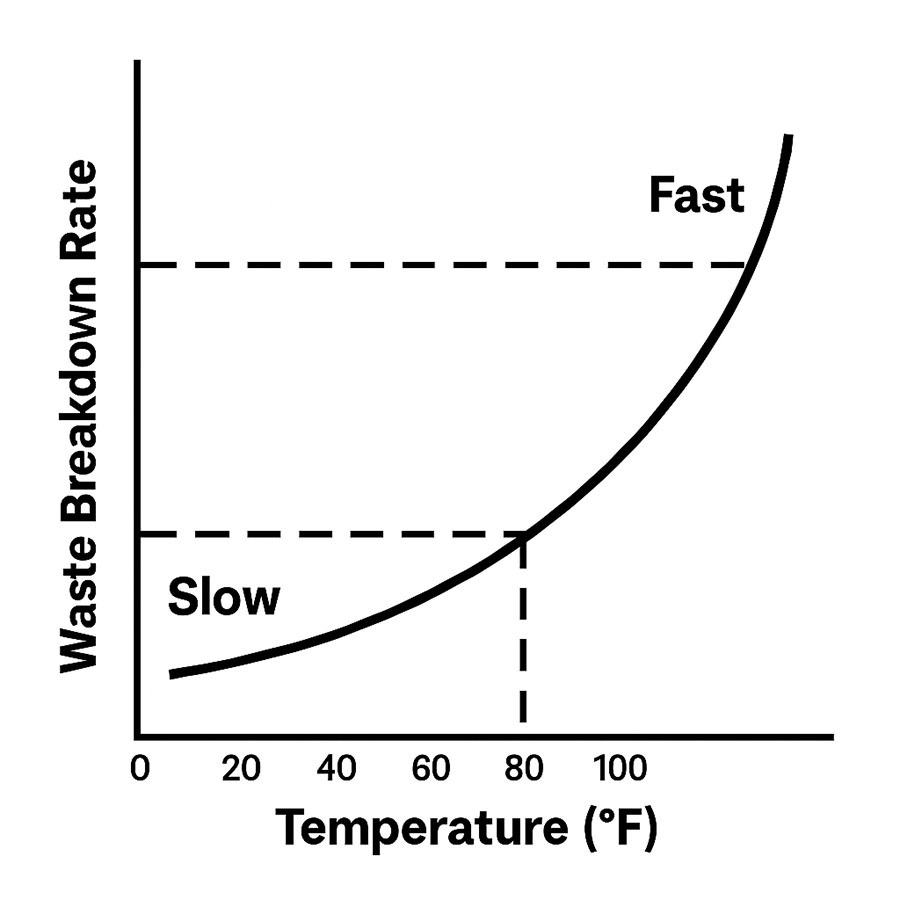
- Cold slows waste breakdown.
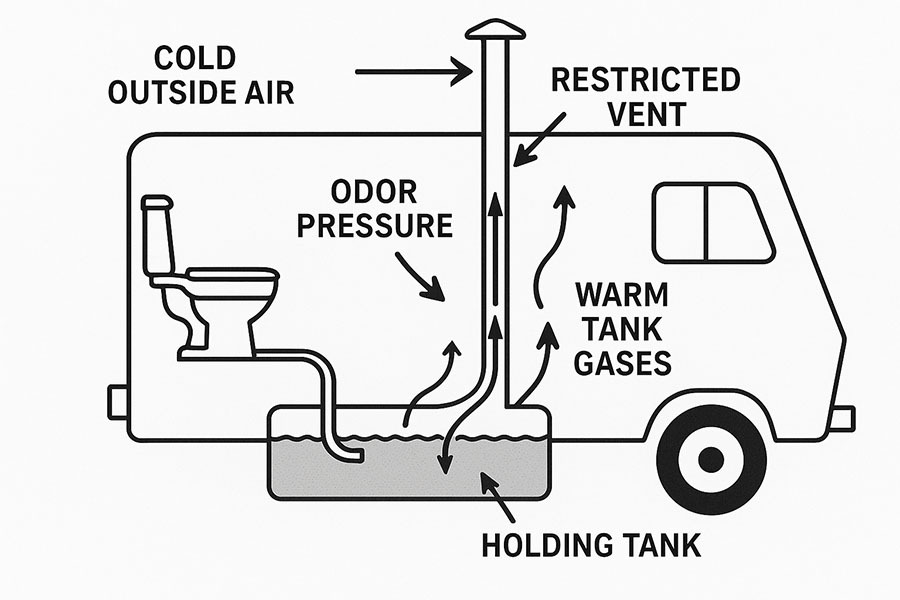
- Warm tank gases expand and push upward.
- Cold air outside pushes down on the vent stack.
- Rubber seals shrink and leak odor.
- Most RVers flush with less water in winter.
- Closed windows trap smells inside the RV.
The Science Behind Winter RV Tank Odors
1. Temperature Slows Breakdown
Waste decomposition slows dramatically in colder temperatures—often cutting in half for every 18°F drop. That means more odor-causing compounds stick around.
2. Pressure Differences (PV = nRT)
Warm air inside your tank expands. Cold outside air contracts. If your vent is restricted, odor gets pushed up through the toilet instead of escaping the roof.
3. Thick, Sticky Sludge
Cold temperatures increase waste viscosity. Thick sludge sticks to the tank walls and traps odor—especially if you aren’t using enough water.
7 Common Winter Odor Problems (and Fixes)
1. Waste Breaks Down Slowly
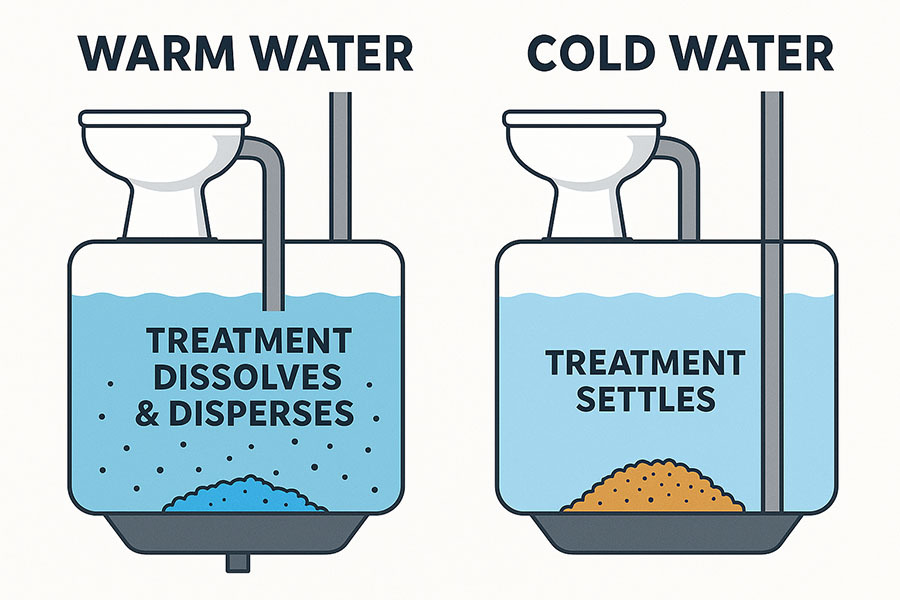
Use warm water to activate your treatment quickly. Cold tanks slow everything down.
2. Vent Stack Pressure “Burps” Odor
Check for ice, debris, or nests. A restricted vent sends odor into the RV instead of out of it.
3. Toilet Seals Shrink
Cold rubber loses flexibility. Apply seal lubricant and make sure your bowl holds water overnight.
4. Not Enough Water in the Tank
Winter flushes are often shorter. Always start with 3–5 gallons after dumping.
5. Treatment Dissolves Slowly in Cold Water
Pre-dissolve it in warm water for full activation. This alone solves many winter odor complaints.
6. Residue Builds Up on Cold Tank Walls
Perform a seasonal deep clean using a mineral-based **tank reset** or your Happy Campers Extreme Cleaner.
7. Cold Weather Messes With Airflow
Run your bathroom fan a little longer and crack windows occasionally to break up stagnant air.
Cold temperatures can significantly alter the internal chemistry of your holding tank. Reduced biological activity, slower reaction rates, and changing gas dynamics all influence odor behavior in winter conditions. We examine these environmental sensitivity differences in depth in our mechanism-based RV holding tank treatment scientific comparison .
Winter Odor Problems That *Aren’t* Your Black Tank
Many RVers assume every bad smell comes from the black tank—but winter introduces several look-alike problems.
- Frozen P-traps – When the trap dries or freezes, gray tank odor escapes.
- Gray tank venting issues – Winter airflow can push gray tank gas upward.
- Furnace backdraft odor – Warm air pulling stale air through seams or floor penetrations.
- Condensation mustiness – Cold walls create moisture that smells like “sewer.”
- Water heater sulfur odor – Especially with certain campground water supplies.
- Roof vent icing – Snow buildup blocks airflow and traps odor inside.
- Refrigerator drain pan odor – A common winter culprit almost no one checks.
Winter RV Odor Myths (Debunked)
- Myth: “Adding more treatments fixes winter odor.”
Truth: Without enough water, nothing works. - Myth: “Cold weather kills all bacteria, so odor should disappear.”
Truth: Odor compounds remain even when breakdown slows. - Myth: “If you smell sewer gas, your tank must be dirty.”
Truth: Many winter odors come from vents, seals, or gray tanks. - Myth: “Black tanks don’t need water in cold weather.”
Truth: Dry tanks smell every time.
Does Warm Water Really Help in Winter?
- Tank priming right after dumping
- Pre-dissolving your treatment
Winter Odor Diagrams
Quick Winter RV Odor Checklist
- Prime your tank with 3–5 gallons after every dump.
- Pre-dissolve your treatment in warm water.
- Lubricate toilet seals regularly.
- Check roof vents for snow or blockages.
- Run your bathroom fan after flushing.
- Do a seasonal deep clean if odors persist.
10-Minute Winter Odor Reset
- Add 1–2 gallons of warm water to the toilet.
- Pre-dissolve one scoop of treatment and pour it in.
- Top off to 3–5 gallons total.
- Run your bathroom fan for a few minutes.
- Fill sink/shower P-traps with warm water.
Cold-Weather RV Odor FAQs
Do I need warm water every flush?
Nope! Only when priming the tank or dissolving treatment.
Why does my RV smell worse in cold weather?
Cold slows breakdown, changes airflow, and shrinks seals—all causing odor.
Does cold weather mean my tank is dirty?
Not always. Gray tanks, vents, and P-traps often cause winter smells.
Does adding more chemical help?
Not without enough water. Water volume matters more than dosage.