



Mold in RVs: The Most Common Hotspots, Causes & How to Stop It for Good
Posted by Happy Campers Store on Jan 12th 2026
Mold in RVs: The Most Common Hotspots, Causes & How to Stop It for Good
RV mold almost always comes down to one thing: moisture. This guide shows you where mold hides, why it keeps coming back, and what to do so you’re not cleaning the same spots every month.
What Mold Needs to Grow Inside an RV
Mold doesn’t need much. RVs are extra vulnerable because they’re small, tightly sealed, and experience big temperature swings.
- Moisture: leaks, humidity, or condensation
- Food: dust, soap residue, paper backing, wood products, fabric
- Low airflow: closed cabinets, blocked vents, tight corners
- Time: especially during storage or rainy seasons
RV Mold Hotspot Infographic (Most Common Locations)
Use this as a quick “walk-through checklist.” If you’re chasing recurring mold, these are the spots to inspect first.
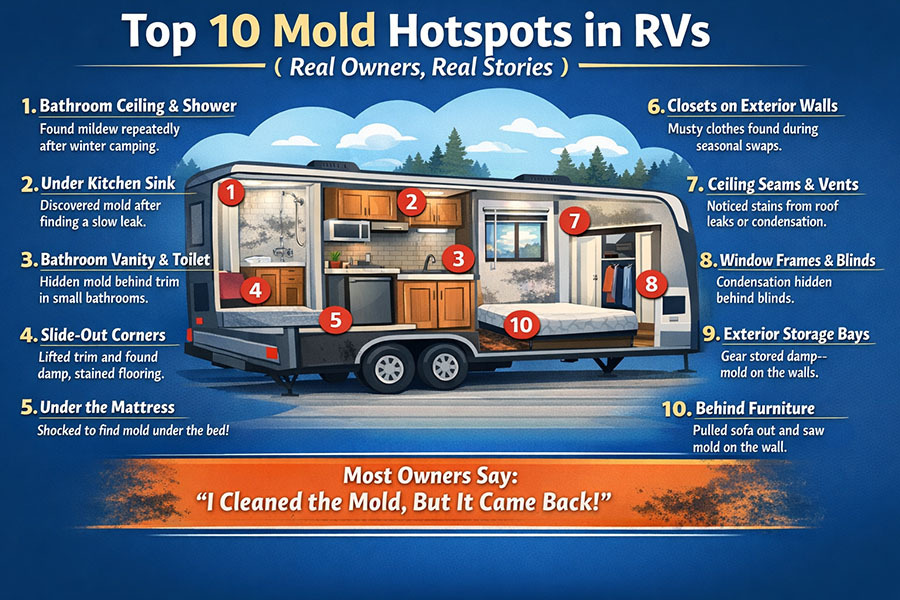
RV Mold Hotspots Most Owners Miss (Real-World Examples)
These locations show up repeatedly in RV forums, Reddit threads, and owner groups. In many cases, mold was discovered accidentally—long after the moisture problem started.
RV Mold Hotspots: Cause → Solution (What RVers Actually Use)
| Mold Hotspot | Root Cause | Most RVers Fix This With… |
|---|---|---|
| Bathroom ceiling & shower corners | Steam condensation with limited airflow | A high-output RV vent fan like the Maxxair MaxxFan Deluxe , run during and after showers. |
| Under kitchen sink | Slow leaks and trapped moisture | Water-sensing leak detectors such as Govee Water Leak Sensors to catch drips before damage starts. |
| Bathroom vanity & toilet base | Splash moisture with poor drying | Passive moisture control using DampRid moisture absorbers placed inside the vanity. |
| Slide-out floors & corners | Seal seepage and cold bridging | Regular seal conditioning with products like Thetford Slide-Out Seal Conditioner . |
| Under mattresses & bed platforms | Trapped body moisture with zero airflow | Permanent airflow separation using Mattress Condensation Prevention Feet instead of flat platforms. |
| Closets on exterior walls | Cold walls meeting humid air | Keeping clothes off walls with airflow spacers plus mini DampRid packs inside closets. |
| Ceiling seams near vents or AC | Minor roof leaks or duct condensation | Preventive roof maintenance using Dicor Self-Leveling Lap Sealant . |
| Window frames & blinds | Daily condensation buildup | Cold-weather insulation using Reflectix window inserts to reduce condensation. |
| Exterior storage bays | Damp gear raising humidity | Rechargeable moisture control like Eva-Dry rechargeable dehumidifiers . |
| Behind furniture on exterior walls | Blocked airflow trapping condensation | Creating air gaps using simple furniture spacers or rigid airflow strips (a common DIY fix recommended in RV forums). |
What Actually Causes Mold in RVs (Root Causes)
1) Condensation (Most common)
- Showers + cold walls
- Cooking without venting
- Breathing overnight in a closed rig
- Slides and exterior walls that run colder than interior air
2) Hidden leaks
- Roof seams, skylights, vents
- Window frames and corner trim
- Plumbing fittings, pump connections, P-traps
- Slide seals and slide roofs
3) Low airflow (even with “low humidity”)
- Closets and cabinets kept closed 24/7
- Mattresses flat on platforms
- Furniture tight to outside walls
4) Storage season (the mold multiplier)
- RV closed up for weeks/months
- Moisture trapped with no ventilation cycle
- Damp gear stored inside (boots, wet hoses, towels)
How to Identify Mold Early (Before It Gets Expensive)
- Musty smell that returns fast after airing out
- Persistent condensation on windows/walls
- Discoloration on caulk, vinyl, fabric, blinds
- Soft wall panels (possible leak behind)
- Allergy-like symptoms only inside the rig
How to Safely Remove Mold in an RV
When DIY is reasonable
- Small, surface-level spots
- Hard, non-porous materials (tile, plastic, some sealed surfaces)
- No evidence of soaked walls, soft floors, or spreading stains
Basic safe approach (simple + effective)
- Ventilate (open windows, run fans).
- Wear gloves and a mask if you’re sensitive.
- Clean the surface (remove grime first—mold loves residue).
- Use an RV-safe mold cleaner option (vinegar or hydrogen peroxide are common choices).
- Dry completely (this step matters as much as the cleaning).
Does Mold Staining Mean Mold Is Still There?
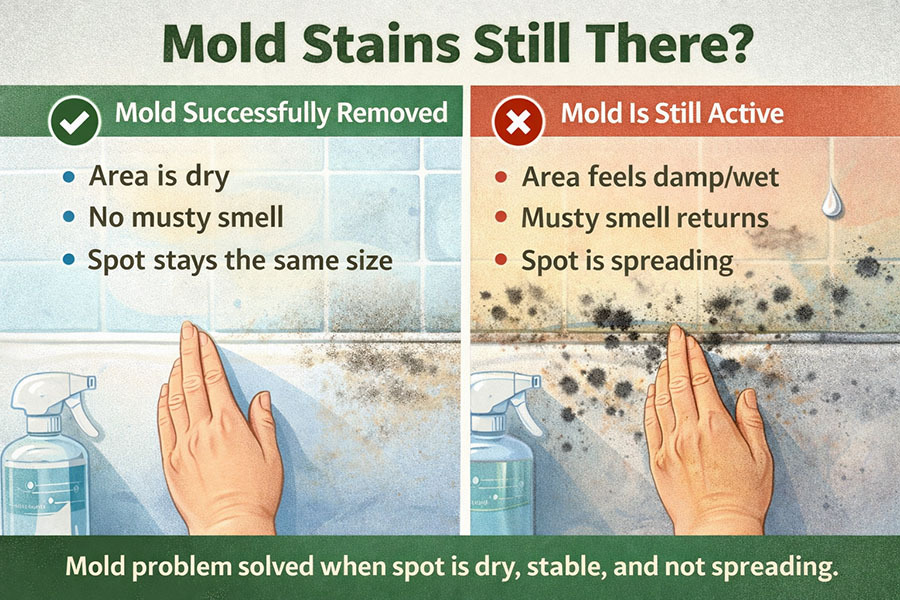
This is one of the most common (and stressful) questions RV owners ask after cleaning mold. The short answer is: no — stains don’t always mean mold is still active.
Why Mold Stains Often Don’t Go Away
- Mold pigments soak into porous materials (wood, fabric, drywall paper).
- Moisture causes chemical discoloration, not living growth.
- Past water damage leaves visual marks even after drying.
This is especially common on caulk, vinyl wall coverings, wood cabinetry, mattress platforms, window frames, and inside storage compartments.
How to Tell If Mold Has Been Successfully Removed
- The area stays dry — no damp feel or recurring condensation.
- The musty smell does not return after airing out.
- The stain does not grow or spread over time.
- The surface remains firm — no softening, bubbling, or crumbling.
- The moisture source was fixed (ventilation, leaks, condensation).
Signs Mold Is Still Active (Even If It Looks Cleaner)
- The stain gets darker or larger.
- A musty smell returns within days.
- The surface feels damp again.
- You’re repeatedly cleaning the same spot.
- New spots appear nearby.
What to Do If the Stain Remains
- Leave it alone if the area is dry and stable (cosmetic only).
- Light cosmetic cleaning using hydrogen peroxide or gentle abrasion.
- Re-caulk or seal only after you’re certain moisture is gone.
Bottom line: Mold is a moisture problem, not a stain problem. Fix the moisture and airflow, and the issue stops — even if the stain doesn’t fully disappear.
How to Prevent Mold in Your RV (A Simple System)
1) Control humidity
- Run vent fans during showers and cooking
- Use a small dehumidifier when needed
- For storage: moisture absorbers + periodic airflow
2) Improve airflow where it matters
- Leave cabinet and closet doors cracked when parked
- Give mattresses airflow (spacer mat or slats)
- Pull furniture slightly away from exterior walls
3) Get ahead of leaks
- Inspect roof seals at least seasonally
- Check around windows and vents after heavy rain
- Fix “tiny drips” immediately—they become soaked panels fast
Mold vs. Mildew vs. “RV Odors” (What People Mix Up)
- Mildew is often surface-level and easier to clean.
- Mold can grow deeper if moisture is ongoing.
- Odors can come from tanks, plumbing, damp materials, or all three.
- If the smell is “sewage-like,” start here: Why Your RV Smells Like Sewage (And How to Fix It) (update URL if your slug differs)
- If it’s a sink / gray-tank smell: How to Clean Your RV Gray Tank (Odor + Buildup) (update URL if needed)
- If odors keep coming back after dumping: RV Black Tank Care, Cleaning & Odor Control (Pillar Guide)
Quick RV Mold Prevention Checklist
- Run vent fan during showers + 10 minutes after
- Crack a roof vent when cooking
- Inspect under sinks monthly (feel for dampness)
- Wipe window condensation in cold weather
- Airflow behind mattress and in closets
- Seasonal roof + window seal inspection
- During storage: moisture control + occasional air exchange
When Mold Is “DIY” vs. When It’s Time for a Pro
- Small surface spots
- No soft walls or floors
- No ongoing leak
- Soft panels / swollen materials
- Spreading stains
- Known roof leak history
- Strong symptoms for occupants
FAQ: Mold in RVs
What causes mold in RVs most often?
Condensation and small hidden leaks are the top causes—especially in bathrooms, under sinks, and around windows.
Where should I check first for hidden mold?
Start with the bathroom ceiling, under sinks, slide corners, mattress undersides, closets on exterior walls, and window frames.
Why does mold keep coming back after I clean it?
Because the moisture source is still there. Cleaning removes growth, but humidity, condensation, or a leak will restart it.
Is bleach a good solution for RV mold?
Bleach can discolor surfaces and may not be effective on porous materials. The bigger issue is ensuring the area is fully dried and the moisture source is fixed.
How do I prevent mold when storing my RV?
Control moisture (dehumidifier or absorbers), keep some airflow, remove damp items, and do periodic check-ins—especially after storms.
Can RV odors be mistaken for mold?
Yes. Tank odors, damp materials, and mold can overlap. If the smell persists, inspect moisture hotspots and also rule out gray/black tank odor sources.
What’s the best way to stop condensation in an RV?
Vent during showers and cooking, use a dehumidifier when needed, and improve airflow behind mattresses and in closets/cabinets.