



Why is My RV Shower Not Draining? Is it Clogged? How Do I Fix it?
Posted by Happy Campers Store on Feb 10th 2026
RV Shower Not Draining? How to Fix a Slow or Backed-Up RV Shower Drain
Updated February 2026
A slow or backed-up RV shower drain is one of the most common plumbing problems RV owners face. The good news? In most cases, the solution is simple — once you identify whether the problem is a full gray tank, a drain clog, restricted venting, or plumbing buildup.
While slow RV shower drains are often caused by hair or soap buildup, gray tank residue behavior can also influence flow over time. Treatment mechanisms that emphasize rapid liquefaction don’t always translate to cleaner evacuation between dumps. We examine this distinction in our mechanism-based RV holding tank treatment comparison .
This is the most complete RV shower drain guide available. It will show you:
- How to diagnose why your RV shower won’t drain (in under 2 minutes)
- The difference between a gray tank issue vs. a drain or P-trap clog
- Why RV plumbing behaves differently than residential plumbing
- How to safely unclog an RV shower drain without damaging seals
- How to prevent recurring clogs, odors, and slow drainage long-term
Why Is My RV Shower Not Draining?
The most common reason an RV shower is not draining is a full gray water tank. Other causes include hair or soap buildup in the drain, a clogged P-trap, restricted roof vent airflow, or residue buildup inside gray tank plumbing.
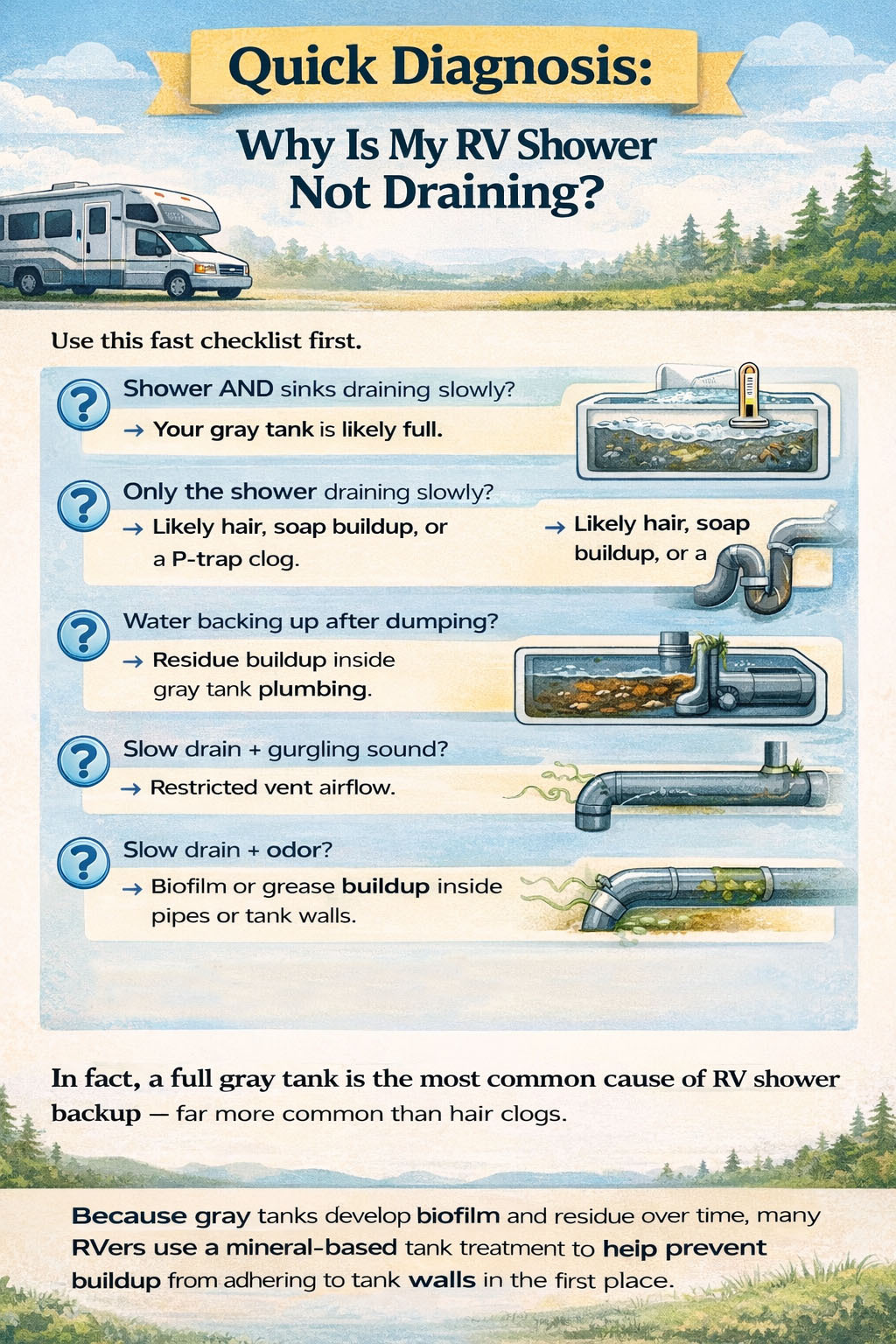
Use this fast checklist first.
- Shower AND sinks draining slowly? → Your gray tank is likely full.
- Only the shower draining slowly? → Likely hair, soap buildup, or a P-trap clog.
- Water backing up after dumping? → Residue buildup inside gray tank plumbing.
- Slow drain + gurgling sound? → Restricted vent airflow.
- Slow drain + odor? → Biofilm or grease buildup inside pipes or tank walls.
In fact, a full gray tank is the most common cause of RV shower backup — far more common than hair clogs.
Why Does My RV Shower Drain Slowly but the Sink Works?
If only the shower drains slowly while the sink works normally, the issue is likely a localized clog in the shower drain or P-trap rather than a full gray tank.
Why Does My RV Shower Gurgle When Draining?
Gurgling usually indicates restricted roof vent airflow or a nearly full gray tank. When air cannot move freely through the vent stack, water flow becomes uneven and noisy.
Can a Full Gray Tank Cause an RV Shower to Back Up?
Yes. When the gray tank is full, water from the shower and sinks has nowhere to go and will back up into the shower pan. This is the most common cause of RV shower drainage problems.
Your RV shower drains directly into the gray water tank. When the gray tank fills up, water has nowhere to go. The result? It backs up into the lowest fixture — usually the shower pan.
How to Fix a Shower That Won’t Drain Because the Gray Tank Is Full
- Check your tank monitor panel
- If unsure, listen for water slosh when gently rocking the RV
- Dump the gray tank completely
- Rinse the tank if possible
- Test the shower again
If this fixes the issue, no further repair is needed.
For a detailed maintenance guide, see: How to Clean Your RV Gray Water Tank (Step-by-Step)
Why RV Plumbing Is Different from Household Plumbing
Many drain problems happen because RVers apply residential advice to RV systems.
RV plumbing differs in several important ways:
- Smaller diameter pipes
- Tighter bends and compact routing
- ABS plastic fittings (not heavy PVC)
- Rubber seals that are more sensitive to chemicals
- No municipal pressure assistance
Because of this, harsh chemical drain openers can damage fittings, soften seals, and create long-term odor issues.
What Causes an RV Shower Drain to Clog?
1. Hair Buildup
Hair is the most common mechanical blockage in RV shower drains. Small pipe diameter means even modest buildup can restrict flow.
2. Soap, Conditioner & Grease Residue
Soap scum does not dissolve easily. Over time, it coats pipe walls and traps debris, forming sticky buildup that narrows flow.
3. Hard Water Mineral Deposits
Calcium and magnesium deposits accumulate inside pipes, especially for RVs that travel across different water regions.
4. Clogged RV Shower P-Trap
Yes — RV showers use P-traps to block sewer gases. Unfortunately, they also collect hair and residue.
5. Restricted Vent Stack
If your roof vent is blocked by debris or insect nests, airflow becomes restricted. Water may drain slowly and produce gurgling sounds.
How Do I Unclog an RV Shower Drain?
To unclog an RV shower drain, remove visible hair and debris, use a plastic drain snake or zip tool, flush with hot (not boiling) water, and inspect the P-trap if the problem continues. Avoid caustic drain cleaners that can damage RV plumbing.
Method 1: Manual Removal (Best First Step)
- Remove drain cover
- Pull out visible hair and debris
- Flush with hot (not boiling) water
Method 2: Use a Plastic Zip Tool or Small Drain Snake
These inexpensive tools are extremely effective for RV drains and safe for plumbing.
Method 3: Baking Soda & Vinegar (For Light Buildup)
- ½ cup baking soda
- ½ cup vinegar
- Wait 30–60 minutes
- Flush with hot water
This helps loosen soap residue — not heavy clogs.
How to Check and Clean the RV Shower P-Trap
- Access plumbing under the shower (panel or cabinet)
- Place container underneath
- Loosen fittings carefully
- Remove debris and rinse trap thoroughly
- Reinstall and test
This step alone solves many recurring slow-drain problems.
What Chemicals Should You Avoid in RV Shower Drains?
Do NOT Use:
- Bleach or chlorine-based cleaners
- Caustic drain openers (Drano-style products)
- Boiling water
- Petroleum-based solvents
These can damage seals, soften ABS fittings, and accelerate odor problems.
How to Prevent RV Shower Drain Clogs Long-Term
- Dump gray tank before completely full
- Use drain strainers in all fixtures
- Flush drains weekly with hot water
- Rinse gray tank periodically
- Keep tank walls clean to prevent residue adhesion
Because gray tanks develop biofilm and residue over time, many RVers use a mineral-based tank treatment to help prevent buildup from adhering to tank walls in the first place.
For a deeper breakdown of treatment types, read: What Is the Best Kind of RV Holding Tank Treatment?
When to Call a Professional
If you notice:
- Persistent backups after clearing visible clogs
- Leaks under shower
- Cracked fittings
- Odor combined with structural moisture
A professional RV technician may be needed to inspect deeper plumbing connections.
Final Thoughts: Diagnose First. Fix Once.
An RV shower not draining is almost never random. It indicates:
- Gray tank capacity
- Plumbing flow restriction
- Ventilation issues
- Residue accumulation
Once you identify the real cause, the fix is usually simple — and permanent.
Fix the cause. Not just the symptom.